Event Planning for Cocktail-Style Receptions in Littleton: How to Organize Seating, Service, and Guest Flow Without a Formal Dinner
What You'll Learn
- Plan seating that supports mingling without leaving guests stranded
- Pace food and beverage service to keep lines short and energy steady
- Improve guest flow with clear zones for arrival, dining, and conversation
- Build accessibility into a social reception from the start
- Use mobile catering to simplify logistics for homes and business events
When hosts want a celebration that feels social, flexible, and less formal than a plated meal, event planner support becomes essential. In Littleton, cocktail-style receptions can work beautifully for weddings, house parties, and business gatherings, but only when the layout, service rhythm, and circulation are intentionally designed. For The Food Truck Family, the goal of an event planner is not simply to place food on-site. It is to create a reception environment where guests can move comfortably, find a place to pause, eat without frustration, and enjoy the event without the bottlenecks that often happen when there is no assigned dinner seat.
A successful cocktail-style reception in Littleton starts with one central question: how will people naturally use the space? An experienced event planner studies arrival points, walk paths, food access, beverage placement, and conversation areas before deciding where anything should go. That planning is especially important for private properties and business venues where access, parking, or neighborhood expectations may shape the setup. Hosts who are still early in the planning process may also benefit from reviewing practical logistics guidance such as permits, neighborhood rules, and event logistics and event planning for events at homes with HOAs so the reception format fits the property as well as the guest list.
Start With Zones, Not Rows of Tables
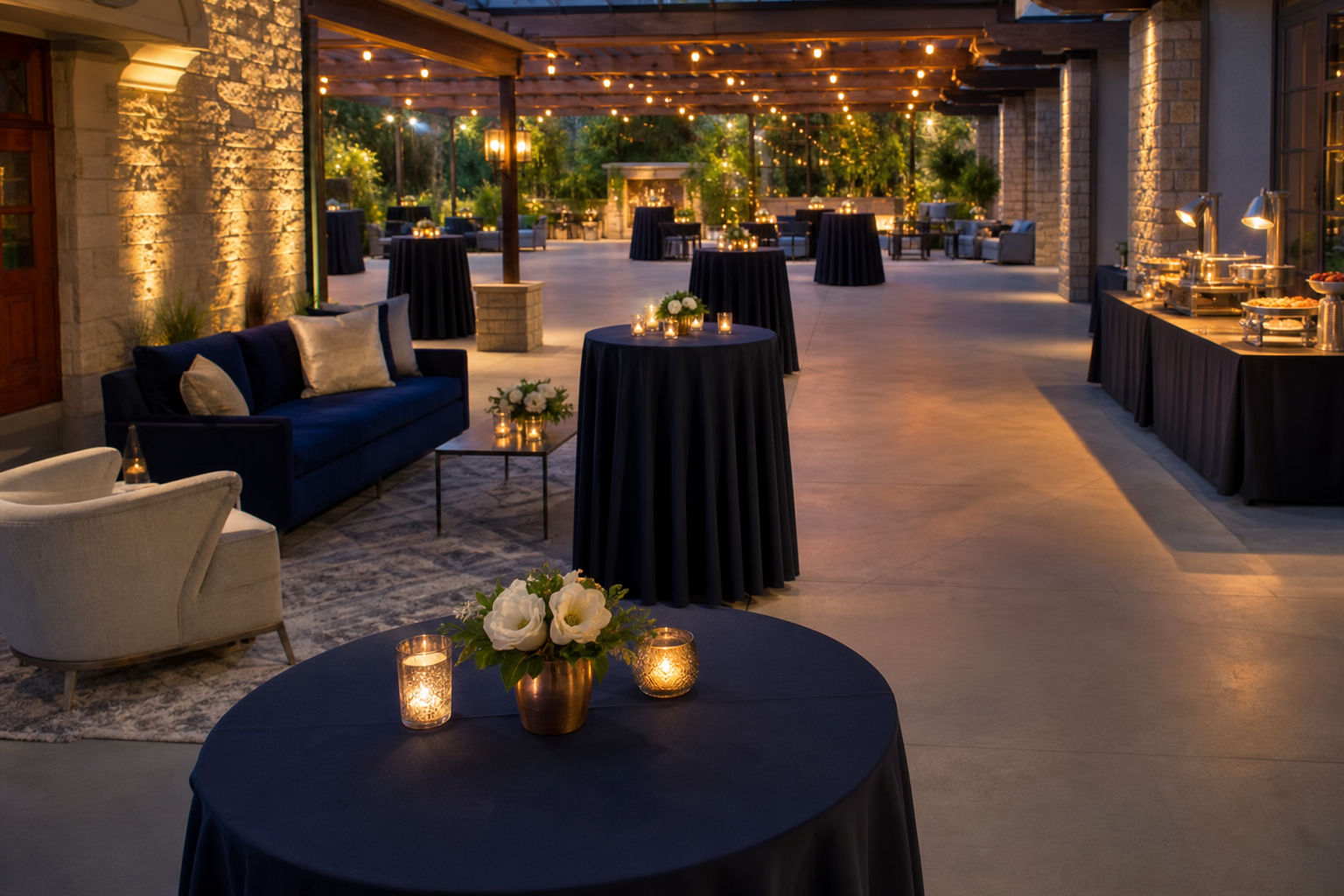
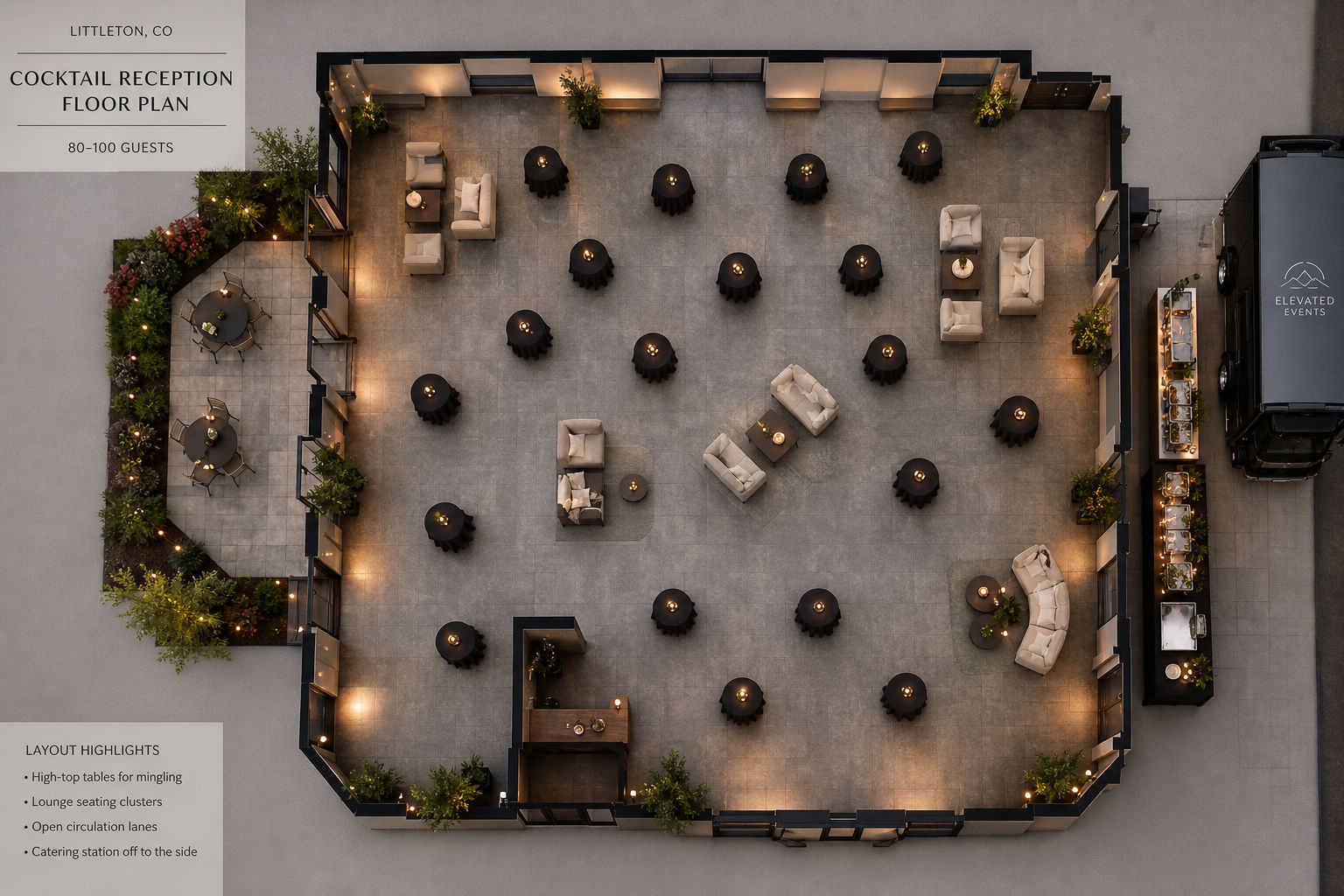
Without a formal dinner, the biggest mistake is treating the reception like a seated banquet minus the chairs. A better approach is to divide the event into zones. In Littleton, an event planner typically creates a welcome zone, food service zone, beverage zone, social clusters, and a few quiet or low-traffic areas for guests who need a break. This prevents the entire reception from crowding around the food source and helps guests spread out more naturally.
High-top tables are useful, but they should not be the only landing spot. A good event planner mixes standing surfaces with limited seated options so older guests, anyone with mobility needs, and those simply balancing a plate and drink have realistic places to settle. For tighter properties, every furniture choice matters. If the event footprint is constrained, hosts can learn from space-efficiency strategies in planning a private event on a tight property footprint, which aligns closely with cocktail-style design decisions.
- Place small table groupings around the perimeter to open the center
- Include some chairs with backs, not only stools or standing tables
- Keep at least one clear, direct path between entry, food, and restrooms
- Separate beverage pickup from primary food service when possible
Design Service Pacing So the Reception Feels Active, Not Chaotic
One reason cocktail-style receptions succeed is that they keep the event moving. But movement needs structure. In Littleton, an event planner works with mobile catering to pace service in waves rather than releasing every food option at once. Early in the event, lighter passed bites or quick-pickup items support arrivals and conversation. As the reception settles, more substantial items should appear so guests still feel they had a satisfying meal, even without a plated dinner.
This pacing reduces long lines and keeps guests from clustering in one place during the first 20 minutes. It also helps the host control the energy of the event. For larger crowds, staggered timing becomes even more important, and the planning logic is similar to the approach discussed in how event planners design staggered service. For company gatherings, the same principle supports better networking and fewer service interruptions, which is why local organizations may also appreciate guidance from what local business owners should prepare before hiring an event planner.
Make Guest Flow Feel Intuitive From Arrival to Departure
Guest flow is often the difference between a reception that feels elegant and one that feels disorganized. A skilled event planner in Littleton thinks through what each guest sees first, where they pause, and what might create hesitation. If the entrance opens directly into the main service area, congestion can happen immediately. If beverages are too close to the food pickup point, people stop and chat in the exact place where others need to move through. If trash and bussing stations are hidden, used plates collect on every nearby surface.
Good flow planning solves those issues before event day. Arrival should be visually clear. Food should be visible but not blocking circulation. Conversation areas should feel inviting without trapping guests in dead-end corners. For events that combine socializing with community or organizational attendance, hosts may find useful crossover ideas in event planner advice for events using mobile catering. The same fundamentals apply: clear routes, controlled service points, and enough breathing room around the busiest zones.
Simple flow choices that improve the experience
- Keep the first food point several steps beyond the entrance
- Use more than one receptacle for plates and napkins
- Avoid placing décor or furniture in natural walk lanes
- Create at least one low-noise area for conversation
- Leave enough turning space around tables and service points
Accessibility Should Be Built Into the Reception Plan
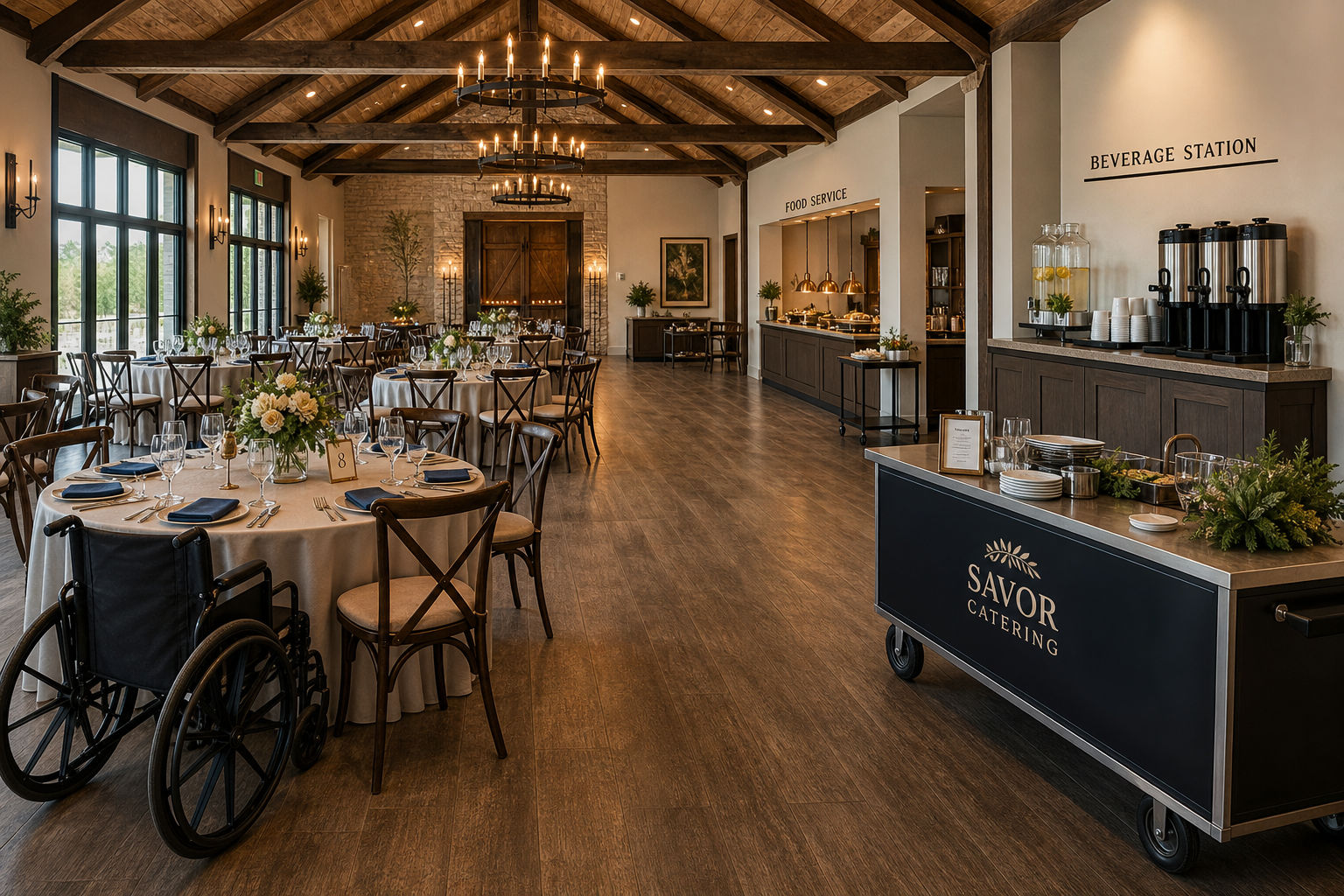
A cocktail-style format should never mean guests are expected to stand, balance plates, or navigate tight paths without support. In Littleton, a thoughtful event planner addresses accessibility early by planning routes, seating variety, surface heights, and service access around real guest needs. That includes making sure there are stable places to sit, enough spacing for mobility devices, and food access that does not require weaving through a dense crowd.
Accessibility also affects timing and communication. If certain guests need easier access to seating or shorter distances between key areas, those choices should shape the overall layout instead of being added as an afterthought. Hosts who want a deeper look at this topic can review how an event planner prepares for guest accessibility needs. For outdoor receptions, weather conditions can also affect walking surfaces, shade, and comfort, making early planning even more important. Related guidance in outdoor celebration weather strategies can help hosts think through those variables in advance.
Why Mobile Catering Supports a More Social Reception Format
Mobile catering works especially well for cocktail-style receptions because it supports flexible service without forcing the event into a traditional dining schedule. For The Food Truck Family, an event planner can coordinate service locations and timing so the catering experience becomes part of the event flow rather than a disruption to it. In Littleton, that is valuable for backyard weddings, residential celebrations, and business events where hosts want energy and interaction instead of a long seated meal.
Because mobile catering can be positioned strategically, it helps define where guests gather while leaving other zones open for conversation. It also makes it easier to release different menu moments over time, which supports the pacing needed for a reception without a formal dinner. When weather is a factor, backup logistics should be addressed early as part of the same planning process. Hosts considering an outdoor format can compare their approach with broader contingency ideas found in how an event planner builds a weather backup plan.
Questions an Event Planner Helps You Answer Before the Reception
Many hosts know they want a mingling-friendly event, but they are not sure how to translate that into practical decisions. A strong event planner in Littleton helps define how many seats are enough, how substantial the food should be, where guests will queue, and whether the property can support the intended flow. That early guidance can prevent costly layout changes later. Hosts who are comparing planning support may also want to read what to ask before hiring an event planner before finalizing their reception strategy.
- Will guests expect a full meal or a more casual reception experience?
- How many people need dedicated seating at any given time?
- Where will lines form if service gets busy?
- Can guests move comfortably if the event is indoors, outdoors, or both?
- What changes are needed if weather or timing shifts?
Conclusion
A cocktail-style reception can feel polished, welcoming, and highly social when the event is designed around real guest behavior rather than a missing dinner table. With the right event planner, hosts in Littleton can organize seating, service pacing, accessibility, and guest flow in a way that keeps the celebration comfortable and memorable from start to finish. For homeowners and business owners alike, The Food Truck Family brings the planning perspective needed to make a mingling-focused reception work smoothly in Littleton.
Source: ADA accessibility guidance