How Event Planners Design Staggered Service for School, Church, and Community Events With Large Guest Counts
What You'll Learn
- Reduce lines with timed releases and multiple serving windows
- Improve safety through smarter traffic flow and site layout
- Match food service plans to schools, churches, and parks
- Create a better guest experience for large local gatherings
Large school festivals, church gatherings, and neighborhood celebrations can feel either impressively organized or frustratingly crowded, and the difference usually comes down to planning. When hundreds of guests arrive within a short window, food service becomes more than a catering decision. It affects wait times, safety, volunteer workload, traffic flow, and the overall tone of the event. For organizers in Westminster, Broomfield, and Arvada, staggered service is one of the most effective ways to keep large guest counts manageable without making the event feel rigid or overly controlled.
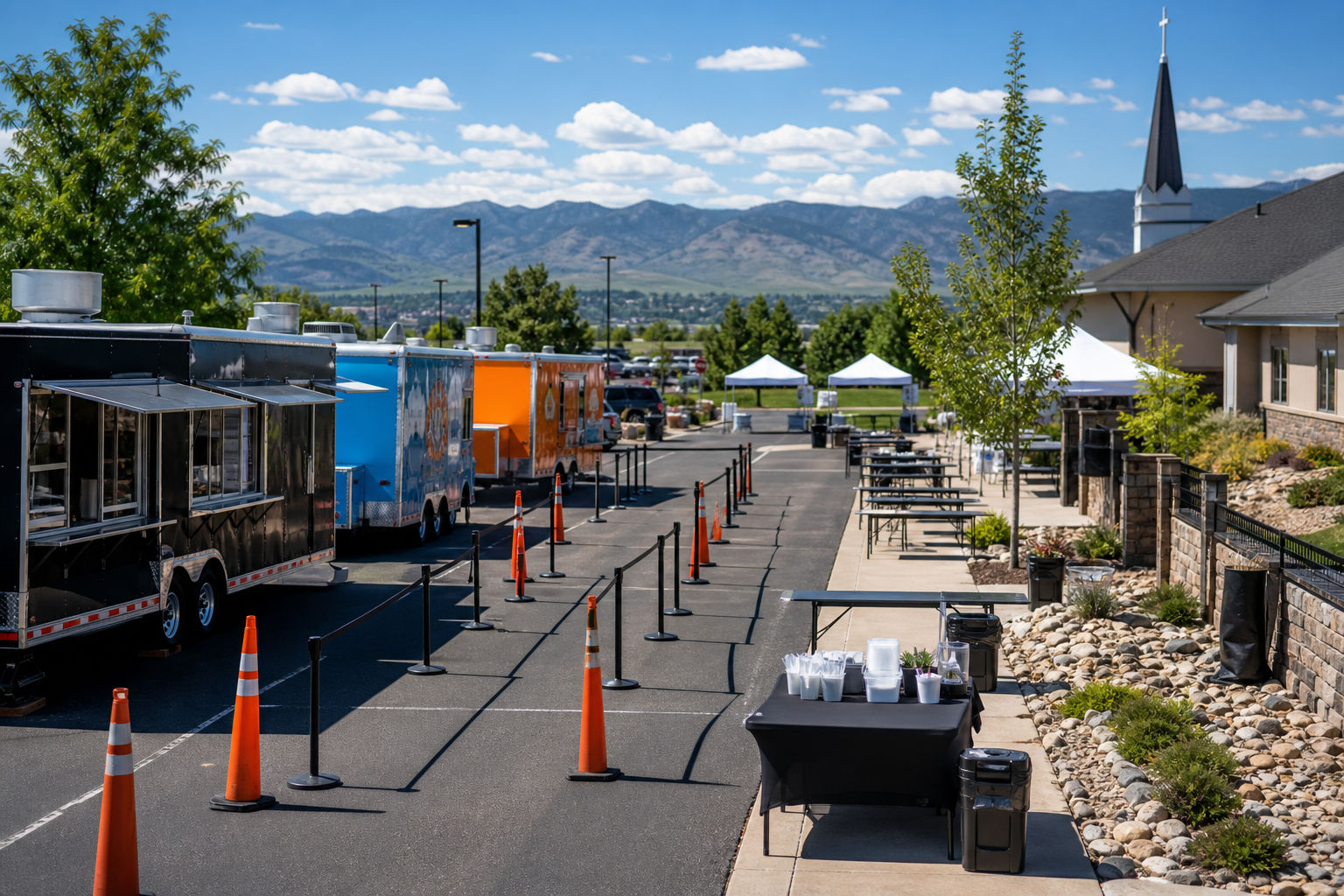
For a mobile caterer and event planning team like The Food Truck Family, staggered service means designing the event so guests are not all trying to order, pick up food, find seating, and cross the same pathways at the same time. Instead of one large rush, the event is structured into smaller service waves. That may include timed table releases, grade-by-grade meal windows, separate pickup points, or multiple serving moments spaced across the schedule. The result is a more comfortable experience for guests and a more predictable operation for organizers.
Why large community events need staggered service
At many community events, the biggest problems are not caused by attendance itself. They come from everyone moving at once. A school fundraiser may dismiss families to eat as soon as a performance ends. A church picnic may release the full congregation at the close of service. A city-sponsored community event may open food access at the same moment that parking, check-in, and activity areas also get busy. Without staggered service, these overlapping surges can create long lines, blocked walkways, crowding near entrances, and unnecessary stress for volunteers.
Thoughtful planning helps avoid those pressure points. Event planners look at arrival patterns, event programming, guest age ranges, accessibility needs, and the physical layout of the site. They then build a service plan that spreads demand across time and space. This is especially important at parks, school campuses, church lots, and neighborhood venues in places like Thornton, Northglenn, and Denver, where access routes, curbside activity, and open-space layouts can vary widely.
- Reduce peak line length during the busiest 20 to 30 minutes
- Keep emergency access lanes and walkways clearer
- Make service easier for families with children and older guests
- Help vendors and volunteers work at a steadier pace
- Support a more relaxed, welcoming event atmosphere
Timed releases: the simplest way to control crowd flow
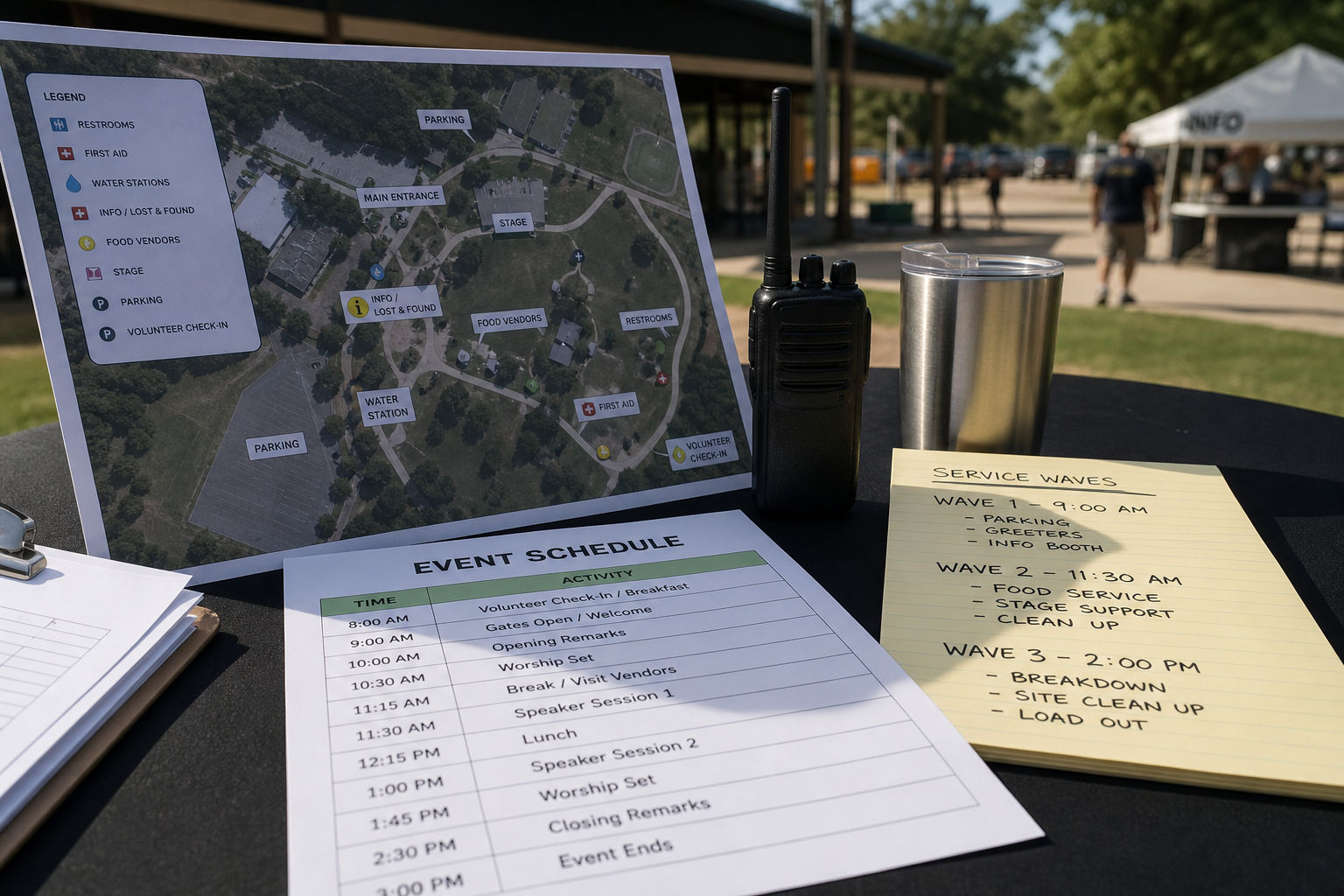
Timed releases are often the most practical tool for high-attendance events. Instead of inviting all guests to line up at once, organizers release groups in planned intervals. At a school event, that could mean separate windows for staff, volunteers, lower grades, and upper grades. At a church event, it may mean calling tables or ministry groups in sequence. At a neighborhood celebration, it could mean assigning pickup windows tied to activity blocks or ticket colors.
The goal is not to slow people down. It is to shorten the time they spend standing still. A five-minute delay before entering a line is usually much better than a twenty-minute wait in a crowded queue. Timed releases also help event planners estimate how many meals must be served within each interval, which improves staffing, prep pacing, and replenishment. If your event also includes outdoor programming, weather planning matters too, and seasonal conditions can change how guests move through a site, as discussed in Colorado Event Planning by Season: What Changes for Spring, Summer, Fall, and Winter Private Events.
How planners decide on release groups
Release groups should follow how guests naturally gather. For example, schools often work best with classroom or grade-level waves. Churches may prefer section-by-section releases based on seating. Community events in Arvada or Broomfield parks may use activity zones, ticket times, or booth clusters. The best grouping method is the one guests can understand quickly and follow without confusion. Clear signs, stage announcements, and volunteer direction are essential.
Multiple serving moments prevent one oversized rush
Another strong strategy is replacing one central meal rush with multiple serving moments. Instead of treating food as a single event checkpoint, planners weave service into the broader schedule. A church festival might offer an early snack period, a main meal window, and a later dessert service. A school carnival might open food sales before games begin, then add a second wave after performances. This spreads demand and gives guests more flexibility.
Multiple serving moments also improve the guest experience because people can choose a time that fits their family or group. Parents with young children may eat early. Volunteers may need a dedicated service window. Guests arriving late still feel accommodated. For organizers, this structure can reduce pressure on any one truck, service station, or pickup area. It is particularly useful for events in Westminster and Lakewood where attendance may build gradually rather than all at once.
When several vendors, entertainment elements, or schedule milestones are involved, service timing should be coordinated with the full event plan. That same coordination mindset is important in other event formats too, including wedding weekends and multi-part celebrations, as covered in How to Plan a Wedding Welcome Party or Day-After Brunch Without Creating Vendor and Timeline Conflicts.
Queue planning matters as much as the menu
Even with staggered timing, a poor queue layout can create bottlenecks. Event planners map where guests will stand, which direction lines will face, how orders will be placed, and where pickups will happen. They also look at how the line interacts with doors, sidewalks, stroller routes, ADA access, restrooms, and seating. A line that crosses a main walkway or blocks an entry point can quickly become a safety issue.
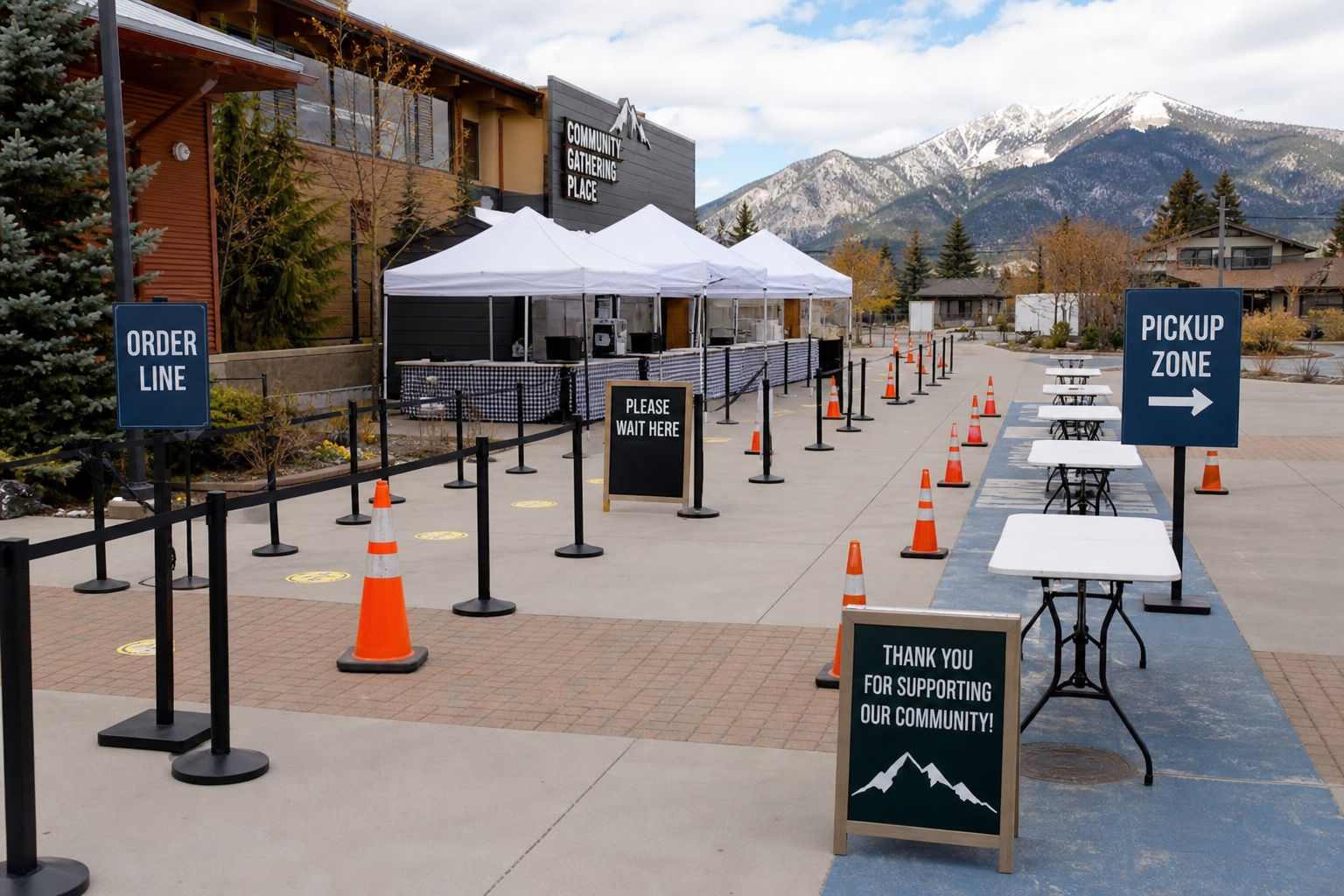
For mobile catering at schools, churches, and civic sites, line design should separate waiting guests from through-traffic whenever possible. That may mean using stanchions, cones, chalked queue lanes, or volunteer-managed turns. If more than one truck or station is involved, planners can assign each one a distinct queue zone rather than allowing lines to merge into a single cluster. This helps guests decide where to go faster and reduces side-to-side crowding.
- Keep order lines and pickup areas clearly separate
- Avoid placing queues across sidewalks, ramps, or main entrances
- Use visible signs so guests know where to start and where to wait
- Provide overflow space for peak periods
- Assign volunteers to redirect guests before confusion builds
Site layout shapes speed, safety, and comfort
The physical layout of the site has a direct impact on service performance. Event planners do not just ask where a truck can park. They ask how guests will approach it, where they will go next, and what nearby activity could create conflicts. A food truck placed too close to a bounce house, check-in table, or exit gate may create cross-traffic that slows everything down. A better layout places service where guests can access it easily without interrupting other event functions.
Parking, drop-off, and circulation are part of that same conversation. If arrivals, food lines, and pedestrian routes all overlap, congestion starts before service even begins. Organizers planning home-based or neighborhood events can see how access planning connects to guest flow in What an Event Planner Recommends for Parking, Drop-Off, and Traffic Control at Home-Based Events. For larger public events, it is equally important to preserve fire lanes, vendor access paths, and room for emergency response.
What a strong service layout usually includes
- A clear guest approach path that does not conflict with arrivals
- A defined line start point with enough holding room
- Separate pickup and condiment areas when possible
- Nearby seating or standing space that does not block the queue
- Volunteer positions at key decision points
- Open access for vendor setup, restocking, and departure
Why local organizers benefit from professional event flow planning
For homeowners, school groups, churches, and local businesses, crowd management is often underestimated because the focus starts with menu choices, entertainment, and attendance goals. But once guest counts rise, service design becomes operational planning. A professional event planner or mobile caterer can help estimate realistic service capacity, identify bottlenecks before event day, and build a layout that supports the venue rather than fighting it.
The Food Truck Family supports events across Thornton, Westminster, Broomfield, Arvada, and surrounding communities with a planning approach that looks beyond food alone. That includes timing, site use, guest movement, and coordination with the broader event schedule. If you are organizing a school function, church gathering, company celebration, or neighborhood event, early planning gives you more room to shape a smooth experience. If you are still building your timeline, How Far in Advance Should You Book an Event Planner for Weddings, Company Parties, and Neighborhood Events offers useful guidance on when to start.
Well-planned staggered service does not make an event feel controlled. It makes it feel easy. Guests spend less time waiting, volunteers stay more effective, and the site remains safer and more comfortable from start to finish. For large community events, that kind of structure is often what turns a busy gathering into a successful one.
Source: National Fire Protection Association