What an Event Planner Recommends for Parking, Drop-Off, and Traffic Control at Home-Based Events
What You'll Learn
- Create a parking plan that protects guest flow and vendor access
- Reduce neighborhood friction with clear arrival instructions
- Set up safe drop-off zones for weddings, parties, and business events
- Keep food trucks, caterers, and rentals moving on schedule
- Avoid common driveway, curbside, and street-parking mistakes
One of the most underestimated parts of a successful home-based event is not the menu, decor, or timeline. It is how people and vehicles move through the property. At private events in Thornton, Denver, and Westminster, parking and traffic flow often determine whether the day feels polished or chaotic. Guests notice when they can arrive easily, find the right entrance, and leave without blocking a neighbor, a catering van, or a delivery truck.
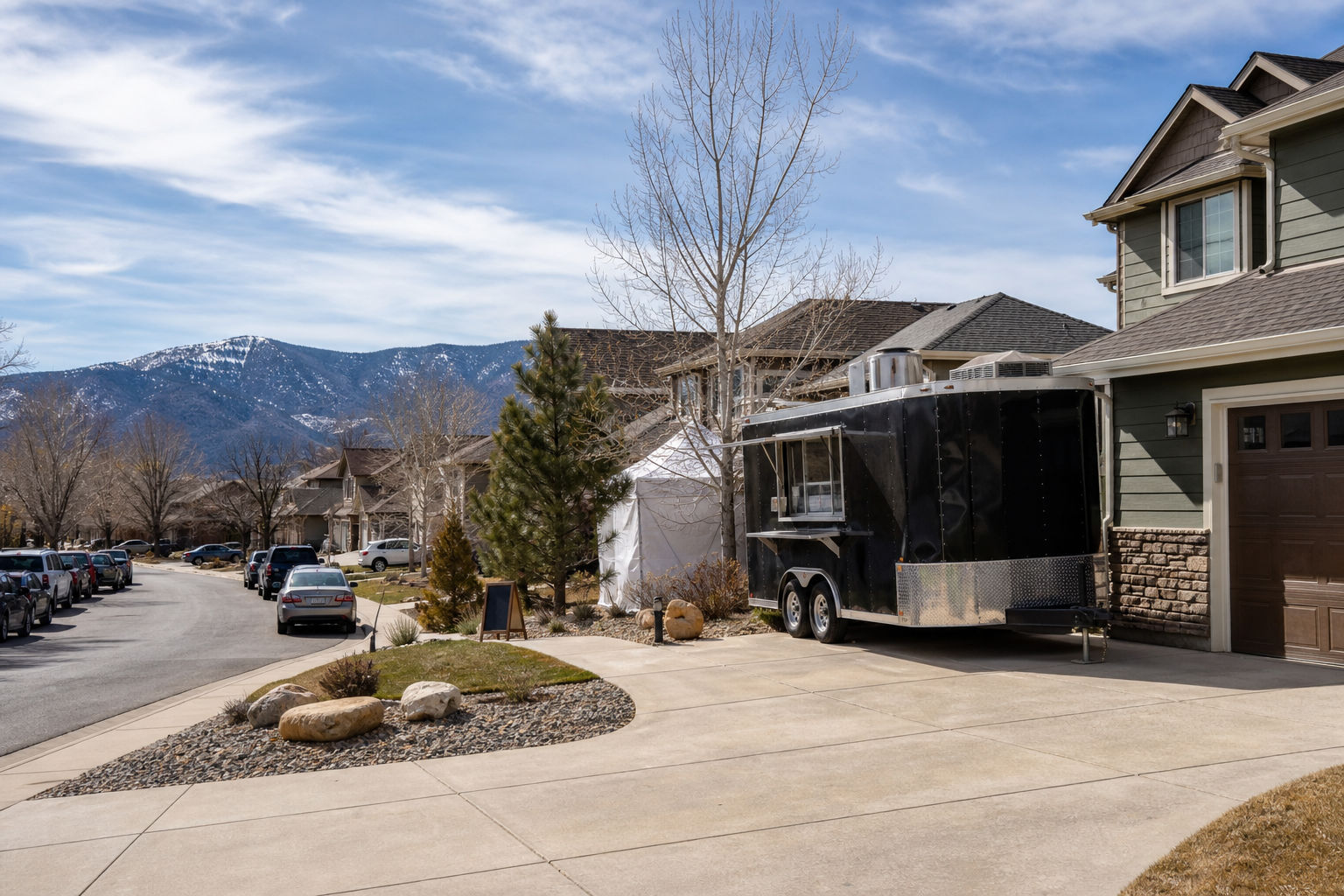
For a mobile caterer and event planning team like The Food Truck Family, vehicle flow matters because service depends on access. Food trucks, prep vehicles, rental drop-offs, florists, DJs, and guests all compete for the same curb space unless someone plans ahead. If you are hosting a backyard wedding, graduation, corporate gathering, or neighborhood celebration, a clear transportation plan protects the guest experience and keeps the event running on time.
Start with the property, not the guest count
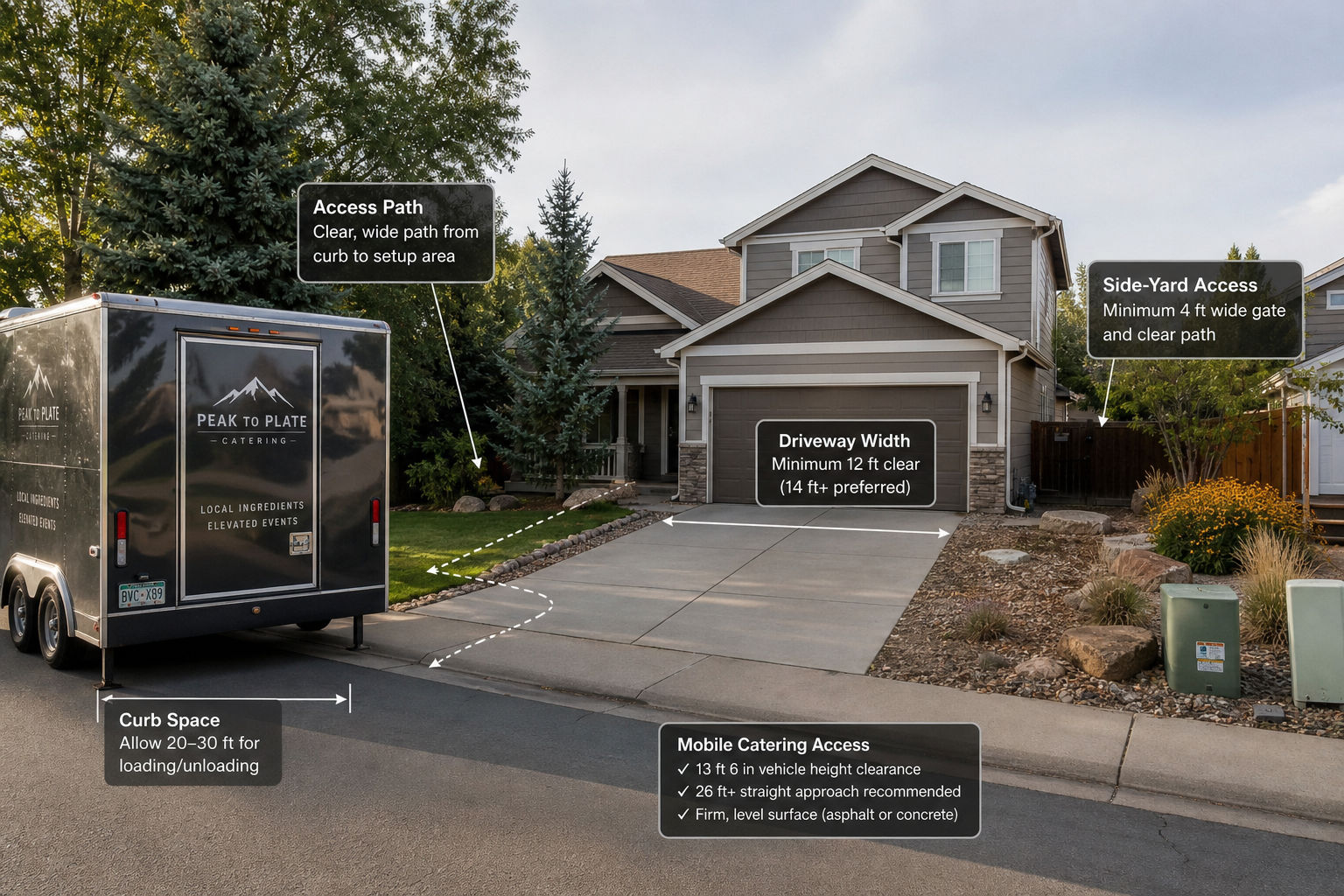
Before deciding where everyone should park, evaluate the property itself. Measure driveway width, note whether vehicles can turn around safely, identify gates or side-yard entries, and confirm where service vehicles need to stage. A home may comfortably host 80 guests in the backyard but only support a few cars on site. That gap is where planning becomes essential.
Look closely at slope, irrigation lines, soft landscaping, overhead branches, HOA rules, and the distance from curb to service area. For mobile catering, access is not just about fitting a vehicle. It is about making sure equipment can move efficiently from truck to setup point without crossing guest paths or damaging the property. This is one reason venue access is always part of a broader event review, similar to the site questions discussed in What an Event Planner Looks for Before Approving a Venue for a Mobile Catered Event.
- Identify the best vendor entrance before sending invitations
- Reserve the closest access points for catering, rentals, and emergency use
- Confirm whether guests can safely park on one or both sides of the street
- Check local restrictions on blocking sidewalks, hydrants, or mailboxes
Use the driveway strategically
Homeowners often assume the driveway should be used for guest parking first. In practice, that is not always the best choice. The driveway is usually the most valuable access lane on the property, and once personal vehicles fill it, vendors may lose the space they need for setup, replenishment, and breakdown. For events with a food truck, bar service, rental equipment, or a wedding timeline, preserving driveway access can prevent major delays.
A smart approach is to assign driveway use by priority. First priority is usually catering and essential event operations. Second is accessibility needs for elderly guests, anyone with limited mobility, or families with very young children. General guest parking usually works better on approved street parking routes, overflow lots, or with rideshare instructions. If you are planning a backyard celebration, this approach pairs well with the broader logistics covered in Event Planning Checklist for Backyard Weddings in Thornton and North Denver.
Plan street parking like an arrival experience
Street parking at residential events works best when it is treated as part of the guest experience rather than an afterthought. Guests should know where to park, which side of the street is preferred, where to walk once they arrive, and which entrance to use. This is especially important in neighborhoods across Broomfield, Northglenn, and Arvada where homes may sit on narrower streets or cul-de-sacs.
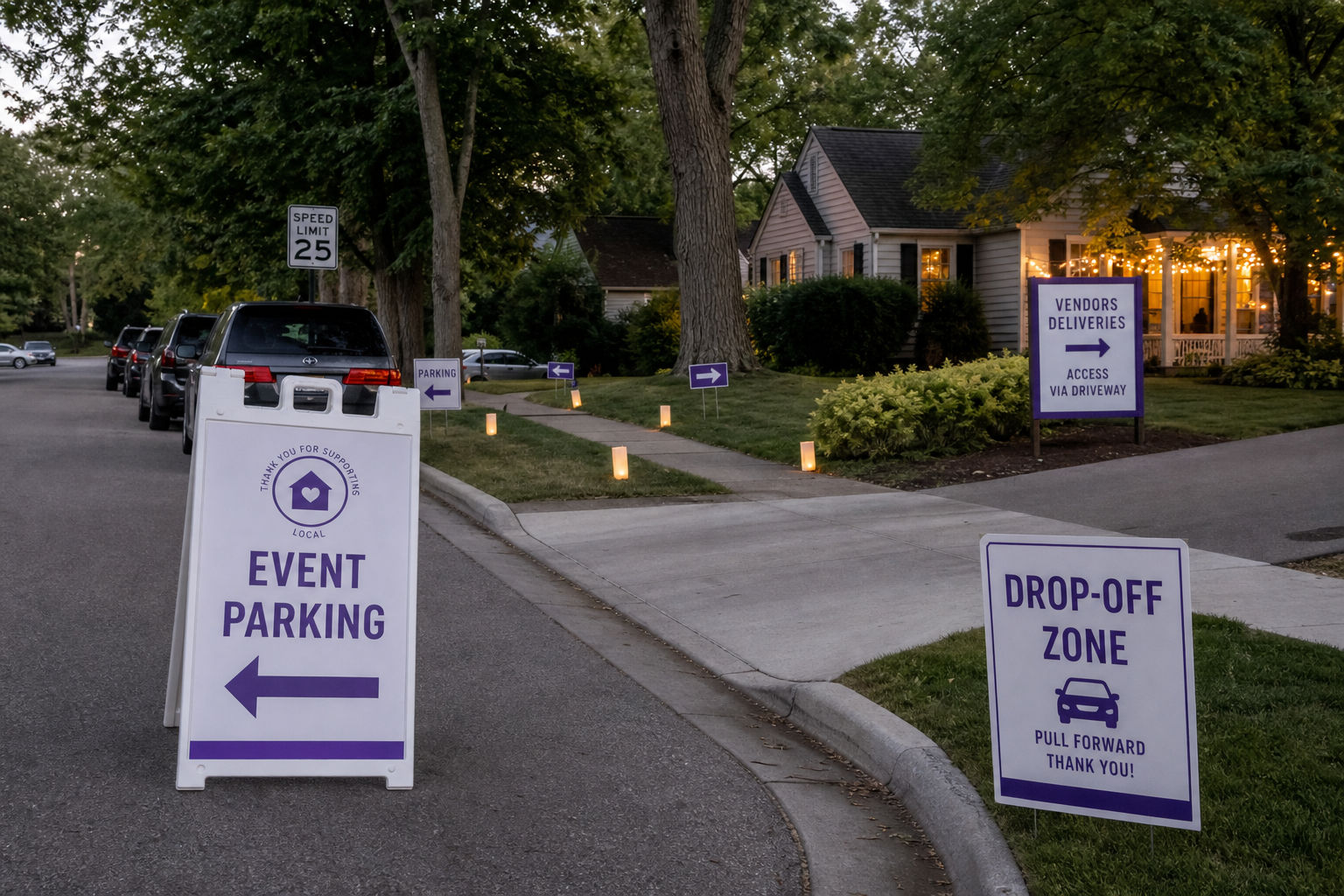
Include a short parking note with your invitation, event website, or confirmation email. Keep it specific. Tell guests whether to avoid the driveway, whether rideshare drop-off is recommended, and whether parking near certain homes or corners should be avoided. For larger gatherings, temporary directional signs at the neighborhood entrance and near the property can reduce confusion and repeated three-point turns in front of neighbors' homes.
- Mark the preferred guest parking side of the street
- Reserve a dedicated drop-off point near the entrance
- Leave clear curb access for vendors and emergency response
- Assign one person to monitor arrivals during the busiest 30 to 45 minutes
Protect neighbor relationships before event day
Traffic management is not only about convenience. It is also about being a good neighbor. A well-run home event avoids blocked driveways, loud idling near bedroom windows, and guests wandering into adjacent yards. In residential areas from Aurora to Littleton, a quick courtesy note to immediate neighbors can make a meaningful difference. Let them know the event timing, expected parking pattern, and who to contact if an issue comes up during setup.
This matters even more when several vendors are arriving in sequence. Mobile catering, rental delivery, floral setup, and entertainment often overlap. Without assigned arrival windows, the street can clog before guests even show up. If your event includes multiple moving parts, the same scheduling discipline used for ceremony and food timing in Planning a Split-Schedule Event: How to Coordinate Ceremony, Photos, and Food Service Without Dead Time also applies to vehicle flow.
Create separate plans for guests, vendors, and service vehicles
The most effective traffic plans separate vehicle types. Guests need simple instructions and fast arrival. Vendors need precise access, timing, and unloading space. Service vehicles such as trash pickup, restroom trailers, ice delivery, or extra beverage restocking may need temporary curb access later in the event. When all three groups share the same path without coordination, bottlenecks happen quickly.
For example, a home-based business launch in Commerce City or Lakewood may have a short arrival surge right before the program starts, while a wedding in Thornton may need staggered vendor arrivals hours earlier. A food truck setup also requires enough room to park level, open service safely, and maintain guest circulation. If evening service is involved, power routing and safe access should be coordinated together, as covered in How an Event Planner Organizes Power, Lighting, and Electrical Load for Evening Events With Mobile Catering.
What to include in your arrival plan
- Vendor arrival windows with one contact person on site
- A map showing guest parking, drop-off, and walking route
- A no-parking zone near service access points
- Backup parking instructions if the street fills faster than expected
- Lighting or pathway markers for evening departures
Signage should reduce decisions, not add clutter
At residential events, signs work best when they are minimal and placed only at decision points. A sign at the wrong location can confuse drivers or cause them to stop suddenly. Use clear wording such as Guest Parking, Drop-Off Only, or Vendor Access. If the property has multiple gates or a detached backyard entrance, signs should guide guests from curb to check-in without requiring them to ask for help.
For local business owners hosting open houses, soft openings, or client appreciation events at a home or private property, traffic control also affects first impressions. Organized arrival tells guests the event will be organized inside as well. That same principle is important in public-facing launches, as seen in How to Plan a Business Grand Opening Event That Feels Organized, Welcoming, and Worth Attending.
When to bring in professional coordination
If your event includes more than a modest number of vehicles, a narrow street, multiple vendors, or timed service, professional event coordination is worth considering. The Food Truck Family helps clients think through access, setup order, guest flow, and service timing so that parking supports the event instead of disrupting it. This is especially useful for homeowners in busy residential areas like Centennial, Parker, and Englewood where curb space can disappear quickly.
A polished home-based event is not just beautifully hosted. It is easy to approach, easy to enter, and easy to leave. With a practical parking plan, clear arrival instructions, and dedicated access for mobile catering and vendors, you can protect the neighborhood experience while giving guests a smoother, more professional event from the moment they arrive.
Source: pedestrian safety guidance