How an Event Planner Organizes Power, Lighting, and Electrical Load for Evening Events With Mobile Catering
What You'll Learn
- Estimate generator and venue power needs before event day
- Place lighting for safety, comfort, and food service flow
- Reduce trip hazards with smarter extension run planning
- Prevent outages that disrupt catering and guest experience
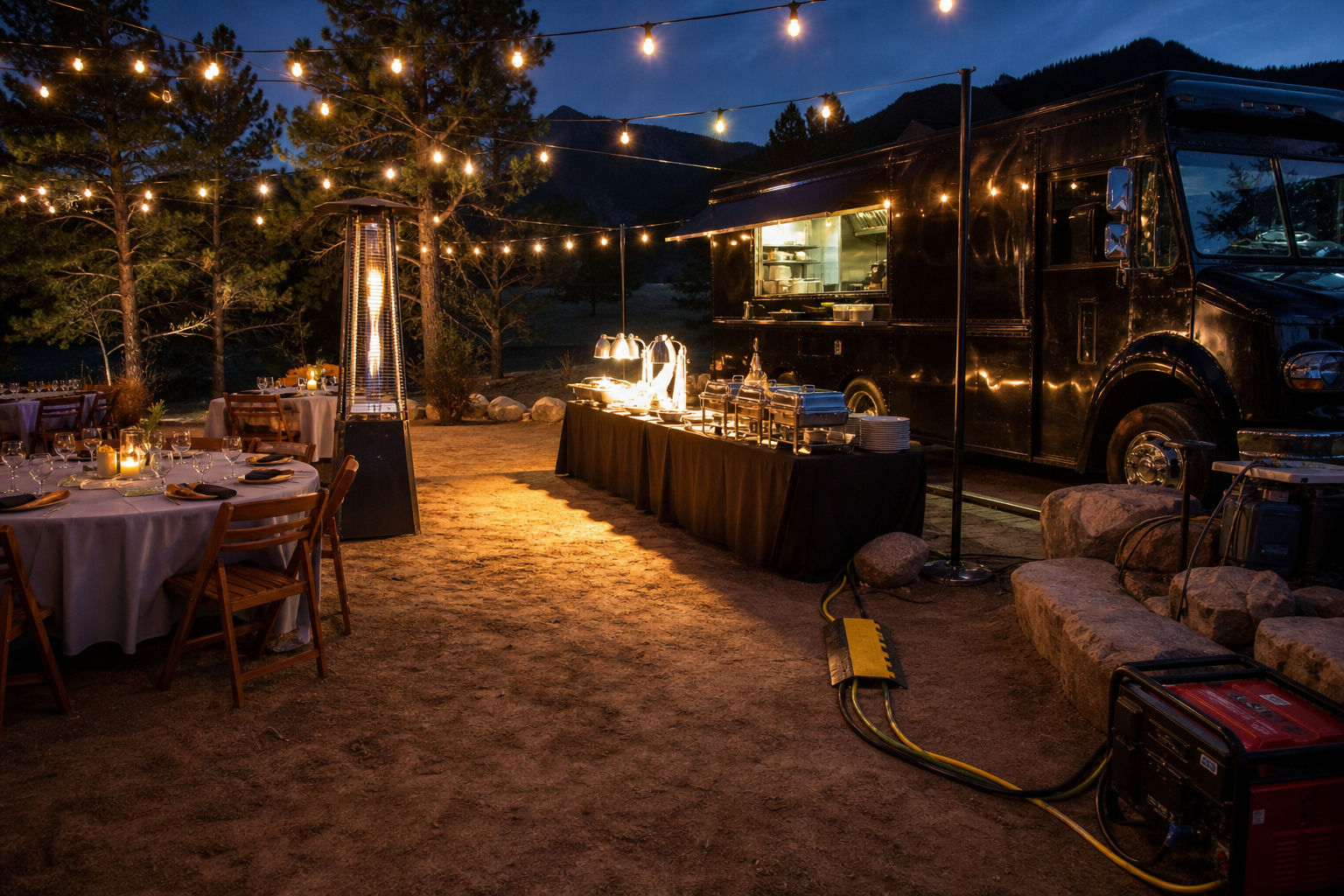
Evening events look effortless when guests arrive to a well-lit space, hot food, and a smooth service timeline. Behind that experience, an event planner is usually making dozens of practical electrical decisions long before setup begins. For weddings, backyard parties, and corporate gatherings across Thornton, Denver, and Westminster, power planning matters even more when mobile catering is involved. A food truck, mobile kitchen, buffet support equipment, beverage stations, DJ gear, and outdoor lighting can all compete for the same electrical capacity if no one has mapped the load in advance.
At The Food Truck Family, event planning for mobile catering starts with the same question every host should ask early: where will the power come from, and how much of it is actually available? That answer affects layout, service speed, guest comfort, and safety after sunset. It also helps avoid the frustrating problems hosts remember most, such as breakers tripping during dinner, dark walkways, overloaded outlets near the house, or delays while vendors troubleshoot on site.
Start With a Real Power Inventory
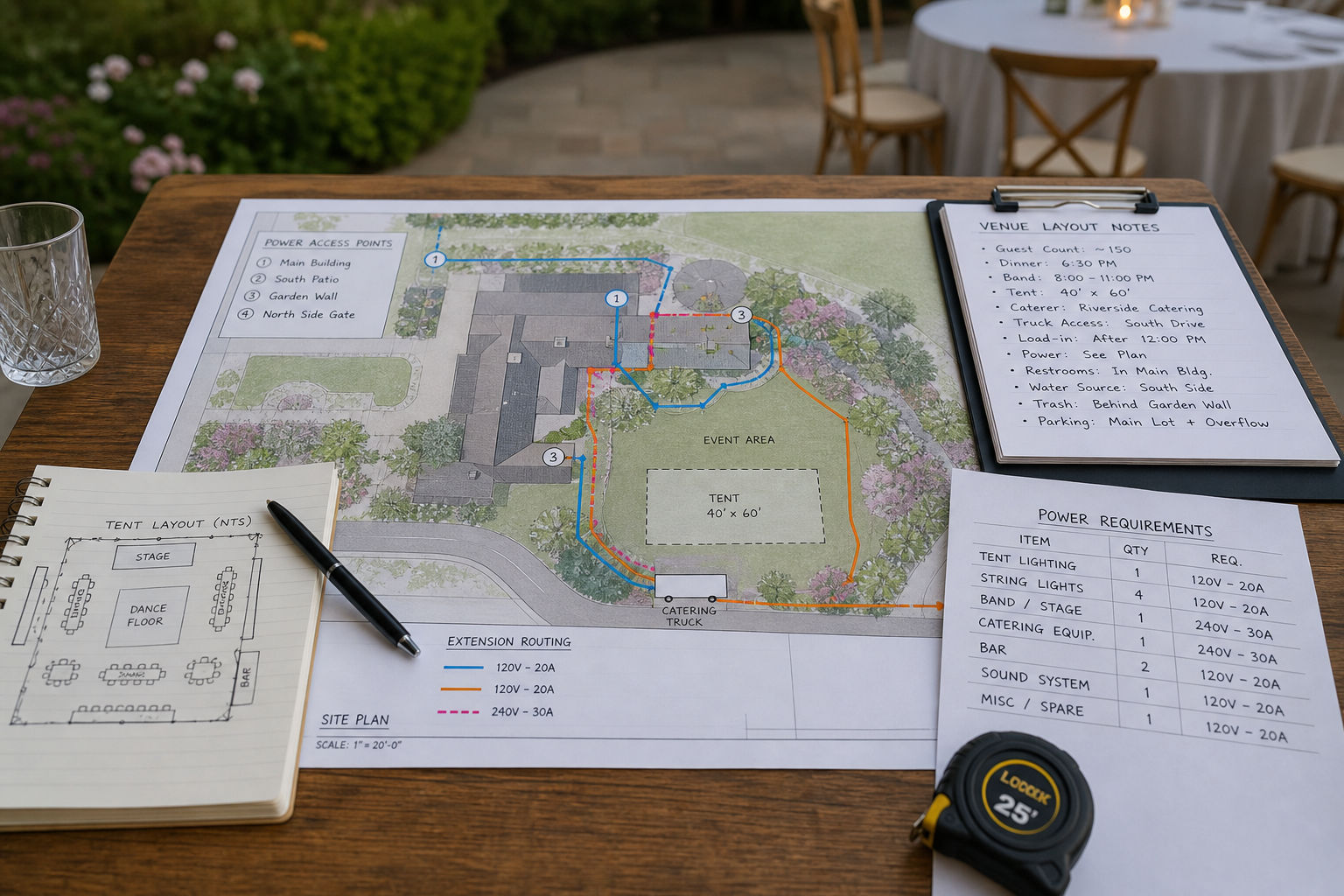
An experienced planner does not assume a venue, backyard, or office lot has enough usable power just because outlets are visible. The first step is an inventory of every item that may draw electricity during setup, service, and breakdown. That often includes food truck equipment, warming cabinets, refrigeration support, coffee service, string lights, catering prep lights, DJ or band equipment, microphones, charging stations, and restroom trailer power if one is being used.
For local events in Aurora, Broomfield, and Northglenn, this inventory is paired with a site walk or a detailed venue conversation. Planners want to know how many dedicated circuits are available, where the panels are located, whether outdoor receptacles are GFCI protected, and whether the property has restrictions on generator placement or extension runs. If you are still comparing locations, it helps to review practical venue questions early, similar to the process described in What an Event Planner Looks for Before Approving a Venue for a Mobile Catered Event.
- Identify every powered item, not just catering equipment
- Confirm outlet locations and dedicated circuit availability
- Separate critical loads from optional decorative elements
- Check whether the event extends past sunset or into cooler hours
When a Generator Is the Better Choice
Generators are not automatically required for every event, but they are often the cleaner solution when the venue power supply is limited, too far from the service area, or already committed to other vendors. In a backyard wedding in Thornton or a private event in Arvada, the house may technically have power available, but using indoor circuits for outdoor catering, entertainment, and lighting at the same time can create reliability issues. A planner weighs the expected load, distance from the source, and the importance of uninterrupted service before deciding whether generator support is the safer route.
Generator planning is not just about total wattage. Placement matters too. The unit should be positioned where exhaust, noise, and refueling concerns will not interfere with guests, dining, or ceremony spaces. Cable runs should be direct and protected, and the generator should support the specific startup loads of the equipment being used. A planner also accounts for contingency: if a key service element depends on power, there should be enough capacity to avoid running at the edge of the system all evening.
Lighting Placement Is About More Than Ambience
Hosts often think about lighting in terms of atmosphere, but planners treat it as both a design and safety system. Guests need to see where they are walking, where to line up for food, where to find drinks, and how to move between parking, seating, restrooms, and exits. For a corporate mixer in Denver or a backyard reception in Brighton, the lighting plan should support the event flow rather than just decorate the perimeter.
Good placement usually starts with the functional zones: catering service area, dining tables, paths of travel, bar or beverage service, and any transition points such as steps or gates. From there, decorative lighting can be layered in without leaving operational blind spots. Food service especially benefits from clear task lighting. Guests can read menu signage, staff can work efficiently, and lines move more smoothly when the ordering and pickup areas are visible. If your event has multiple phases, such as a ceremony followed by photos and dinner, the lighting plan should shift with the schedule just like the service timeline outlined in Planning a Split-Schedule Event: How to Coordinate Ceremony, Photos, and Food Service Without Dead Time.
- Light walkways, steps, gates, and uneven ground first
- Add task lighting for food pickup, bars, and vendor work areas
- Use decorative lighting to support the layout, not replace safety lighting
- Check sightlines after sunset, not only during daytime setup
Safe Extension Runs Protect Guests and Service
Some of the biggest event-day problems come from temporary power runs that were treated as an afterthought. Long extension cords across grass, driveways, or patios can create voltage drop, trip hazards, and unreliable equipment performance. A planner reviews where power needs to travel, what type of cable is appropriate, and how those runs will be secured and protected from foot traffic, carts, and weather exposure.
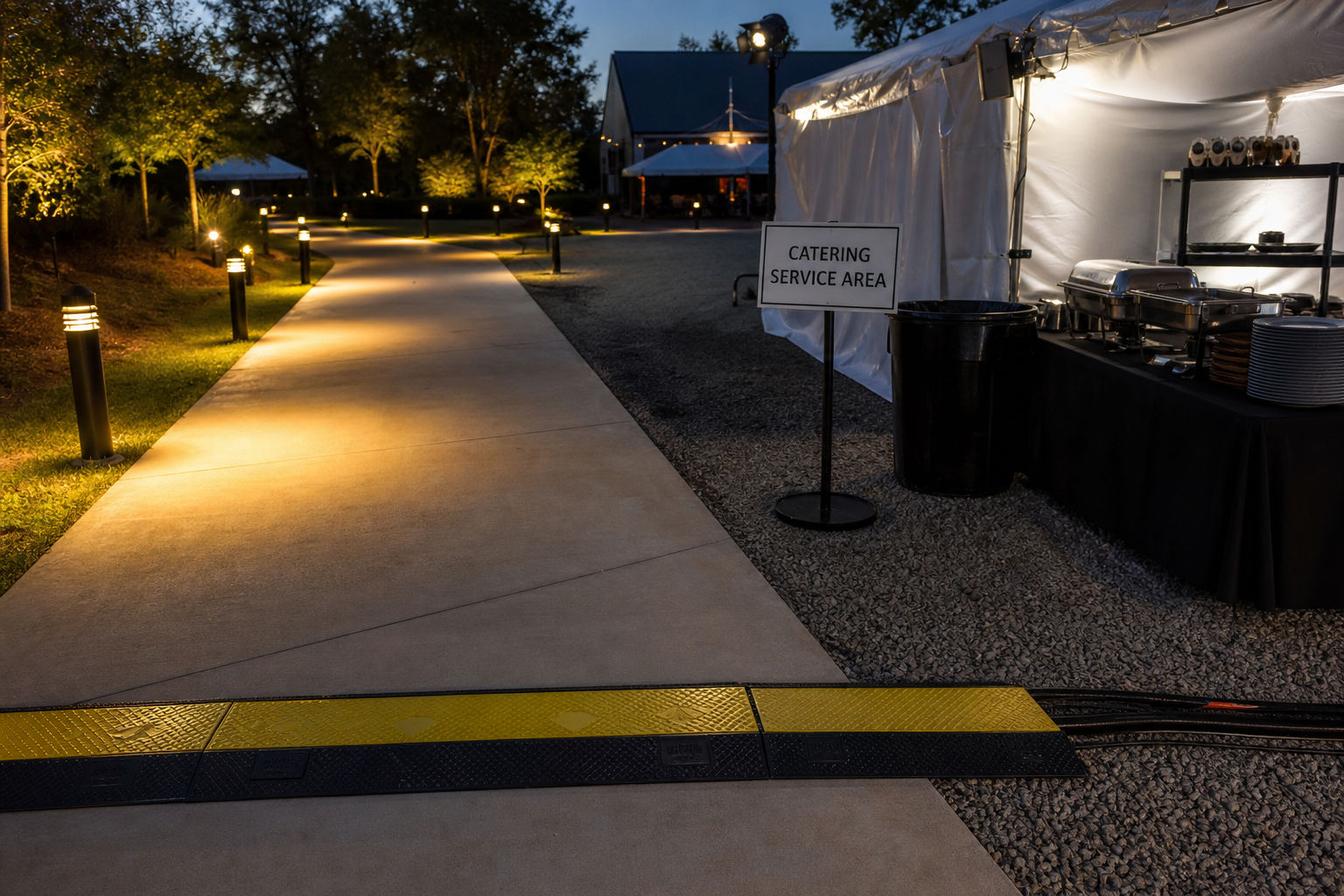
For events in Commerce City, Lakewood, or Littleton, that often means rethinking the layout so the mobile caterer, lighting hub, and entertainment setup are not competing across long distances. Shorter runs are usually safer and more efficient. Where cords must cross a guest path, cord covers or routing changes should be part of the plan. Outdoor-rated equipment, protected connections, and GFCI awareness are especially important when irrigation, damp grass, or evening temperature changes are factors.
Backyard Weddings and Business Events Need Different Power Priorities
Not every event uses power the same way. Backyard weddings often have more temporary infrastructure: tent lighting, portable restrooms, music, catering support, and guest circulation across residential spaces that were never designed for event traffic. Corporate gatherings may have stronger venue access but more AV demands, branded activations, or tighter schedules. In both cases, the planner's job is to prioritize the loads that keep the guest experience stable if adjustments are needed.
For residential events in Thornton and nearby neighborhoods, a detailed checklist is especially useful because household power access, parking, and outdoor layout all affect the final plan. Hosts planning at home may also want to review Event Planning Checklist for Backyard Weddings in Thornton and North Denver to understand how site logistics connect with catering and timing. For business owners planning community events, fundraisers, or school functions, coordinated vendor communication is just as important, as shown in School and Nonprofit Event Planning: How to Coordinate Sponsors, Volunteers, and Food Service Without Confusion.
How Early Planning Prevents Interruptions After Sunset
The best electrical plan is the one guests never notice. When power and lighting are addressed early, the event can move naturally from daylight into evening without service interruptions or uncomfortable dark zones. Catering stays on pace, staff can work safely, entertainment remains consistent, and guests are not left waiting while someone searches for another outlet or resets a breaker.
That is why local hosts in Westminster, Parker, Centennial, and surrounding areas benefit from working with a team that understands both catering operations and event logistics. Mobile food service does not exist in isolation; it depends on access, timing, layout, and reliable support systems. If you want the event to feel easy for your guests, the planning behind the scenes has to be intentional.
The Food Truck Family helps homeowners and business owners think through these details before event day, from site flow and service placement to practical power coordination for evening events. If you are planning a wedding, company gathering, or private party with mobile catering, early electrical planning is one of the simplest ways to protect the experience you are investing in.
Source: electrical safety guidance