Event Planning Checklist for Backyard Weddings in Thornton and North Denver
What You'll Learn
- Build a realistic backyard wedding timeline and site plan
- Avoid common permit, parking, and neighborhood issues
- Plan power, catering access, and guest flow with confidence
- Create a weather backup plan that protects the experience
- See how an event planner reduces stress at home-based weddings
A backyard wedding can feel personal, flexible, and memorable, but it also asks your home to function like a venue for a full day. That means thinking beyond flowers and seating charts to logistics such as permits, restroom capacity, parking, power, waste removal, and how guests will move through the property. For couples in Thornton, Denver, and nearby North Metro communities, a practical checklist is often the difference between a relaxed celebration and a day filled with preventable problems.
When a mobile caterer and event planner like The Food Truck Family supports a home-based wedding, the goal is to make the event feel simple for the couple while handling the details that keep service on time and the property organized. If you are still comparing catering formats, this guide on food truck catering versus drop-off catering is a helpful place to start before you finalize your backyard layout.
Start with the property, not the Pinterest board
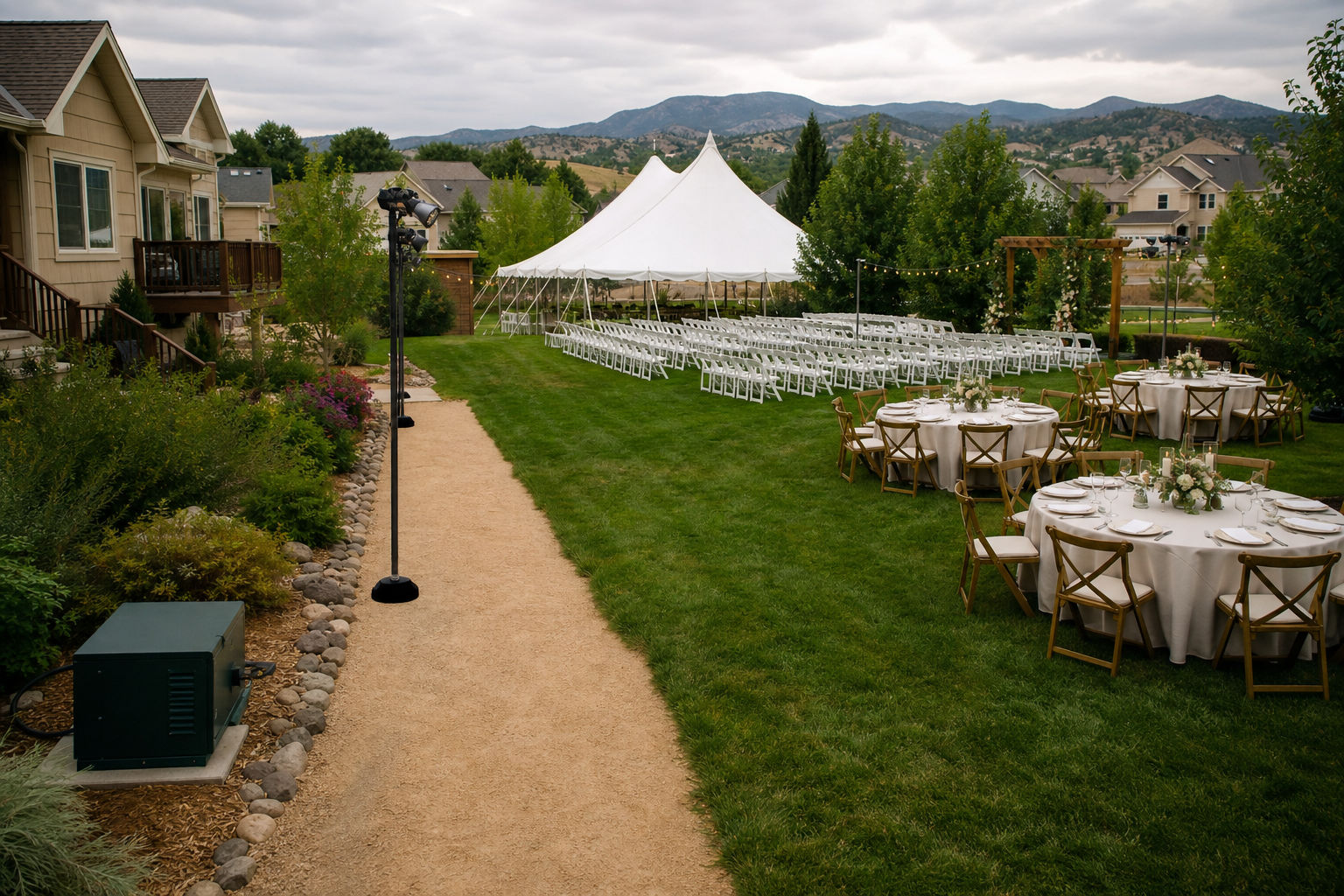
Before you commit to a guest count or rental package, evaluate the site honestly. Measure the yard, side access, driveway, and any hardscape areas. Note slopes, soft ground, sprinkler lines, fences, and overhead tree branches. A backyard that feels spacious on a normal weekend can become tight once you add ceremony seating, dining tables, a bar, prep areas, generators, dumpsters, and service paths for vendors.
An event planner typically maps the property into zones: arrival, ceremony, cocktail hour, dining, catering operations, restrooms, and exits. This prevents one of the most common backyard wedding issues: guests crossing through work areas or clustering in bottlenecks near gates and patios. For homeowners in Westminster, Broomfield, or Northglenn, this step is especially useful when neighborhood lots vary widely in size and access.
- Measure usable space after excluding gardens, sheds, and narrow walkways
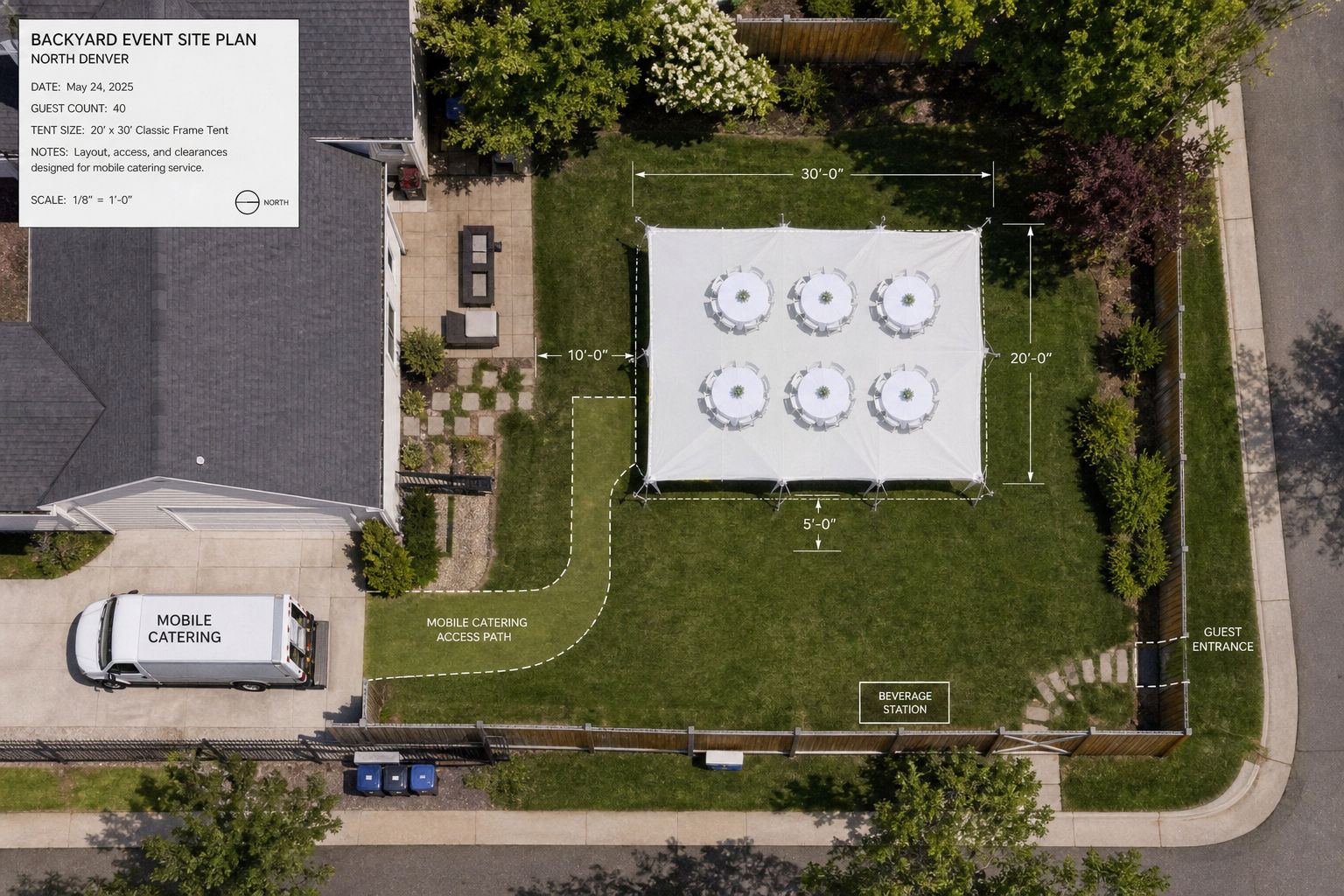
- Identify a level service area for food truck or mobile kitchen setup
- Confirm clear access width for vendors, rentals, and deliveries
- Plan separate guest circulation and vendor work paths
- Check lighting needs for pathways, service, and evening safety
Check permits, parking, and neighborhood rules early
Backyard weddings can trigger local requirements depending on guest count, tent size, street use, amplified sound, alcohol service, and temporary structures. Rules can differ across municipalities, so couples should verify what applies in Thornton, Denver, Aurora, or any surrounding city well before invitations go out. A planner helps identify what to ask, what deadlines matter, and which vendors may need to provide certificates of insurance or equipment details.
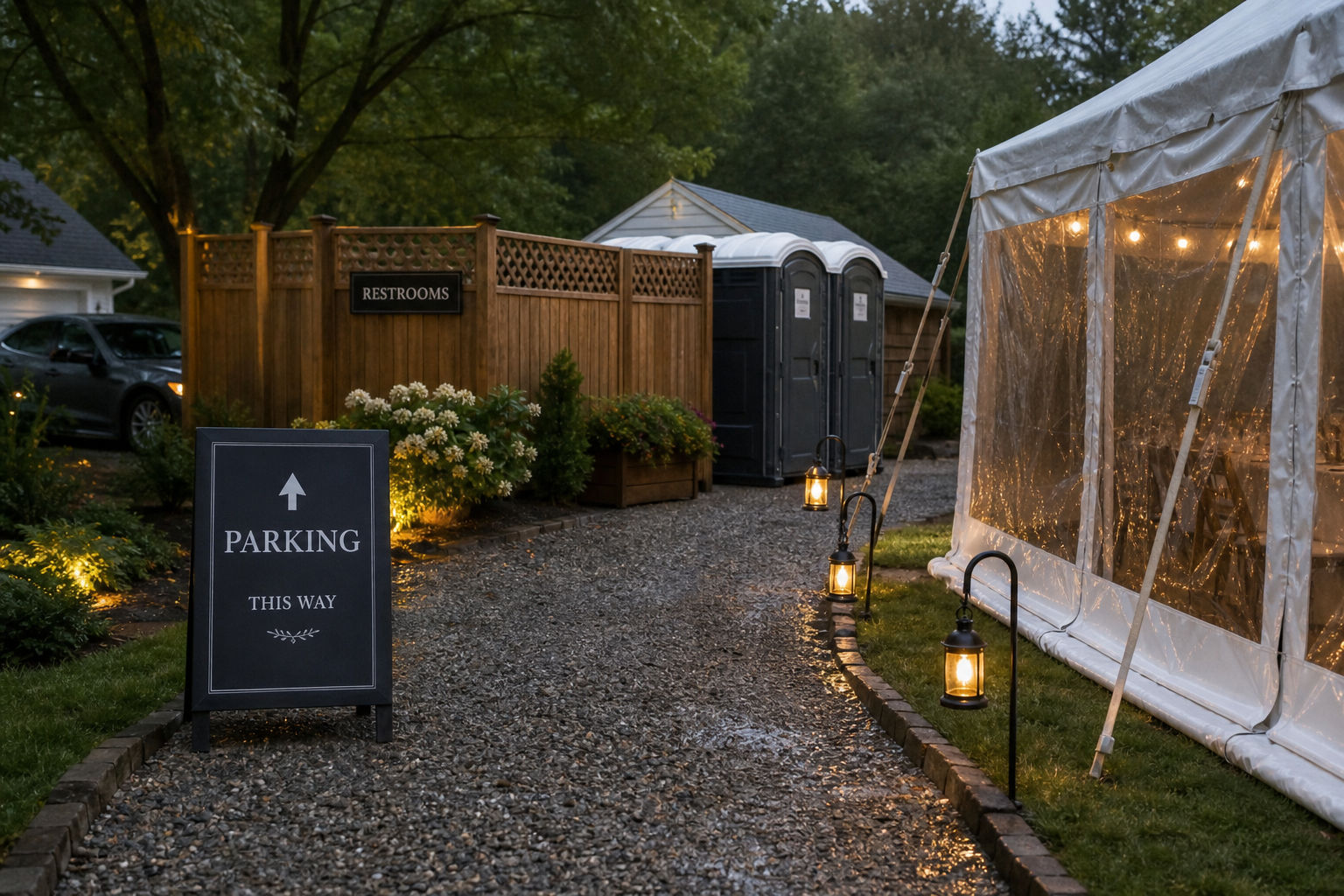
Parking is another issue that gets underestimated. If guests line both sides of a residential street, block driveways, or crowd cul-de-sacs, the celebration can create tension with neighbors before the ceremony even starts. A realistic plan may include off-site parking, a shuttle loop, rideshare instructions, attendants, or staggered arrival times. This is one reason many homeowners find value in professional coordination: a planner sees the neighborhood as part of the event footprint, not just the backyard itself.
Plan mobile kitchen access, power, and utilities
Food service logistics should be settled long before the wedding week. If you are booking a food truck or mobile caterer, confirm where the unit will park, whether the surface is level and stable, and how it will enter and exit without damaging landscaping. If a truck cannot access the property directly, your planner may recommend an alternate service setup or a nearby staging location. The best option depends on the home, the menu, and the guest count.
Power is equally important. Tents, string lights, DJs, mobile bars, warming equipment, and outdoor restrooms can all compete for limited household circuits. An event planner or experienced caterer will review electrical needs in advance and determine whether dedicated circuits or a generator are the safer choice. For a broader look at what makes service feel seamless, see how food truck catering can feel effortless at local events and how to choose food truck catering that actually fits your event.
- Confirm vehicle access, turning space, and parking surface
- Review total power draw for catering, lighting, music, and rentals
- Decide whether household power is sufficient or a generator is needed
- Plan water access, handwashing, and waste disposal
- Protect lawns and pavers in high-traffic work areas
Design guest flow so the event feels easy
Good guest flow is what makes a backyard wedding feel polished instead of crowded. Guests should understand where to arrive, where to sit, where to order or pick up food, and where to go next without constant verbal direction. Signage can help, but layout matters more. Ceremony chairs should not block the path to restrooms. Bar lines should not cut through dining tables. Catering pickup or service windows should not empty directly into a narrow gate or patio choke point.
For events in communities like Arvada, Commerce City, and Lakewood, where homes may have split-level yards or tighter side access, the right layout can dramatically reduce stress for both guests and vendors. A planner also sequences transitions, such as moving from ceremony to cocktail hour while catering completes final setup. If you want more ideas for smoother event logistics, this local event planning article and this overview for homeowners and business owners offer useful context.
Build a weather backup plan you can actually use
Every backyard wedding needs a rain and wind plan, even during seasons that usually look favorable. A true backup plan is more than "we will move things under the patio." It should answer where the ceremony goes, how dining stays comfortable, how food service continues, how electrical equipment stays protected, and what changes are triggered by the forecast. Tents, flooring, sidewalls, indoor reset options, and revised vendor timelines all need to be considered ahead of time.
Temperature matters too. Heat can affect food safety, guest comfort, and floral performance, while cold evenings can shorten the event if you do not plan for heaters or enclosed areas. A planner coordinates these adjustments with the caterer, rental company, and entertainment team so you are not making last-minute decisions under pressure.
Do not overlook restrooms, trash, and end-of-night cleanup
Homeowners often focus on setup and forget that guest comfort depends on the less glamorous details. Restrooms should match guest count and event duration, and in many cases supplemental restroom rentals are the practical solution. Trash, recycling, bussing, and grease or food waste handling should also be assigned clearly. Without a plan, bags pile up in visible areas, bins overflow, and cleanup stretches late into the night.
This is where event management adds real value. Instead of leaving family members to direct vendors, answer questions, move chairs, and solve problems, a planner keeps the timeline moving and the property functioning as intended. The result is not just efficiency. It is a better guest experience and a much calmer wedding day for the couple.
What an event planner handles for a backyard wedding
- Site walk-throughs and layout planning
- Vendor coordination and arrival scheduling
- Permit and neighborhood logistics review
- Catering access, service flow, and utility planning
- Weather contingencies and timeline adjustments
- Setup oversight, event-day troubleshooting, and cleanup coordination
Backyard weddings can be beautiful and highly personal, but they work best when the logistics are treated with the same care as the design. Whether you are hosting in Thornton, Denver, or nearby North Denver communities, a realistic checklist helps you protect your budget, your timeline, and your peace of mind. The Food Truck Family supports couples with mobile catering, event planning, and event management that keeps home-based celebrations organized from the first walkthrough to the final pickup.
Source: local permits