What an Event Planner Looks for Before Approving a Venue for a Mobile Catered Event
What You'll Learn
- Understand the venue checks that prevent day-of service problems
- Learn how access, layout, and utilities affect mobile catering
- See why guest flow and serving zones shape the guest experience
- Know what contingency plans matter most for outdoor events
- Find out when early site planning saves time and budget
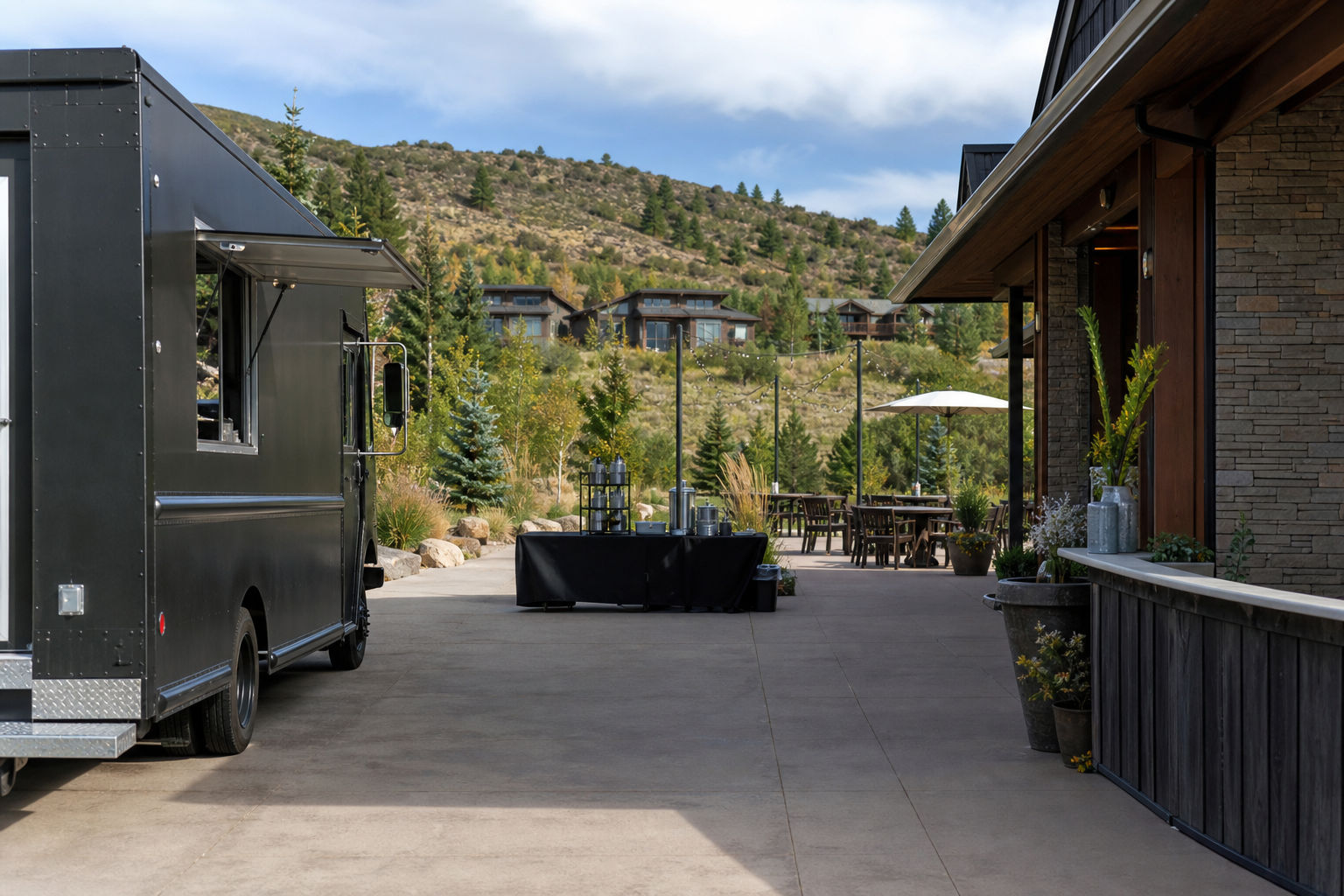
Choosing a venue for a mobile catered event is not just about picking a beautiful address. An experienced event planner looks at how the site will actually function once guests arrive, vendors unload, food service begins, and the schedule starts moving. For homeowners and business owners in Thornton, Denver, and Aurora, that evaluation process is often the difference between an event that feels calm and organized and one that runs into avoidable delays.
At The Food Truck Family, venue approval starts with practical questions. Can the truck enter safely? Is there enough room to serve without blocking guests? Are restrooms close enough? What happens if weather changes, the timeline slips, or a neighborhood has sound restrictions? Professional planning answers those questions early so the event day feels simple. If you are comparing service formats, our post How to Decide if Food Truck Catering or Drop-Off Catering Fits Your Event Best is a helpful starting point.
Why venue approval matters for mobile catering
A venue can look ideal online and still create serious operational issues for a mobile caterer. Narrow driveways, soft ground, poor traffic flow, limited parking, or distant utility access can all disrupt service. Event planners review the site through the lens of execution, not just appearance. That means understanding how the event will work minute by minute, from arrival and setup through meal service and cleanup.
For private parties, weddings, school functions, and company events, this process protects both the host and the guest experience. It also helps keep communication clear between the venue, the caterer, and any planners or coordinators involved. In places like Westminster, Broomfield, and Northglenn, local venue rules and neighborhood logistics can vary widely, which is why a real site review matters.
The first check: site access for the truck and support vehicles
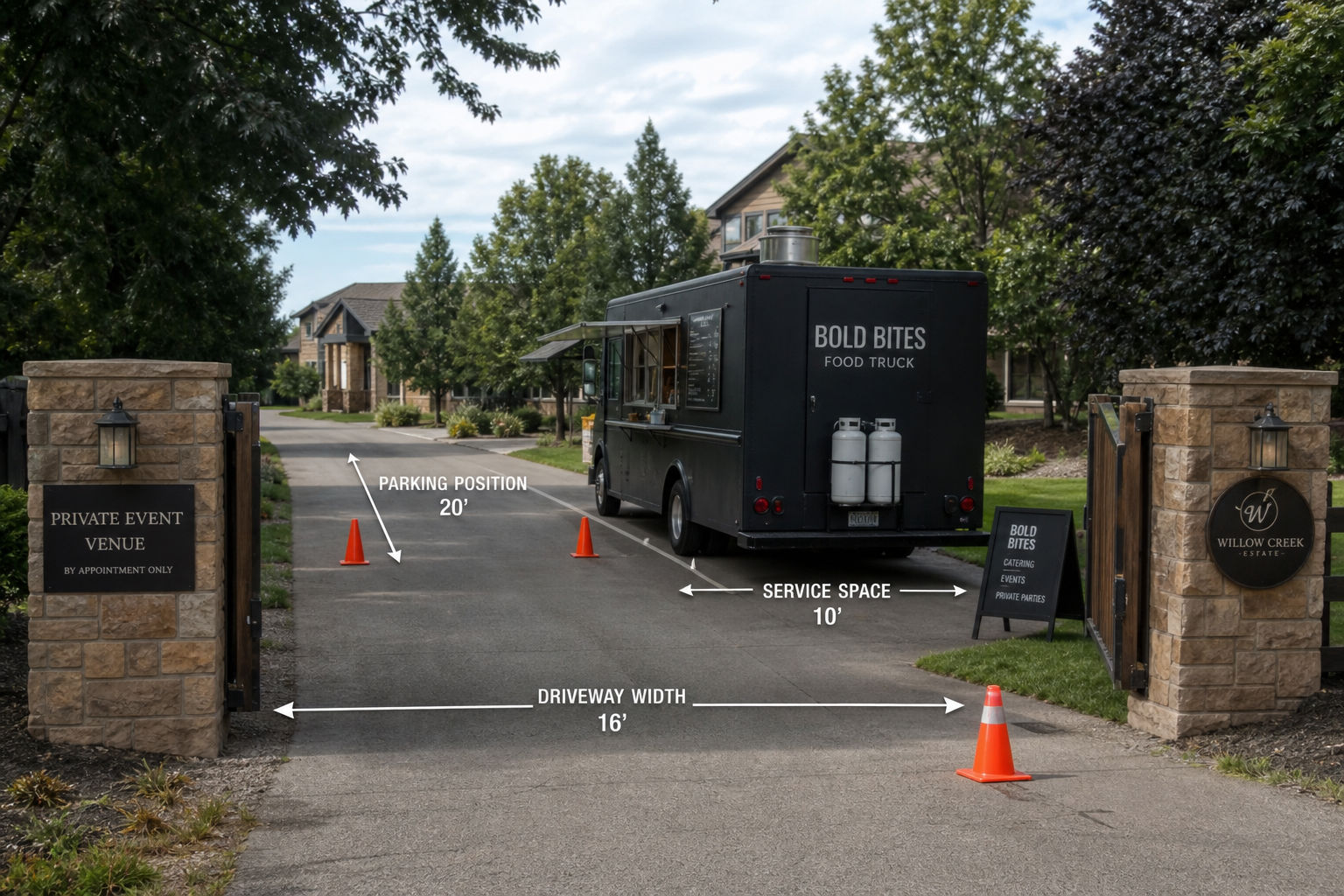
Before approving a venue, planners confirm that the food truck can physically reach and operate at the site. This includes checking gate widths, turning radius, slope, overhead clearance, pavement condition, and whether the truck can park on a stable, level surface. Access is one of the most common hidden problems at homes, office campuses, and event spaces.
- Entry and exit paths for the truck
- Loading and unloading space for supplies
- Parking rules and time restrictions
- Whether guest parking conflicts with service access
- Any permits or property approvals required
For example, a corporate event in Commerce City may have a large lot but limited loading windows, while a backyard celebration in Arvada may have easy guest access but no realistic truck placement. Reviewing those details in advance keeps service from starting late or requiring last-minute changes.
Layout and guest count drive the service plan
Guest count is not just a headcount; it shapes the entire event layout. A planner wants to know where guests will gather, how they will approach the truck or serving station, where lines can form without congestion, and how seating, bars, entertainment, or presentations affect traffic flow. A venue that works for 40 guests may not work well for 140 if the layout forces everyone into one narrow area.
Serving zones should feel natural and easy to find. Guests should not have to cross active vehicle paths, walk too far from the main event area, or queue in direct sun without shade. At weddings and private events in Littleton, Lakewood, or Centennial, planners often map the guest journey from ceremony or cocktail hour to meal service so transitions feel smooth rather than rushed.
What planners review in the layout
- Distance between the truck and the main guest area
- Line management space for peak service times
- Locations for tables, trash, beverages, and condiments
- Accessibility for guests with mobility needs
- Separation between dining, entertainment, and vendor work zones
This is one reason many hosts appreciate working with a team that plans both food service and event logistics. Our article How to Plan a Smoother Local Event With Food Truck Catering explains how early coordination reduces bottlenecks before they happen.
Restrooms, utilities, and venue rules cannot be afterthoughts
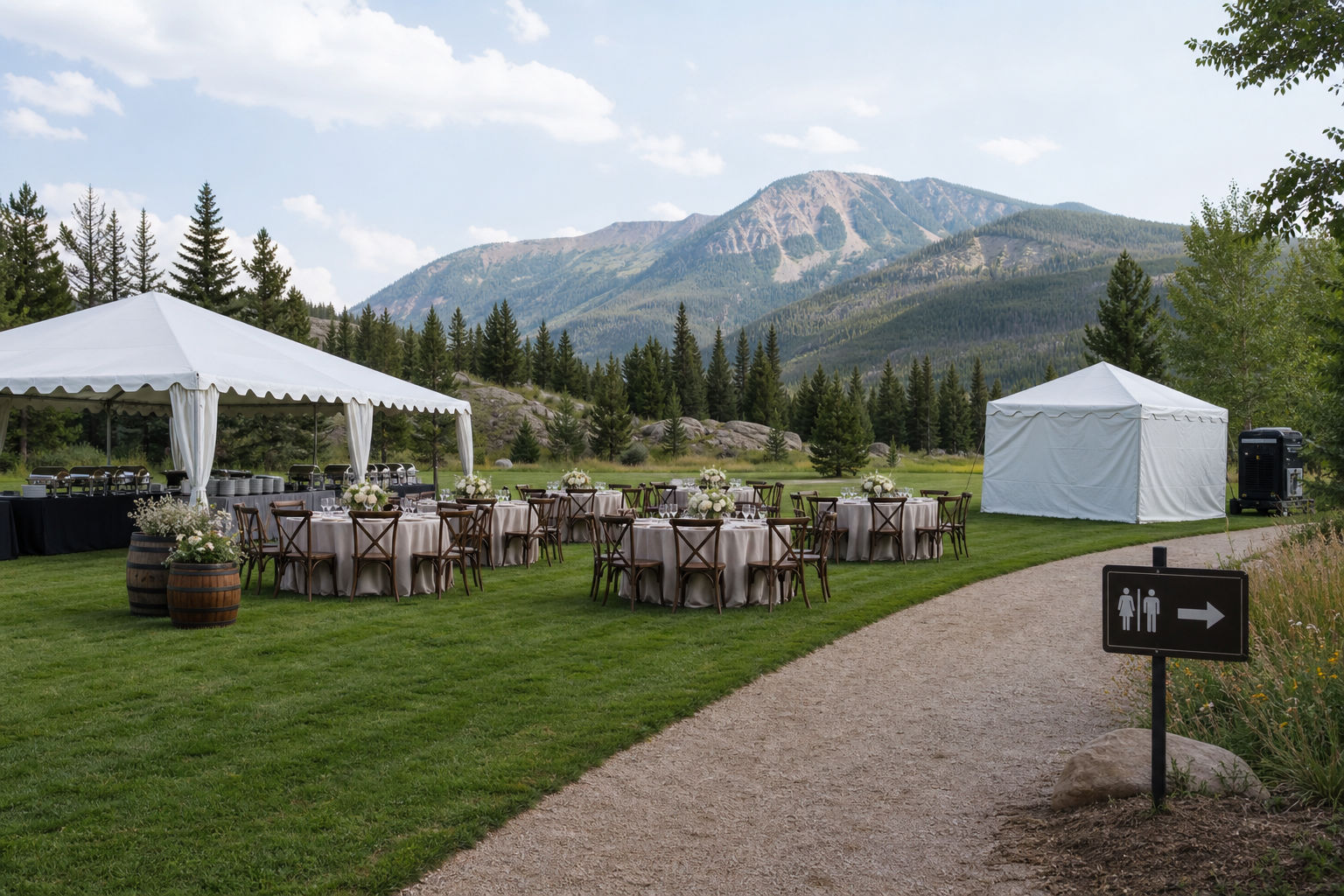
Even when a food truck can operate independently, planners still review the broader guest support needs at the venue. Restroom access matters more than many hosts expect, especially for longer events, family gatherings, weddings, and business functions. If restrooms are too far away, too few, or difficult to access, guest comfort drops quickly.
Venue rules also matter. Some sites have generator limitations, strict service windows, alcohol boundaries, cleanup requirements, or noise limits that affect music and announcements. In residential areas like Parker, Lone Tree, or Wheat Ridge, neighborhood quiet hours may influence how long amplified sound can continue. A planner confirms these restrictions early so the event timeline and vendor plans stay realistic.
For school and nonprofit functions, the approval process often includes even more coordination around access points, volunteer flow, and sponsor visibility. If that applies to your event, see School and Nonprofit Event Planning: How to Coordinate Sponsors, Volunteers, and Food Service Without Confusion.
Weather, timing, and backup plans are part of venue approval
A professional planner does not approve a venue based only on best-case conditions. They evaluate what happens if weather shifts, guest arrival runs late, or a ceremony goes long. Outdoor events in Colorado often need flexible planning for wind, heat, rain, or sudden temperature changes. Contingency planning may include alternate parking positions, tented waiting areas, indoor fallback options, adjusted service timing, or a revised guest flow plan.
For backyard weddings and private celebrations, this is especially important because residential properties are rarely designed like event venues. Driveway slope, lawn condition, power access, and neighborhood rules all need review. Our post Event Planning Checklist for Backyard Weddings in Thornton and North Denver covers many of the details that hosts often miss during early planning.
How professional planning prevents avoidable day-of problems
The goal of venue evaluation is not to make planning feel complicated. It is to remove surprises. When an event planner checks access, layout, guest count, serving zones, restrooms, rules, and backup options in advance, the event has a stronger foundation. Vendors know where to go, guests know where to gather, and the host is not forced into last-minute decisions.
That is why mobile catering works best when it is paired with thoughtful event planning. A well-reviewed venue allows the food truck experience to feel polished, fast, and welcoming rather than improvised. If you want to understand how that looks in practice, How to Make Food Truck Catering Feel Effortless at Local Events explores the operational side of creating a seamless guest experience.
Planning your event in Thornton or the greater Denver area
Whether you are hosting a wedding in Castle Rock, a neighborhood party in Brighton, or a company event in Englewood, venue approval should be treated as a strategic step, not a formality. The Food Truck Family helps clients across Thornton, Denver, Aurora, Westminster, Broomfield, Arvada, Commerce City, Lakewood, Littleton, and surrounding communities evaluate event sites with service in mind.
If you are early in the planning process, start by thinking beyond the venue brochure or online photos. Consider how guests will move, where service will happen, what restrictions apply, and what your backup plan will be if conditions change. That level of preparation is what turns a good location into an approved event venue for mobile catering.
Source: event planning safety guidance