School and Nonprofit Event Planning: How to Coordinate Sponsors, Volunteers, and Food Service Without Confusion
What You'll Learn
- Build a clear event chain of command before planning begins
- Align sponsors, volunteers, and vendors with one master timeline
- Prevent food service bottlenecks with smarter arrival planning
- Create on-site roles that reduce confusion during public events
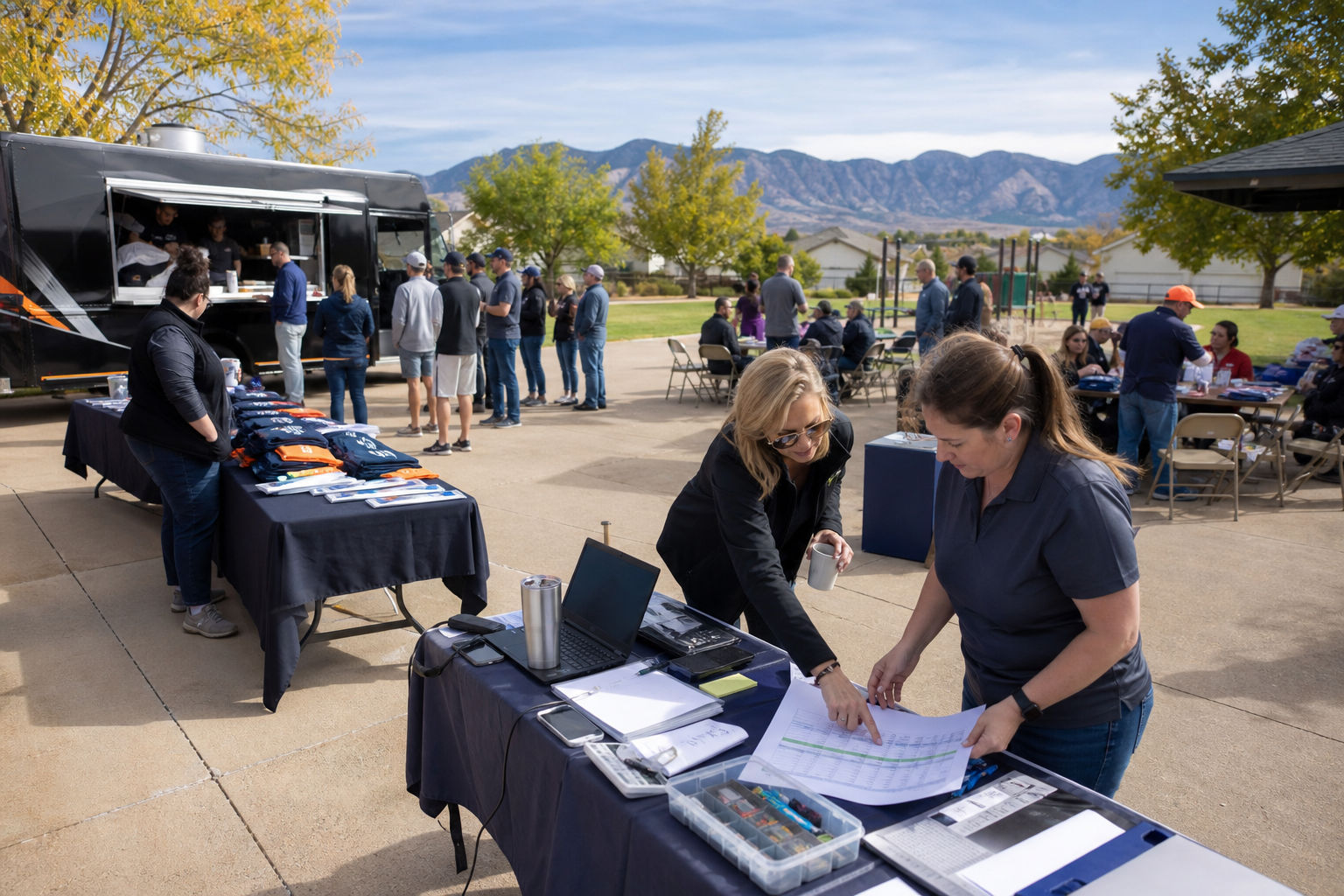
School fundraisers, booster club events, nonprofit galas, community festivals, and campus celebrations often look simple from the outside. In reality, they usually involve multiple decision-makers, limited setup windows, changing attendance counts, sponsor expectations, volunteer turnover, and food service logistics that all have to work together in real time. That is where a structured event planning system matters. For organizations in Thornton, Denver, and Aurora, the difference between a smooth public-facing event and a stressful one usually comes down to communication, timeline control, and clearly assigned on-site responsibilities.
As a mobile caterer and event planning partner, The Food Truck Family helps organizers create order before guests arrive. That means mapping who approves what, when vendors load in, where service happens, how volunteers support guest flow, and what backup plans exist if something changes. If you are still deciding what format best fits your event, it can help to compare service styles in How to Decide if Food Truck Catering or Drop-Off Catering Fits Your Event Best before building the rest of the schedule.
Start With One Decision-Making Structure
One of the biggest reasons school and nonprofit events become confusing is that too many people are making partial decisions without a shared process. A principal may approve the date, a PTO board may select food, a facilities contact may control access, and a volunteer chair may manage staffing. None of those roles are wrong, but they need a single communication structure. The best approach is to name one lead organizer, one backup contact, and one person responsible for day-of logistics.
That structure gives vendors, sponsors, and volunteers a clear path for questions. It also reduces last-minute contradictions, such as changing service times without notifying the caterer or moving sponsor tables into a food truck queue area. For large events in Westminster, Broomfield, or Northglenn, centralized communication becomes even more important because site access, parking, and public traffic are harder to manage once guests begin arriving.
- Assign one primary contact for approvals and one backup
- Document who controls budget, site access, and vendor communication
- Share one master event sheet with all stakeholders
- Set a deadline for final attendance and service updates
Build One Master Timeline Instead of Separate Plans
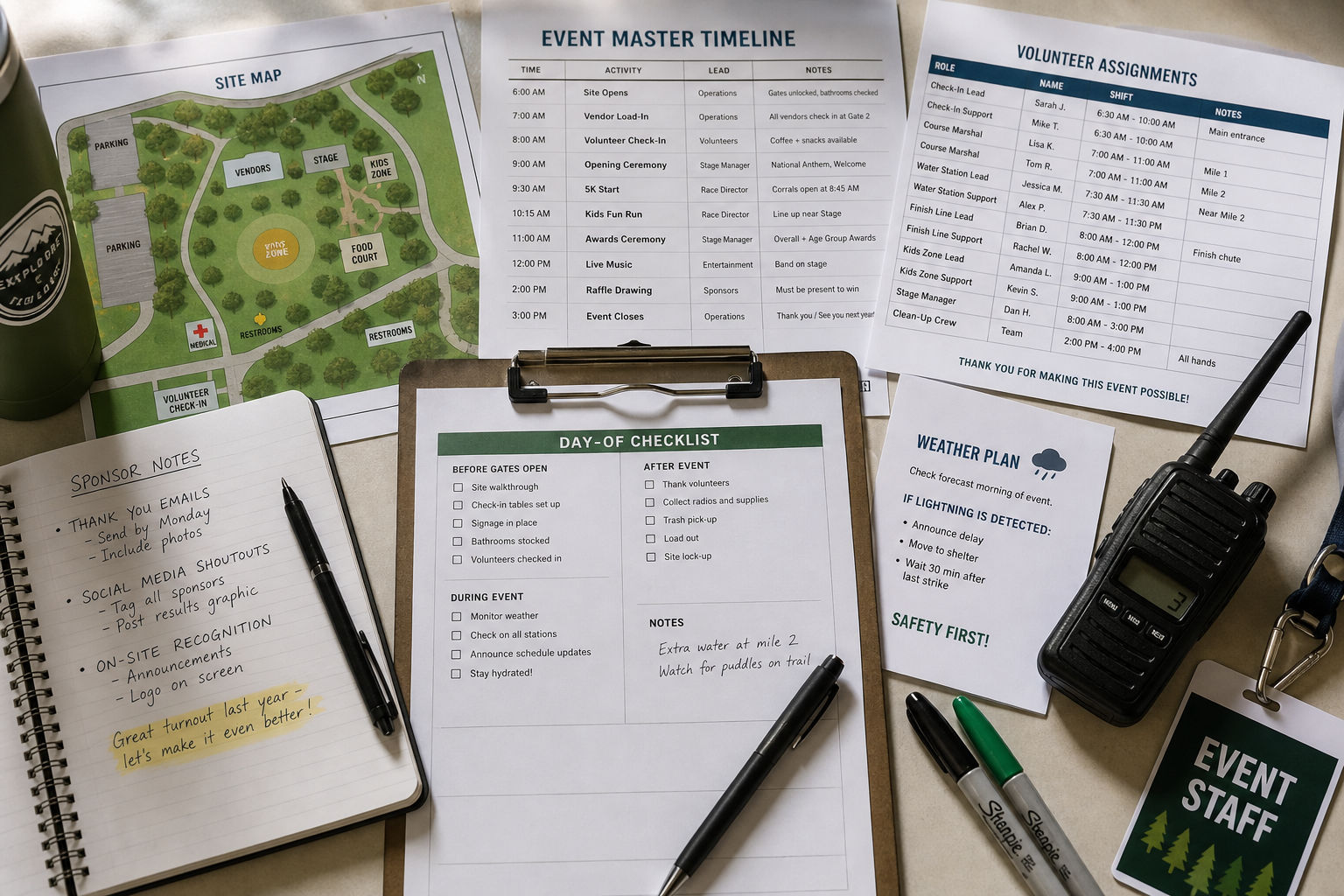
Many event teams make the mistake of creating separate timelines for sponsors, volunteers, food service, entertainment, and setup crews. The result is overlap, delays, and confusion. A stronger system is a single master timeline that includes every major milestone from load-in to cleanup. This should cover sponsor arrival, volunteer check-in, table setup, power access, food truck positioning, service opening, announcements, peak meal periods, and breakdown.
For example, if a fundraiser in Arvada starts at 5:30 p.m., the food vendor should not be learning at 5:10 that sponsor booths now occupy the original service lane. Likewise, volunteers should not be asked to direct traffic if they have never been told where the queue begins. A complete timeline helps everyone see how one moving part affects another. If your event includes mobile catering, the planning principles in How to Plan a Smoother Local Event With Food Truck Catering are especially useful for timing service windows and guest flow.
Coordinate Sponsors Without Letting Them Disrupt Guest Flow
Sponsors are important to school and nonprofit events, but their presence has to fit the event layout. Sponsor tables, branded activations, prize displays, and speaking moments should be planned around guest movement, not added at the last minute. When sponsor placement is handled strategically, organizations can protect visibility for sponsors while also keeping entrances, check-in stations, and food service areas open and efficient.
An event planner typically maps sponsor locations against the practical needs of the site: electrical access, walking paths, ADA considerations, emergency access, and meal lines. That matters whether the event is held at a school in Commerce City, a church campus in Lakewood, or a nonprofit venue in Littleton. Sponsors should know their arrival window, unloading instructions, setup boundaries, and breakdown time in advance. That keeps them engaged without creating friction for volunteers or vendors.
Give Volunteers Specific Roles, Not General Instructions
Volunteers are often the reason a community event succeeds, but even the most willing team needs structure. Telling volunteers to "help where needed" usually leads to duplicated effort in one area and neglect in another. A better system is role-based assignment. Each volunteer should know where to report, who supervises them, what time they begin, what supplies they need, and what problem they are expected to solve.
Useful volunteer roles may include parking support, guest welcome, check-in table coverage, sponsor support, food line direction, beverage restocking, trash monitoring, runner support, and cleanup lead. For larger public events in Brighton, Englewood, or Centennial, a short pre-event briefing can prevent a long list of avoidable issues. When everyone understands their job, the event feels more polished to guests and less stressful to organizers.
- Create role sheets with start time, location, and supervisor
- Train volunteers on guest questions they are likely to hear
- Identify who handles vendor requests and who does not
- Schedule relief coverage for meal and rest breaks
Plan Food Service Around Real Attendance Patterns
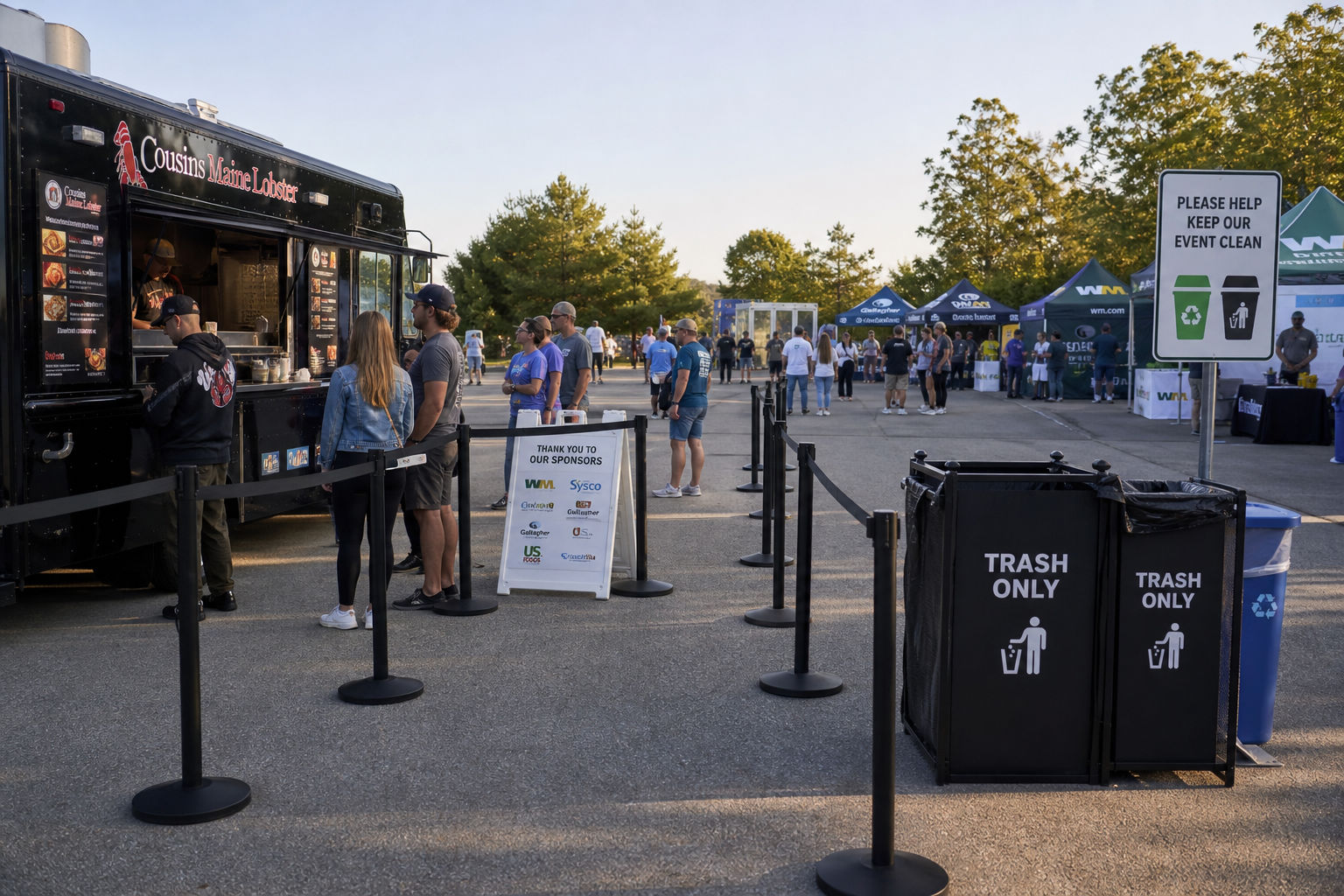
Food service works best when it is integrated into the event plan, not treated as a separate vendor issue. Schools and nonprofits often have concentrated service periods because guests arrive in waves after pickup, performances, speeches, or games. That means the catering plan should reflect when people actually eat, not just the official event hours. A food truck or mobile caterer needs a service location, arrival path, queue area, and realistic estimate of guest demand during each window.
For many organizers, this is where professional support creates the most value. Managing meal volume, staging, and service timing can dramatically improve the guest experience while protecting the event schedule. If you want a better sense of how mobile catering can simplify the guest side of operations, see How to Make Food Truck Catering Feel Effortless at Local Events and How to Choose Food Truck Catering That Actually Fits Your Event. Those same principles apply to school carnivals, nonprofit donor events, and neighborhood festivals across Parker, Lone Tree, and Castle Rock.
Use On-Site Communication Tools That Work in Real Time
Even the best event plan needs day-of communication tools. Printed run-of-show sheets, simple site maps, text groups for leads, and designated check-in points help teams make fast decisions without creating panic. The goal is not to overcomplicate the event with layers of management. The goal is to make sure the right people can solve problems quickly when weather shifts, attendance spikes, or setup takes longer than expected.
A strong event planner also builds contingency steps in advance. If a volunteer is late, who fills in? If a sponsor arrives early, where do they wait? If food service needs a few extra minutes to open, how will guests be directed? These are small details, but they shape the public experience. For events in Sheridan, Wheat Ridge, Dacono, or Milton, organized communication can be the difference between a flexible adjustment and visible confusion.
Why Professional Event Coordination Helps Schools and Nonprofits
When internal teams are already balancing fundraising goals, board communication, donor relations, family attendance, and facility rules, outside event support can remove pressure from the people who care most about the mission. A professional event planner helps align the timeline, vendor coordination, layout, service windows, and on-site roles so organizers can focus on guests, sponsors, and outcomes instead of chasing details.
The Food Truck Family supports events throughout Thornton, Denver, Aurora, and surrounding communities with mobile catering, event planning insight, and practical logistics for public-facing gatherings. Whether you are organizing a school appreciation event, a nonprofit fundraiser, or a community celebration, the right planning system makes the event feel calmer, more welcoming, and easier to manage from start to finish.
Source: event planning checklist