Rain, Wind, and Heat: Event Planning Strategies for Outdoor Celebrations in Colorado
What You'll Learn
- Build backup layouts that protect service flow and guest comfort
- Plan tents, power, and vendor placement before weather changes
- Adjust timing and menus for wind, rain, and summer heat
- Reduce day-of stress with clear contingency planning
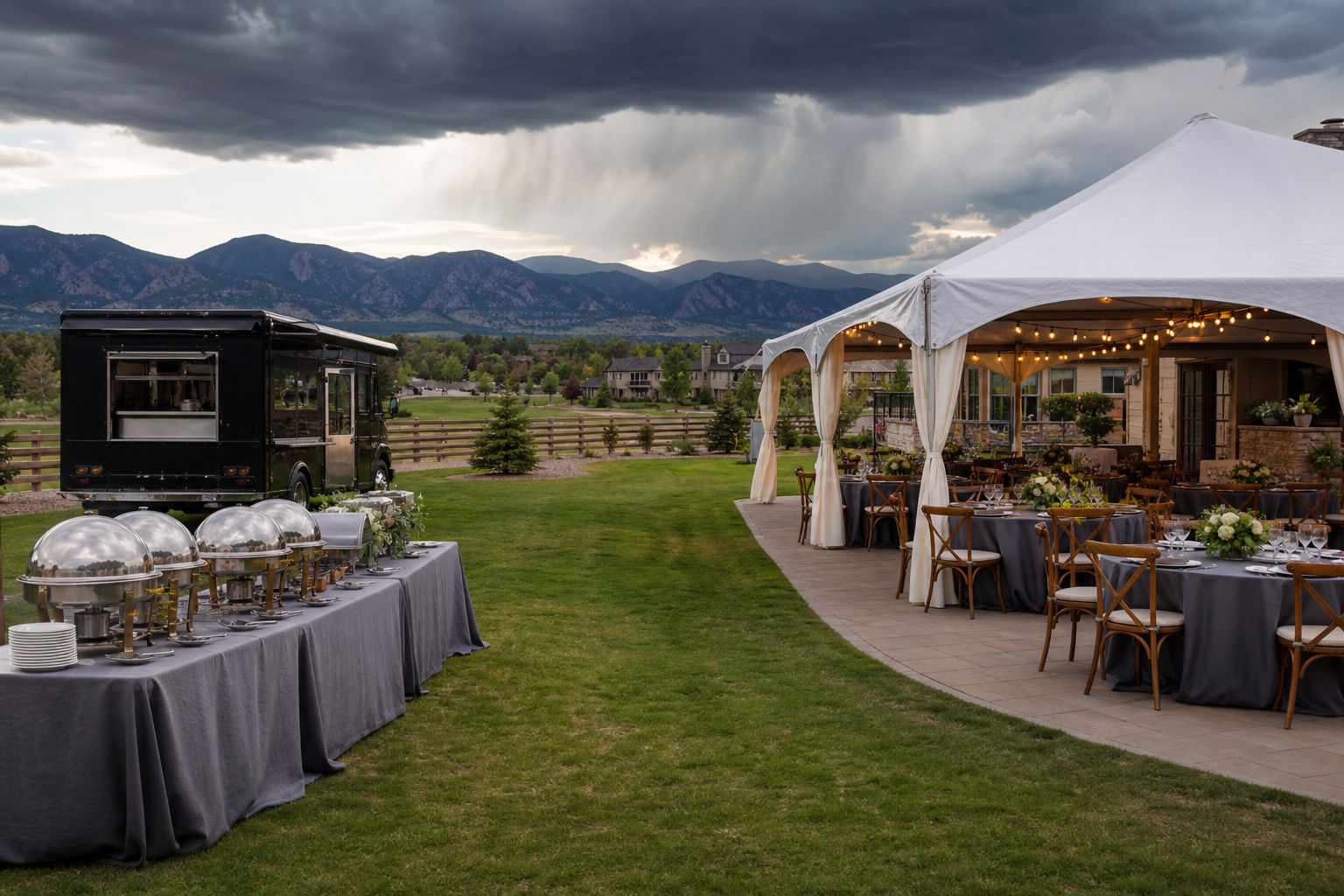
Outdoor events in Colorado can be beautiful, but they also demand realistic planning. A sunny afternoon in Thornton can turn windy by cocktail hour, a warm evening in Denver can cool down fast after sunset, and a private party in Westminster may need shade long before guests arrive. For weddings, company gatherings, and backyard celebrations, weather planning is not an extra detail. It is part of the event design. An experienced planner looks at the site, service style, guest count, and season together so the event can stay comfortable, efficient, and welcoming even if conditions shift.
For a mobile caterer like The Food Truck Family, weather planning also affects how food is prepared, served, and protected. Wind can disrupt buffet setups, heat can change holding strategies, and rain can alter traffic flow between the truck, bar, seating, and restrooms. That is why strong event planning starts with layout decisions, backup options, and guest comfort measures that support the entire experience rather than just reacting when the forecast changes.
Start with the site, not the forecast
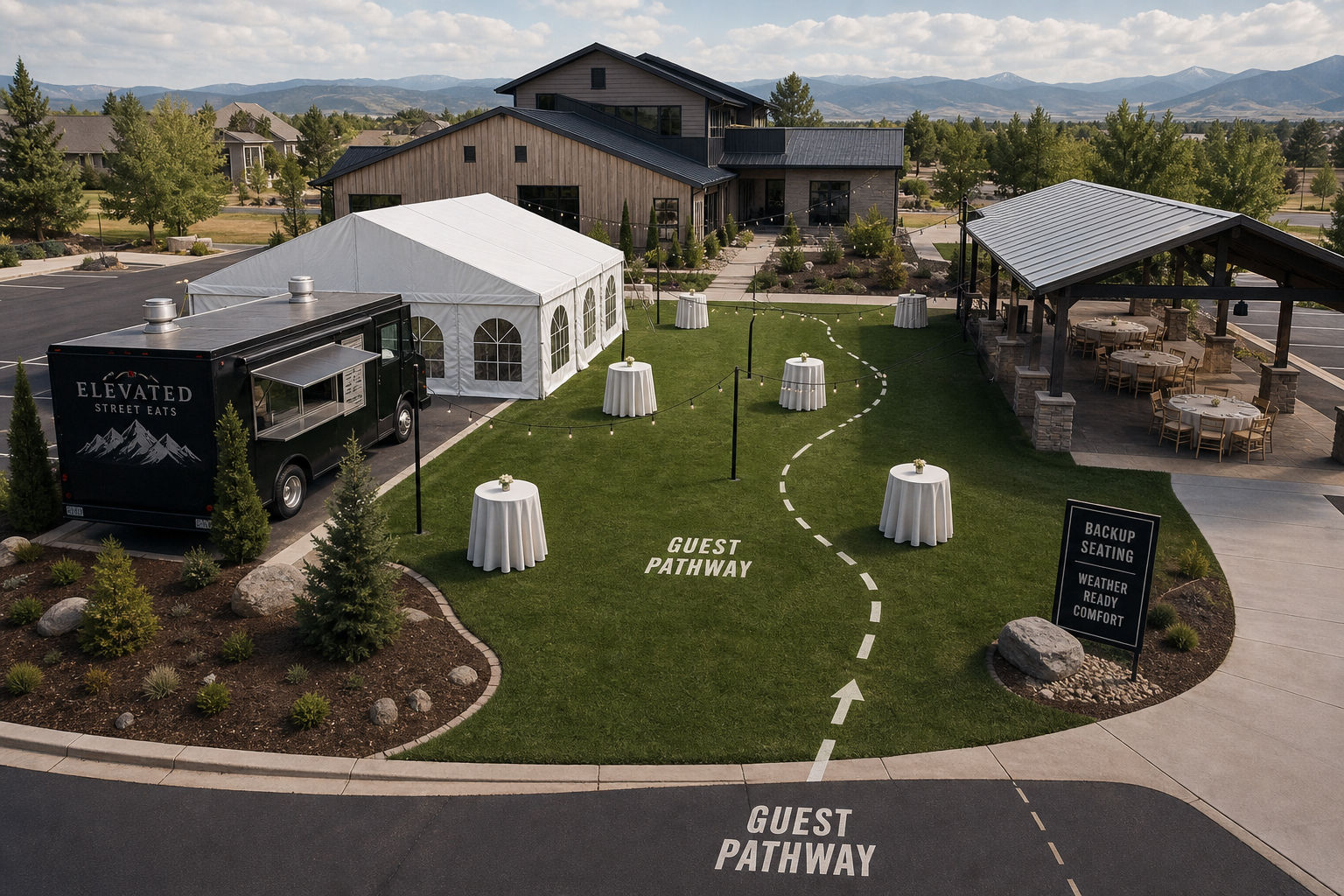
The forecast matters, but the site matters first. A planner studies where guests enter, where the food truck can park, how vendors access power, and whether the ground drains well after rain. In places like Aurora, Broomfield, and Arvada, two properties with the same guest count can need completely different plans because one has open exposure to wind and the other has trees, fencing, or structures that create shelter. A strong site plan also leaves enough room for lines, seating, dance space, and emergency access without crowding service areas.
If you want a deeper look at how layouts support mobile catering, see How an Event Planner Builds a Site Plan for Private Events With Mobile Catering in Thornton and Denver. That kind of planning becomes even more important when the weather may force a quick shift from the original setup to a backup arrangement.
- Identify a primary layout and a weather backup layout before booking rentals
- Map guest routes between parking, ceremony, service, bar, seating, and restrooms
- Confirm truck access, turning radius, and stable parking on event day
- Reserve covered or indoor overflow space when possible
Create backup layouts that still feel intentional
The best weather backup plan does not feel like a last-minute compromise. It should preserve the event flow as much as possible. For a wedding, that may mean moving cocktail tables under a tent while keeping dinner service near the food truck to avoid long waits. For a corporate event in Commerce City or Lakewood, it may mean shifting lawn games out and widening the covered dining area so employees can still mingle comfortably. For a private party, it may mean reducing lounge furniture so guests have more dry standing room.
Guest movement is a big part of this. If weather changes where people gather, the planner may need to relocate beverage stations, trash points, or dessert service so lines do not block entrances or bottleneck around the truck. That is one reason event flow and service timing should be planned together. Hosts can explore that idea further in How to Plan Guest Counts, Service Windows, and Seating for a Mobile Catered Event and Event Flow Planning for Mobile Catered Weddings in Thornton and North Denver.
Tent planning should support service, not just cover tables
Tents are often treated as the obvious answer to Colorado weather, but they only help when they are sized and placed correctly. A tent should match the event purpose, not just the guest count. If all seated guests fit under the tent but the buffet, bar, and line queue remain exposed, the event may still struggle in rain or intense sun. For mobile catered events, planners consider where the truck window faces, how guests queue, whether sidewalls are needed, and how the tent affects traffic between dining and service zones.
Wind matters just as much as rain. In open areas around Brighton, Centennial, or Parker, lightweight decor, disposable service pieces, signage, and linened high-tops may all need additional stabilization. Tent anchoring, sidewall decisions, weighted buffet equipment, and protected condiment stations are all part of the plan. A professional planner coordinates these details with the rental provider and catering team so the setup remains functional instead of simply covered.
Adjust food and beverage service for heat, wind, and sudden storms
Weather affects menus and service pacing more than many hosts expect. On hot days in Littleton or Lone Tree, service may begin slightly earlier, beverage access may be expanded, and certain self-serve items may be reduced to protect quality. In windy conditions, individually plated garnishes, lightweight dessert displays, or open condiment bars may be reworked into more controlled service formats. If storms are likely, the planner may tighten the timeline so key moments happen before the highest-risk weather window.
For weddings, this can be especially important because ceremony timing, cocktail hour, and dinner service all connect. If one part runs late, the entire event may drift into the hottest or stormiest portion of the day. That is why couples often benefit from reading Planning a Wedding With Mobile Catering: How to Coordinate Ceremony Timing, Cocktail Hour, and Dinner Service. Coordinated timing gives the catering and planning team room to make weather-smart adjustments without making the event feel rushed.
Guest comfort is part of risk management
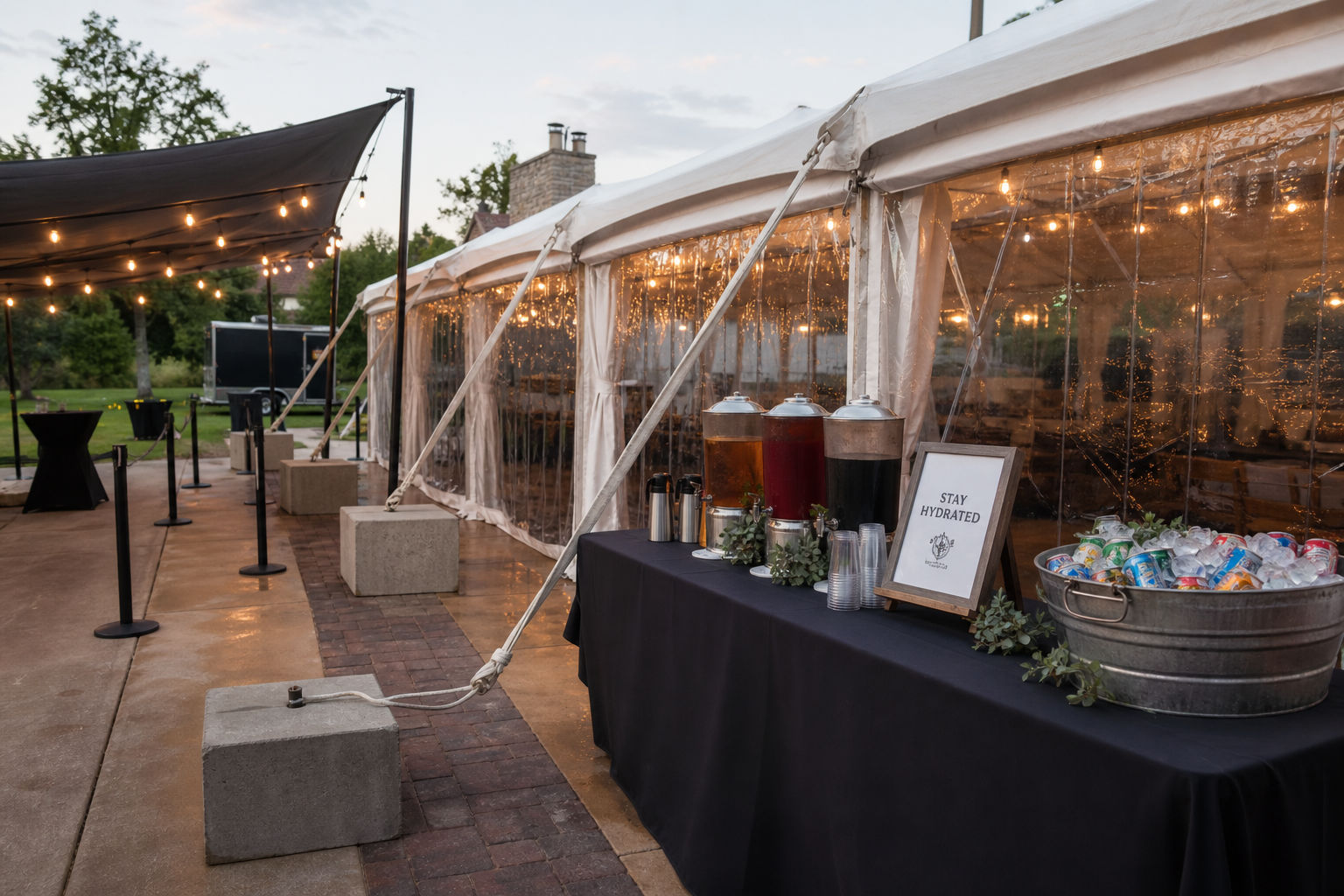
Weather planning is not only about protecting equipment. It is about keeping guests comfortable enough to enjoy the event. Shade, hydration, airflow, and temperature changes all shape how long people stay engaged. For daytime celebrations, planners may add water stations, shaded waiting areas, parasols, or seating zones that rotate guests out of direct sun. For evening events, they may stage blankets, patio heaters, or a closer transition to indoor space if temperatures drop. In Sheridan, Wheat Ridge, and Northglenn, where neighborhood events often use private outdoor spaces, these details can make a major difference in how polished the experience feels.
- Offer water access well before meal service begins
- Use shaded or covered queue areas near the truck
- Plan seating for guests who may need breaks from sun or wind
- Prepare lighting and warmth options for cooler evening temperatures
Corporate events and private parties need the same discipline as weddings
Many hosts assume detailed contingency planning is mainly for weddings, but company events and private celebrations benefit just as much. A picnic in Denver or a client appreciation event in Englewood still needs clear circulation, weather protection, and service timing. If attendance is large, those needs become even more important because lines, seating turnover, and shelter capacity can change quickly. For larger team gatherings, Company Picnic Planning in Denver and the North Metro Area: How to Keep Large Employee Events Organized offers helpful guidance on keeping complex outdoor events structured and manageable.
Smaller events also deserve thoughtful planning, even if they do not need full-scale coordination. Hosts in Castle Rock, Dacono, or Milton may only need support with layout, rentals, and service flow to avoid common weather-related problems. If you are deciding how much help makes sense for your event, When to Hire an Event Planner for a Small Event and When You Can Keep Coordination Simple can help you evaluate the right level of planning support.
What experienced planners do before event week
Strong outdoor events rarely depend on luck. They depend on decisions made early enough to protect options. An experienced event planner coordinates with the caterer, rental team, property contact, and host well before setup day. That includes confirming access times, reviewing power needs, choosing service formats that work in changing weather, and setting a clear trigger point for when the backup plan goes into effect. This preparation helps everyone move decisively if conditions change.
- Review the site for sun exposure, drainage, wind exposure, and access
- Finalize a primary layout and a realistic weather backup
- Align tenting, seating, and service stations with guest flow
- Adjust menu and timing plans to match seasonal conditions
- Communicate contingency decisions to vendors and hosts in advance
For homeowners and business owners across Thornton and the greater Denver area, the goal is simple: keep the event enjoyable, organized, and resilient. When weather planning is built into the event from the start, outdoor celebrations feel calmer and more polished. The Food Truck Family brings together mobile catering, event planning, and event management support to help hosts prepare for Colorado conditions with practical layouts, service adjustments, and guest-focused solutions.
Source: National Weather Service Denver/Boulder forecast resources