Event Flow Planning for Mobile Catered Weddings in Thornton and North Denver
What You'll Learn
- Build a timeline that matches guest movement and food service
- Prevent bottlenecks at ceremony, bar, buffet, and cleanup points
- Keep mobile-catered food hot, fresh, and timed correctly
- Coordinate parking, power, and access before wedding day
- Create a smoother guest experience from arrival to send-off
Why event flow matters more with a mobile caterer
When a wedding includes a mobile caterer, the timeline cannot be treated like a generic banquet schedule. A food truck or mobile kitchen has different setup, access, holding, and service needs than an indoor venue kitchen. In Thornton and across North Denver, couples often host weddings at private homes, barns, community properties, and flexible outdoor spaces where the guest experience depends on strong event flow planning. That means every transition matters: guest arrival, seating, ceremony start, cocktail hour, dinner release, dessert, and final cleanup.
The Food Truck Family approaches wedding planning by treating the timeline as both a hospitality tool and a logistics map. The goal is simple: avoid long lines, cold food, blocked pathways, and awkward gaps where guests are not sure what happens next. A well-built timeline protects the food quality while also making the event feel calm and organized. Many of the same planning questions used for private and corporate events apply here, and couples can get a sense of that process in Questions an Event Planner Will Ask Before Coordinating a Wedding, Private Party, or Corporate Gathering.
Start with the site, not just the ceremony time
Before anyone sets a dinner bell or picks a cocktail hour length, an event planner studies the property. In Thornton, Westminster, and Arvada, mobile catering timelines often hinge on practical details: where the truck can park, how guests walk from parking to ceremony, whether the service area is level, and how far food has to travel from the truck to guests. If the truck needs to cross guest pathways, or if a buffet line sits too close to the ceremony aisle, delays are almost guaranteed.
That is why timeline planning starts with the footprint. The planner identifies arrival routes, queue space, bar placement, trash and bussing zones, and the quietest place for the mobile kitchen to operate without becoming a visual or noise distraction during vows. This is especially important on tighter residential lots, where every parked vehicle and service table affects circulation. For couples working with smaller properties, How to Plan a Private Event on a Tight Property Footprint in Thornton, Arvada, and Westminster offers useful context on managing space without sacrificing service.
Building the wedding timeline around guest arrival and ceremony
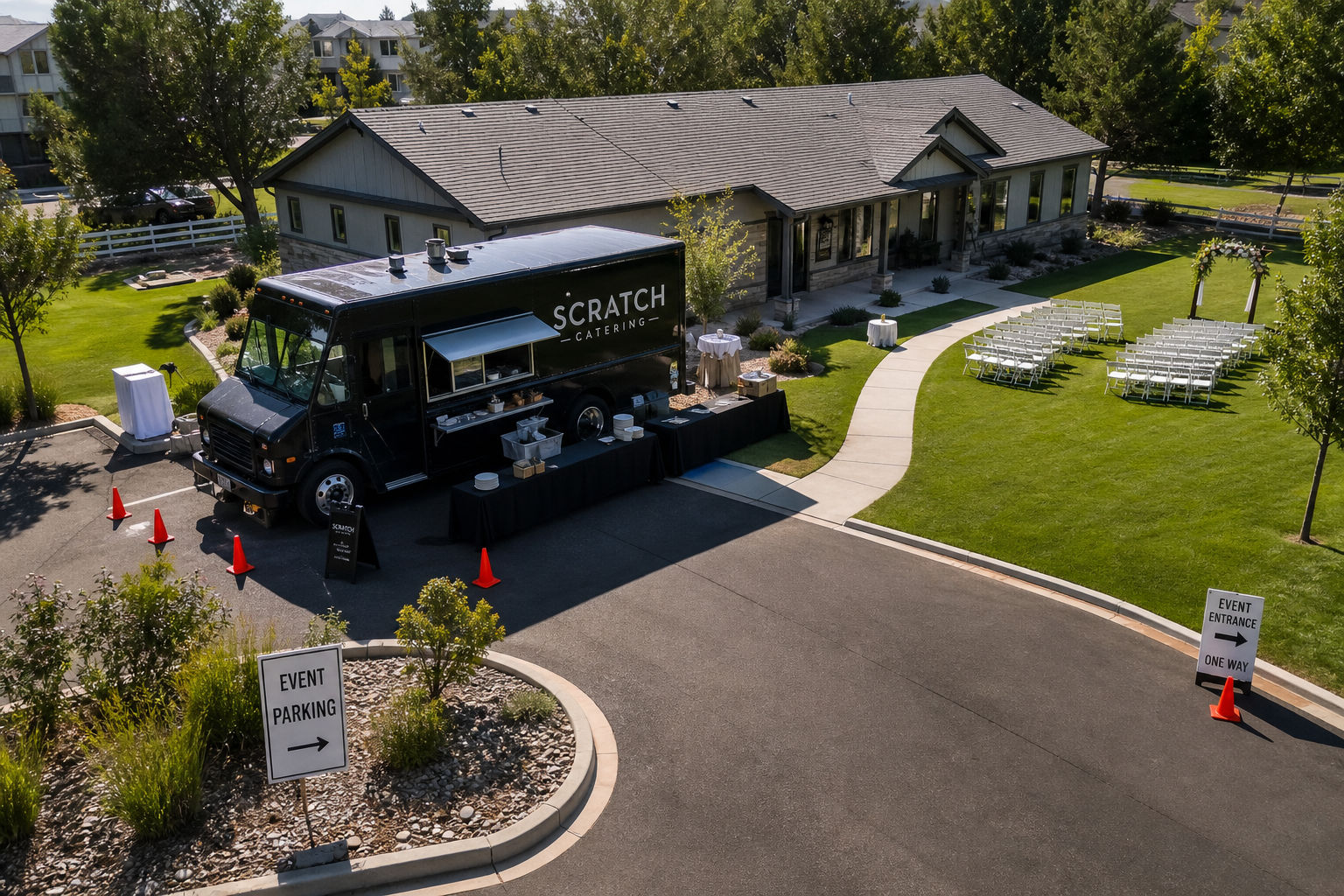
A strong mobile-catered wedding timeline usually begins 90 to 120 minutes before guest arrival, when the caterer and planner confirm setup, power, water access if needed, signage, and service staging. Guests should arrive to a space that feels ready, not active with major vendor repositioning. If the truck is still maneuvering into place as guests pull in, the first impression becomes confusion instead of welcome.
For the guest-facing portion, planners typically create a 20- to 30-minute arrival window with a clear parking and greeting plan. Ushers, directional signs, and visible pathways reduce late seating disruptions. If beverages are available before the ceremony, they should be positioned away from the ceremony seating area so guests are not clustering near the aisle. The planner also accounts for restroom use during arrival, because that can affect whether the ceremony actually starts on time.
- Guest arrival and parking open
- Welcome station or light pre-ceremony beverage service
- Ceremony seating begins with buffer for late arrivals
- Ceremony start with all service noise paused
- Post-ceremony transition guided toward cocktails
The key during the ceremony is operational quiet. A professional mobile caterer and planner coordinate so generators, prep activity, and visible service motions do not compete with the ceremony. In places like Broomfield or Northglenn where neighborhood settings can be close and sound carries, that operational pause is part of the timeline, not an afterthought.
Using cocktail hour to absorb movement and protect dinner timing
Cocktail hour does more than fill time between the ceremony and dinner. With a mobile caterer, it is often the most important pressure-release point in the day. Guests need time to congratulate the couple, move between spaces, find drinks, and settle into the reception rhythm. The caterer needs time to finish final dinner prep and confirm that service stations, disposables, and staffing are exactly where they should be.
If cocktail hour is too short, dinner starts with everyone arriving at once, producing long lines and rushed service. If it runs too long without enough seating, shade, or appetizers, energy drops and guests begin to feel the gap. An event planner balances that window based on guest count, menu complexity, and service style. This is similar to how planners manage guest movement for other social formats, as explained in Event Planning for Open House Parties in Denver: How to Design Guest Flow, Food Service, and Timing That Keeps People Mingling.
What planners coordinate during cocktail hour
- Photo timing so the couple is not delayed for dinner entrance
- Passed or stationed appetizers placed away from bottlenecks
- Bar lines separated from food pickup lines
- Guest announcements that clearly signal the next transition
- Final check that dinner service can begin at the planned minute
Choosing the right dinner service flow for a mobile wedding
The best dinner timeline depends on how food is served. A truck-window ordering model may work well for a casual celebration, but many weddings need a more structured release so grandparents, children, and the wedding party are not all standing in one long line. In Denver, Aurora, and Commerce City, planners often recommend staggered table releases, dual service points, or pre-plated station support when guest counts rise.
For buffet service, the planner calculates how many people can reasonably be released at once without creating a queue that backs into high-traffic areas. For truck service, the planner may use textural pacing in the timeline: speeches before dinner if food needs a final few minutes, or a brief welcome toast while first tables are called. For larger weddings, multi-point service can be the difference between smooth flow and a crowded service zone, which is why How Event Planners Coordinate Multi-Point Service for Large Private Parties and Corporate Gatherings is relevant even for receptions.
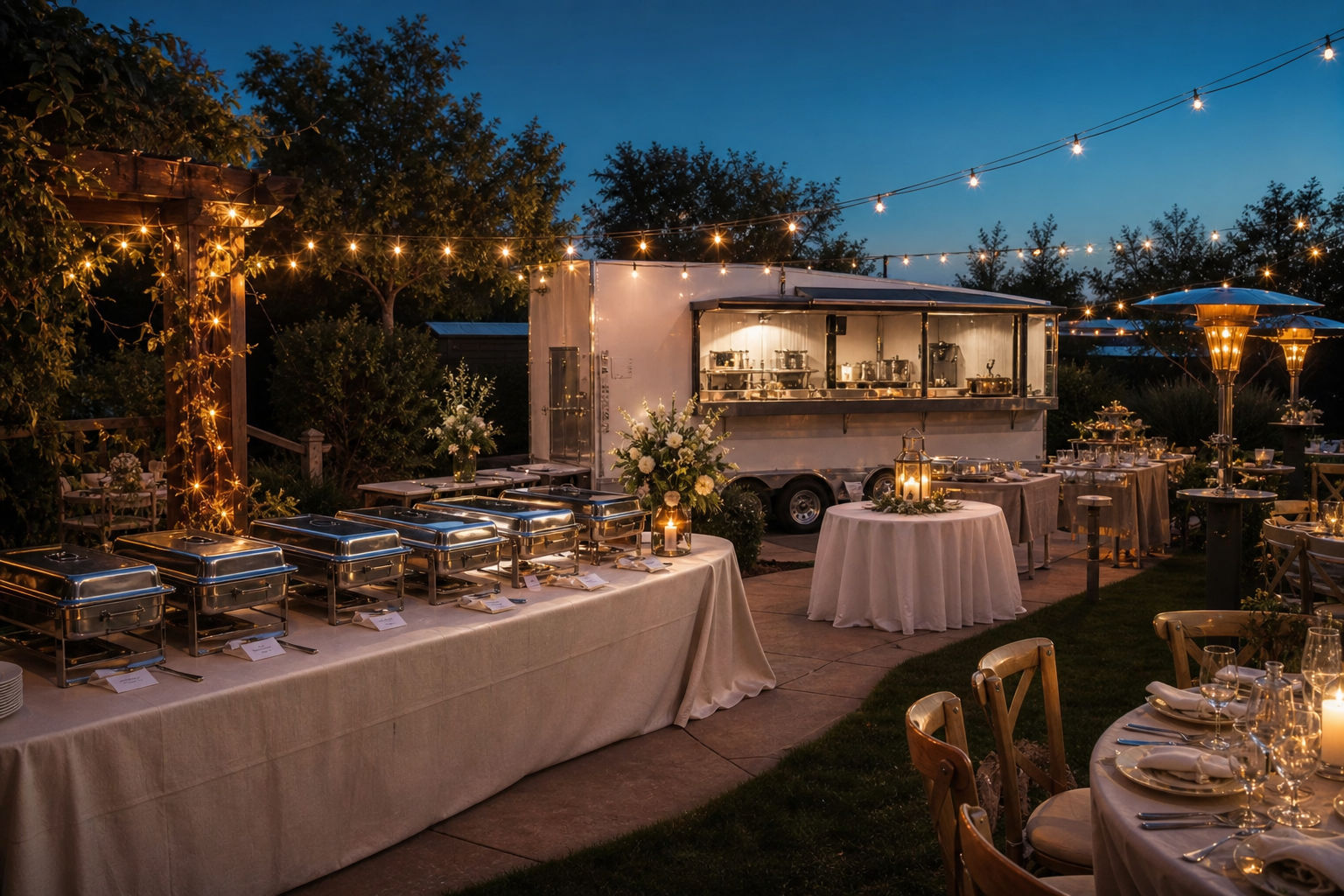
The planner also protects food quality by aligning service start with actual guest readiness. Starting too early can leave plated items waiting. Starting too late can force holding times that affect texture and temperature. The right sequence keeps the kitchen moving steadily and guests moving comfortably. That is especially important for menus with items best served immediately, such as crisp fried foods, grilled proteins, or composed bowls.
Avoiding common bottlenecks couples do not see coming
Most wedding delays are not dramatic. They are small chokepoints that compound over the day: one entrance path for both guests and vendors, one trash station too close to the bar, one buffet placed beside the dance floor, one speech schedule that stalls dinner service. A planner looks for these friction points early so they can be solved on paper instead of in real time.
- Separate guest lines from service and restocking paths
- Keep the bar, buffet, and dessert from sharing one narrow zone
- Reserve accessible seating near the easiest food access point
- Add signage so guests know where to go after the ceremony
- Plan lighting for evening service and late cleanup
Guest mix matters too. If children, older relatives, and mobility-limited guests are part of the wedding, the timeline and layout should reflect that. Earlier table release, shorter walking distances, and seating near service can improve the experience for everyone. Couples planning for a broad age range may also benefit from Planning an Event for Mixed Age Groups: How to Balance Kids, Adults, Seniors, and Service Logistics.
End-of-night timing, breakdown, and cleanup
Cleanup should be built into the wedding timeline as carefully as dinner. A mobile caterer needs a clear breakdown window, access path, and trash removal plan that does not interrupt the last guest moments. If the truck is boxed in by guest vehicles, or if rentals cannot be struck until after the truck exits, the end of the night can become unnecessarily long and expensive in effort.
Professional event flow planning sets the last 60 to 90 minutes with intention: final beverage call, dessert close, trash consolidation, leftover handling, vendor strike order, and load-out access. Whether the wedding is in Thornton, Lakewood, or Littleton, this final phase protects the property and keeps the event from ending in a scramble. For couples who want one team thinking through both hospitality and operations, The Food Truck Family provides mobile catering and event planning support designed to keep the day moving from first arrival to final cleanup.
A better wedding timeline creates a better guest experience
The most successful mobile-catered weddings do not feel tightly managed to guests. They feel natural. People know where to go, food arrives when it should, and transitions happen without dead time. That result comes from careful timeline design around site conditions, guest behavior, and the needs of the mobile kitchen. When those pieces are coordinated well, couples get a celebration that feels welcoming, efficient, and memorable for all the right reasons.
Source: wedding reception timeline