Event Planning for Open House Parties in Denver: How to Design Guest Flow, Food Service, and Timing That Keeps People Mingling
What You'll Learn
- Plan arrivals to prevent crowding at the door and buffet
- Use service windows that support steady traffic and fresh food
- Create seating zones that encourage mingling without congestion
- Design circulation paths that work for homes, yards, and driveways
- Build a timeline that fits come-and-go guest behavior
Open house parties look relaxed on the surface, but the best ones are carefully structured behind the scenes. Whether you are hosting a graduation celebration in Thornton, a retirement gathering in Denver, or a casual neighborhood party in Westminster, the goal is the same: guests should be able to arrive, eat, visit, and move through the space without feeling stuck in lines or unsure where to go. For come-and-go events, good planning is less about formal scheduling and more about managing flow.
At The Food Truck Family, open house event planning starts with a practical question: how will people move? That includes where they park, how they enter, where they naturally pause, when they eat, and where conversation happens most comfortably. For homeowners and local business owners, those decisions affect everything from guest experience to cleanup. A thoughtful layout helps the event feel welcoming from the first arrival through the last wave of guests.
Start With Arrival Patterns, Not Just a Start Time
Unlike a seated dinner, an open house usually has a broad attendance window. Guests may arrive in clusters right after invitations suggest, then taper in, then surge again after another nearby event ends. That is why the arrival plan matters more than a single start time. In many Denver-area neighborhoods, especially residential streets in Aurora or Broomfield, the first 30 to 45 minutes can create the biggest pressure on parking, entry points, and food access.
A planner typically maps the guest journey in order: parking, walkway, greeting area, beverage access, food access, and conversation zones. If the front door opens directly into the kitchen, for example, placing food immediately inside can create a bottleneck. In that case, it may be smarter to shift beverages to the entry side yard, keep the main service farther inside or outside, and use signage or visual cues to pull people deeper into the event space. Homes with neighborhood restrictions may need even earlier coordination, which is why it helps to review considerations like access and rules discussed in Event Planning for Events at Homes With HOAs: Rules, Access, and Guest Logistics to Address Early.
- Keep the first food or drink station away from the front door
- Use a clear greeting point so guests know where to head next
- Separate parking instructions from entry instructions in advance
- Avoid placing trash, gifts, and drinks in one tight zone
- Create more than one reason for guests to move through the space
Build Food Service Around Waves, Not One Rush
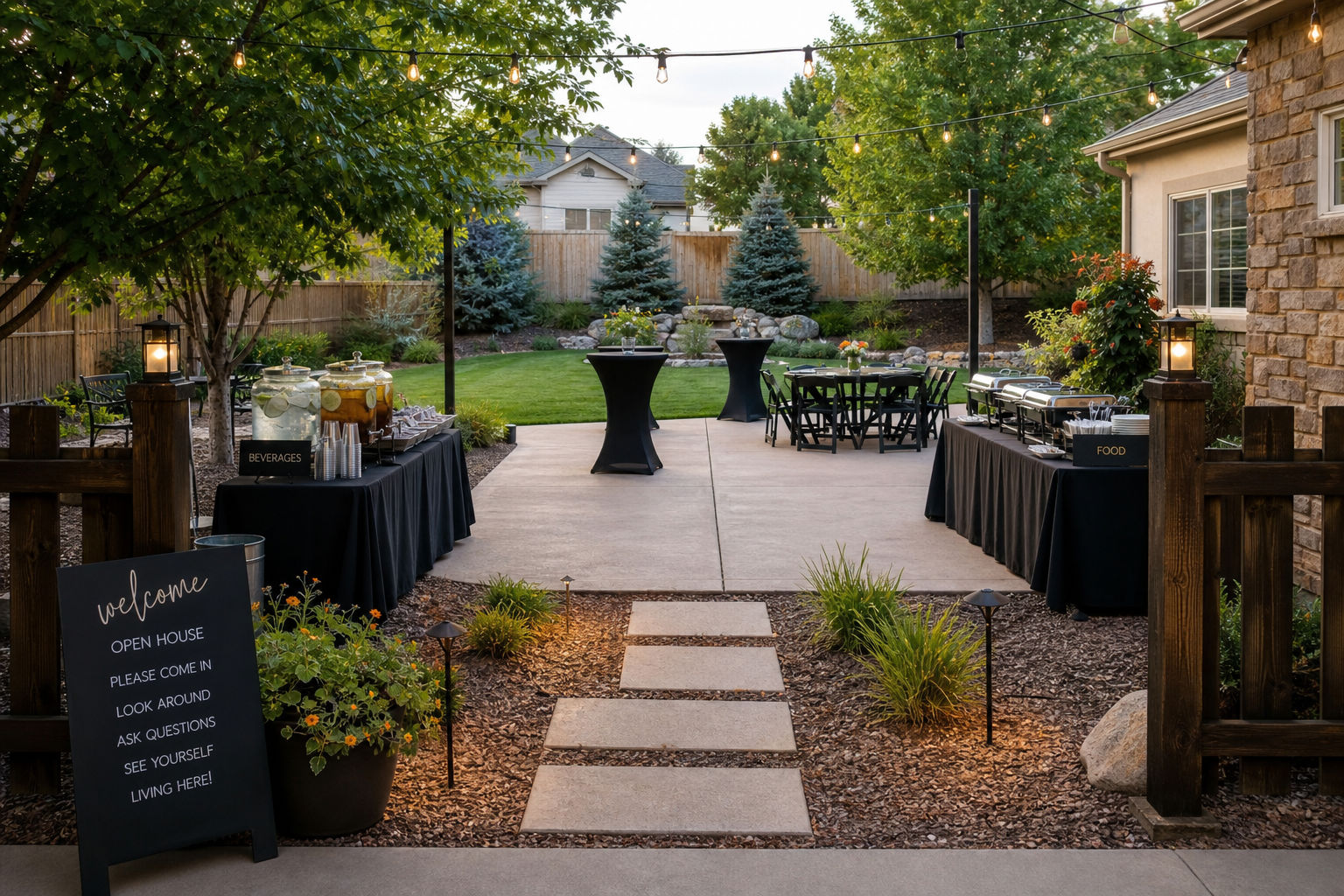
Food service at an open house should support steady social energy, not stop it. That means planning for waves instead of assuming everyone will eat at once. A mobile caterer can stagger production and service so food stays fresh and available throughout the event window rather than peaking early and fading later. This is especially useful for graduation parties and retirement celebrations where guests often come and go over several hours.
For many open house formats, the best service model is one that allows quick decisions and short wait times. Smaller composed items, handhelds, or a controlled menu from a food truck can move people through service efficiently while still offering enough variety to feel generous. If guest counts are larger or the property has multiple gathering areas, planners may also borrow ideas from How Event Planners Coordinate Multi-Point Service for Large Private Parties and Corporate Gatherings by adding a beverage point separate from the main meal service.
How service windows keep the event balanced
Service windows help control pace. Instead of announcing a formal meal, an event planner may recommend a primary meal window, followed by a lighter snack or dessert period. That keeps the middle of the event active and gives later arrivals a good experience too. For example, a two-and-a-half-hour open house might offer heavier food during the first 90 minutes, then transition to lighter bites and beverages. For morning and midday gatherings, timing and menu structure can shift significantly, as explained in Morning and Midday Event Planning: What Changes When Your Catered Event Is Not Held at Dinner Time.
Use Seating Zones to Support Conversation, Not Occupy Space
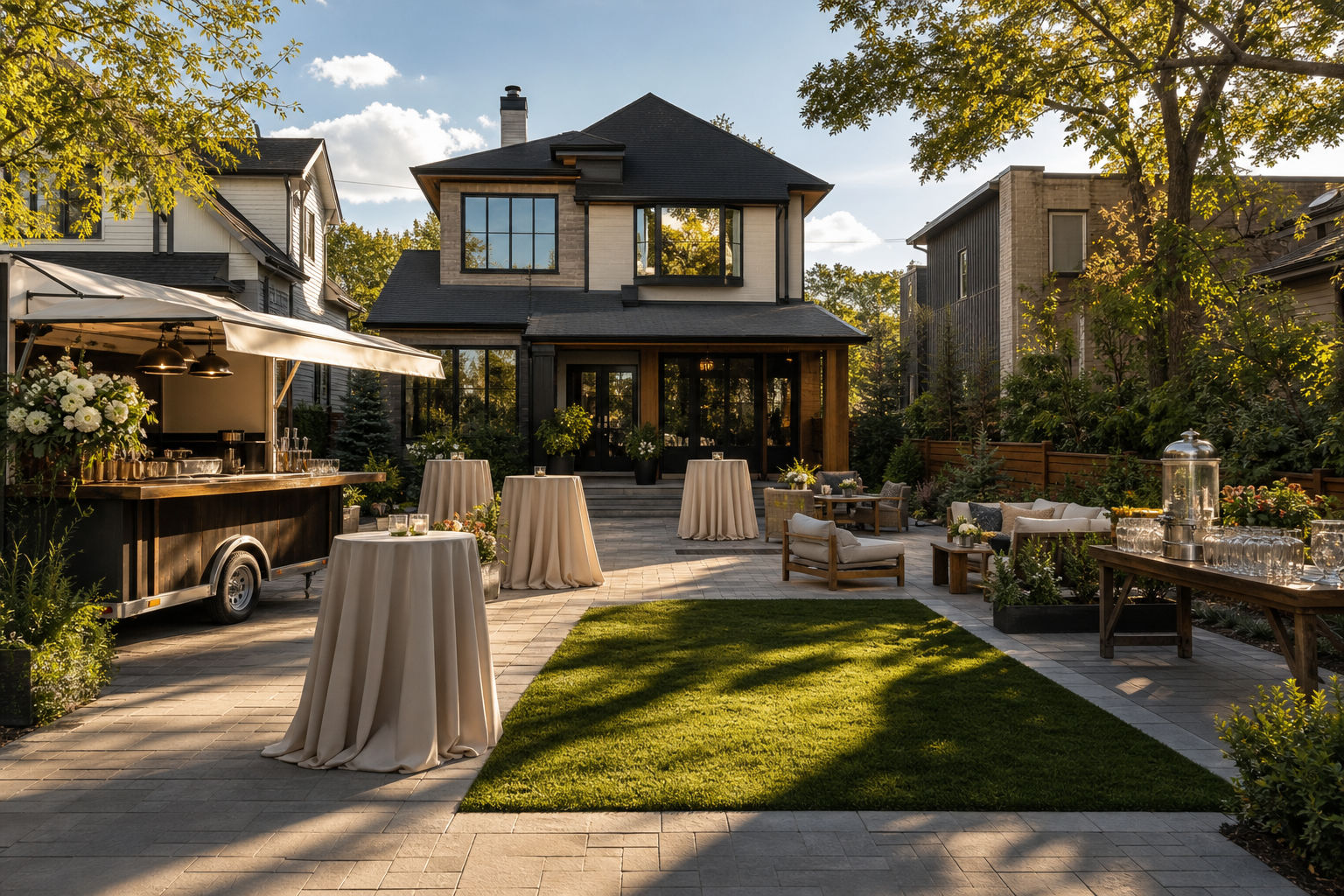
One of the most common open house mistakes is adding too much seating in the wrong places. Guests at a come-and-go event usually do not need a full seat for every attendee at once. They need a mix of options: a few comfortable spots for older family members, some shaded seating outdoors, standing-height surfaces for quick eating, and open space for people to circulate. Too many chairs packed into one patio or living room can freeze movement and break up natural mingling.
A better approach is to create zones with different purposes. One zone near the food area supports short stays and turnover. Another quieter area supports longer conversations. A third zone, often near the yard or driveway edge, can absorb overflow without pulling everyone to one point. This is especially helpful when hosting mixed generations, where grandparents may need stable seating while younger guests prefer to move around. For events with a wide age range, the planning framework in Planning an Event for Mixed Age Groups: How to Balance Kids, Adults, Seniors, and Service Logistics can help shape the layout.
- Place seated guests where they can still see activity
- Use cocktail tables to reduce long table crowding
- Keep at least one path fully clear between entry and service
- Put refill stations where people can approach from two sides
- Avoid clustering all seating near the food line
Design Circulation for the Property You Actually Have
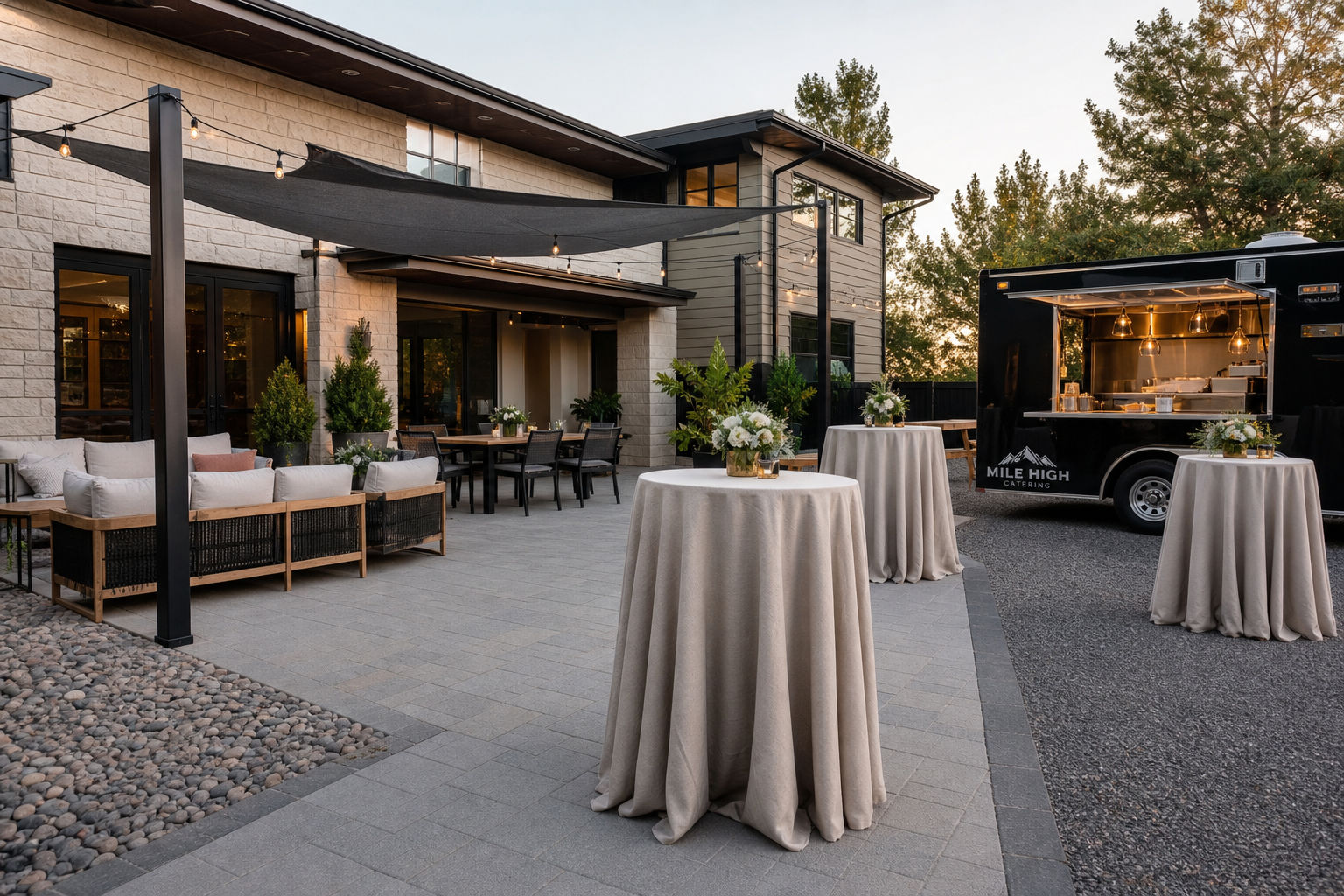
Open house logistics are never one-size-fits-all. A compact Denver bungalow, a larger lot in Littleton, and a suburban home in Arvada all create different flow patterns. The planner's job is to work with the real property conditions, including narrow side yards, stairs, fences, garage access, sun exposure, and street parking limitations. Sometimes the smartest move is to route guests through the backyard first. Other times, it is better to keep all service near the driveway to reduce traffic through the home.
Weather also affects circulation more than many hosts expect. Heat, wind, and afternoon storms can quickly shift where guests gather and how long they stay in one area. For outdoor or partially outdoor setups, backup plans should be part of the original design, not added at the last minute. A strong example of this planning mindset appears in How an Event Planner Builds a Weather Backup Plan for Outdoor Weddings and Private Parties in Thornton and Denver, where layout flexibility is treated as a core part of guest comfort.
Set a Timeline That Feels Flexible but Operates With Intention
Open house timing should feel easy to guests, but it still needs structure. A good event plan defines when setup is complete, when hosts should be ready to greet, when food service peaks, when replenishment shifts, and when cleanup can begin without making the party feel over. That internal timeline allows the host to stay present instead of constantly solving small problems.
For business open houses, this kind of pacing also supports networking and visitor turnover. The same principles that help residential parties can apply in professional settings, especially when the goal is conversation rather than a formal program. If that is your focus, How to Plan a Corporate Open House That Encourages Conversation, Steady Traffic, and Smooth Food Service offers useful parallels for service timing and guest movement.
When hosts in Thornton, Denver, and surrounding communities want an open house to feel polished without becoming overly formal, the right event planning support makes a measurable difference. The Food Truck Family helps structure food service, circulation, and timing so guests can relax, connect, and keep moving comfortably throughout the event. That is what turns a crowded gathering into one that feels effortless.
Source: Denver park permits