Planning an Event for Mixed Age Groups: How to Balance Kids, Adults, Seniors, and Service Logistics
What You'll Learn
- Design seating and traffic flow that works for every generation
- Reduce stress with age-friendly timing and activity zones
- Improve accessibility without sacrificing event style
- Keep food and beverage service moving without crowding
Planning a family reunion, neighborhood celebration, or milestone birthday sounds simple until the guest list spans toddlers, teens, parents, and grandparents. What feels fun for one age group can feel tiring, noisy, or inconvenient for another. A strong event plan solves that problem before the first chair is set. For homeowners and business hosts in Thornton, Denver, and Aurora, the goal is not just serving good food. It is creating an environment where guests can move comfortably, find their place quickly, and enjoy the event without confusion or long waits.
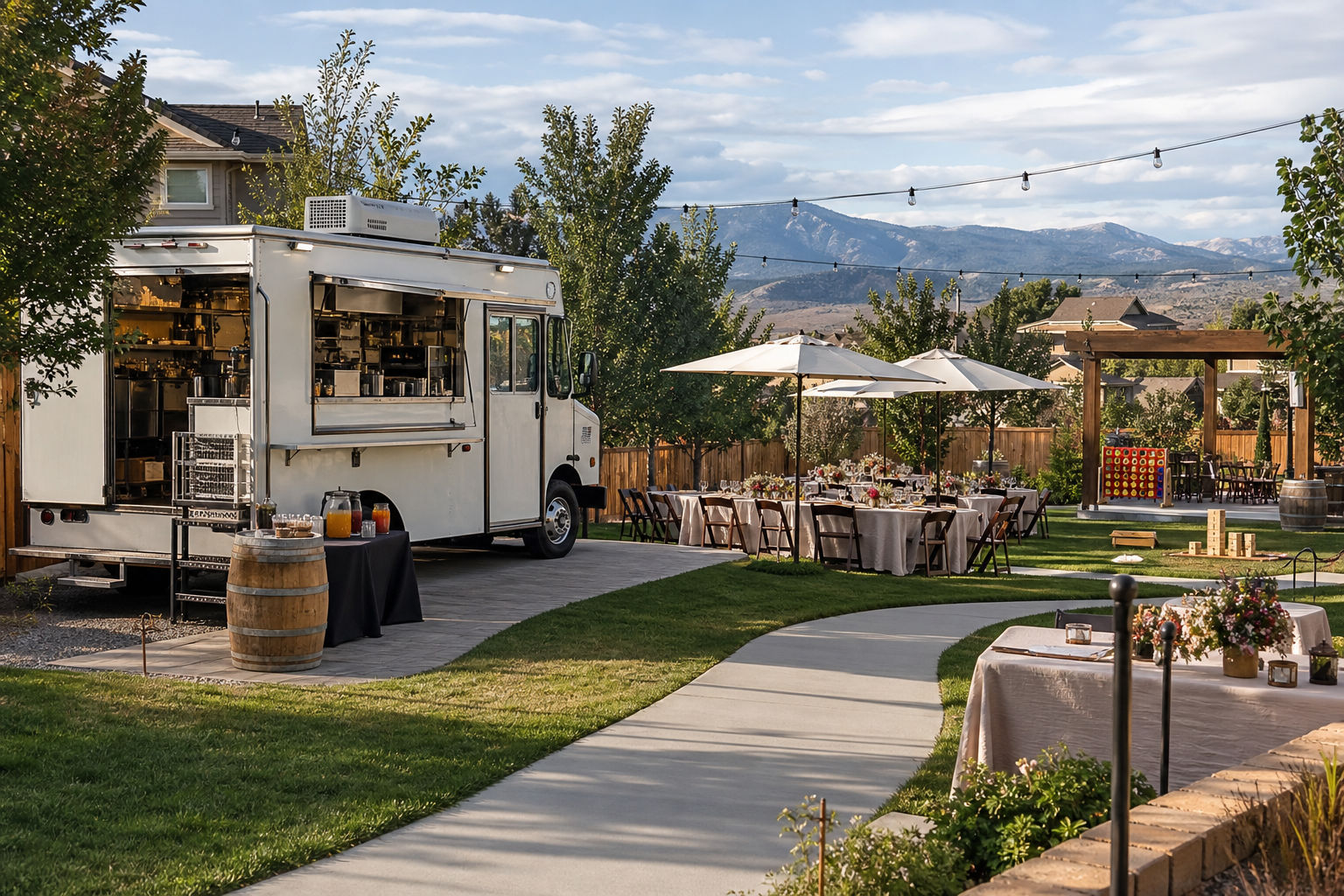
At mixed-age events, the layout matters as much as the menu. An experienced mobile caterer and event planner looks at seating, accessibility, timing, activity placement, and service flow as one connected system. That is especially important when a food truck, buffet, beverage station, rental equipment, and entertainment all need to fit into the same footprint. The right plan helps kids stay engaged, gives adults room to socialize, and makes it easier for seniors to participate without extra strain.
Start with guest comfort, not just guest count
Many hosts begin by asking how many people are coming. A planner starts by asking who is coming and how they will use the space. A 75-person event with mostly adults needs a different setup than a 75-person event with strollers, mobility devices, and several generations arriving at different times. Before deciding where the food truck parks or how many tables to rent, it helps to map the guest mix: young children, school-age kids, adults, older adults, and anyone with mobility or dietary needs.
That guest profile affects nearly every decision. Seniors often need shorter walking distances, stable seating, shade, and easier access to restrooms. Parents want clear sightlines to children and enough space around tables, activity areas, and service lines. Adults usually want places to talk that are not directly next to loud games or speakers. When these needs are addressed early, the event feels organized instead of improvised. If your guest arrivals will be spread out rather than concentrated at one start time, it also helps to plan service accordingly, as we discussed in How to Plan an Event Schedule for Guests Who Arrive in Waves Instead of All at Once.
Use seating zones to support different energy levels
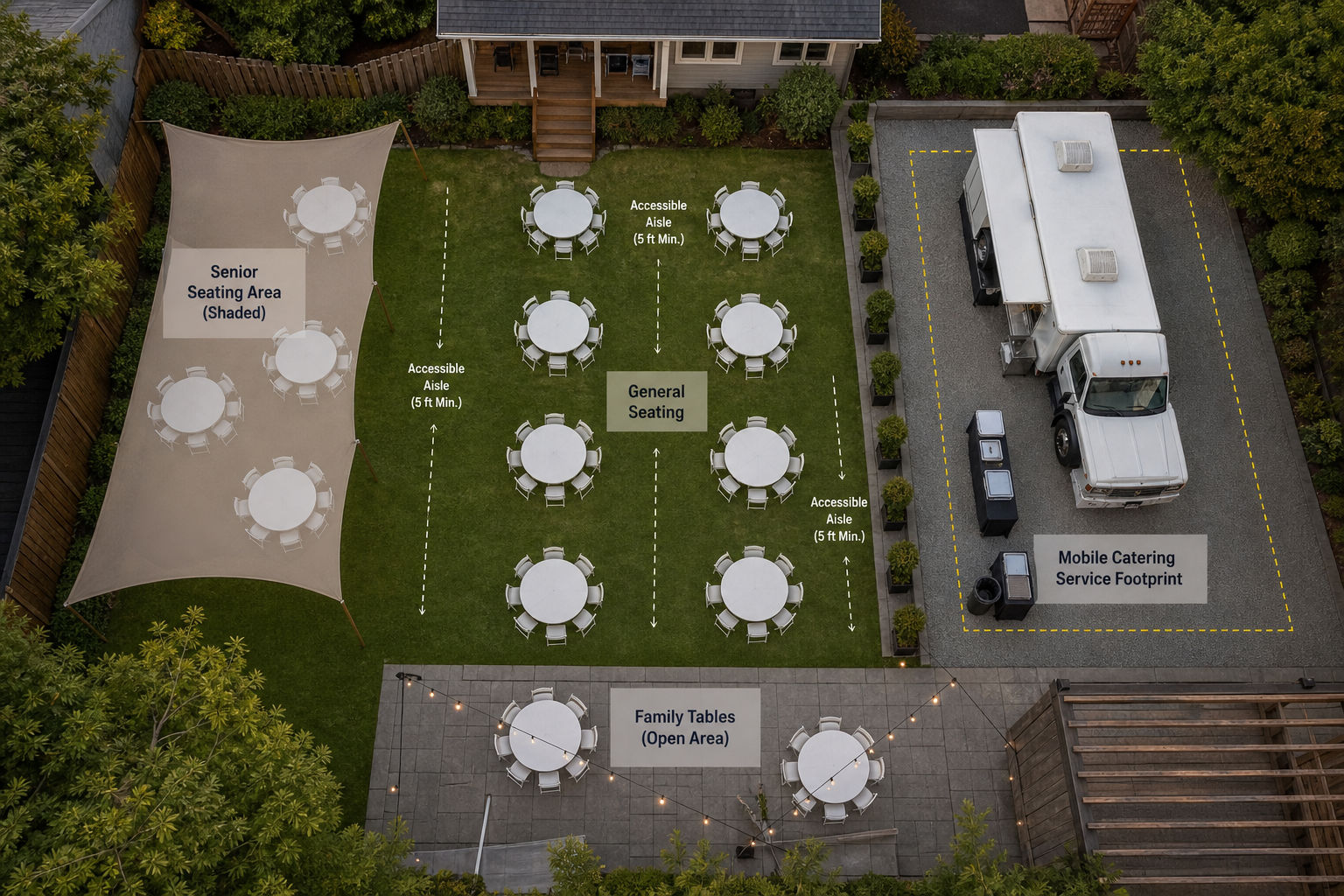
One of the best ways to balance mixed age groups is to stop thinking about seating as one large block. Instead, create zones. A social seating area near the food and beverage service works well for adults who want conversation and easy access. A quieter seating section slightly removed from speakers, games, or the main queue is better for seniors and anyone who needs a calmer place to sit. Family tables near activity zones can help parents supervise children without constantly getting up.
- Place stable chairs with backs in the most accessible seating rows
- Leave wide walking paths between tables, service points, and restrooms
- Keep a portion of seating in shade or weather protection when outdoors
- Avoid putting all seating directly beside the food line or speaker setup
For events in Westminster, Broomfield, or Northglenn backyards, parks, and community spaces, zoning also helps prevent crowding. Guests should not have to cut through a kids' game area to reach the buffet or weave through a service line to find a seat. The cleaner the layout, the easier the event feels. This is one reason venue planning matters so much before event day. If you are still evaluating a property or rented space, our post on What an Event Planner Needs From Your Venue Walkthrough Before a Wedding or Private Party explains what to review in advance.
Build accessibility into the layout from the beginning
Accessibility is not a last-minute accommodation. It should shape the event plan from the first walkthrough. That means considering parking proximity, curb transitions, surface conditions, ramp access, restroom routes, lighting, and how far guests need to travel between key areas. A mobile catered event can work beautifully for all ages, but only if the service footprint leaves enough room for practical movement.
For example, placing a food truck at the far edge of a lot may look tidy on paper, but it may create a long, exposed walk for older guests. Similarly, a beverage station tucked behind decor or entertainment can create congestion. An event planner balances visual appeal with function so everyone can participate more easily. This becomes even more important in public venues or parks, where permits, load-in, and infrastructure can affect the safest setup. For outdoor events, see Planning a Wedding or Private Party at a Park or Public Space in Denver: What an Event Planner Handles Before Event Day.
Set a timeline that matches real guest behavior
Mixed-age events usually run better when the schedule is layered instead of rigid. Children may be ready to eat earlier. Seniors often prefer key moments not to happen too late in the day. Adults may linger longer over conversation if the service style allows it. Rather than planning every guest around a single narrow service window, a planner creates a sequence that keeps the event moving without rushing everyone at once.
A common approach is to open with a soft arrival period, move into food service before energy drops for younger and older guests, and place speeches or recognition moments after most people have eaten. If there are games, music, or more active entertainment, those can build later while quieter seating remains available. This reduces the problem of children getting restless in line and seniors waiting through long pre-meal activities.
Create activity zones without disrupting service
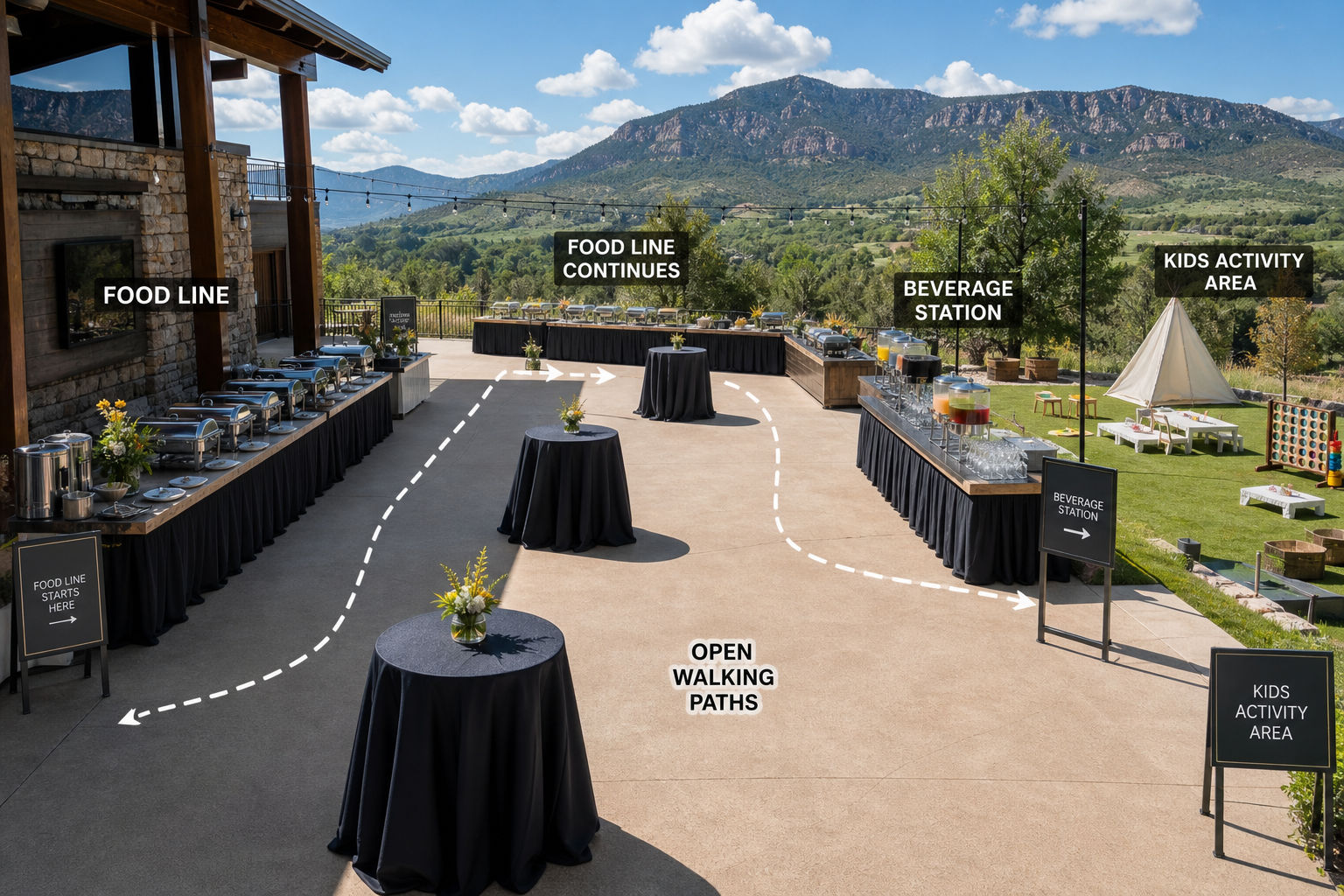
Activity zones are useful at reunions and neighborhood events, but they need clear boundaries. Kids' games, crafts, lawn activities, or photo areas should be visible and convenient without spilling into the main service route. When activity areas overlap with food pickup, beverage access, or vendor paths, the event starts to feel chaotic quickly. A planner separates high-motion spaces from high-traffic service areas so each zone can function properly.
That same logic applies behind the scenes. Vendor load-in, trash collection, replenishment, and staff movement need dedicated space too. Guests may not notice those logistics when they are done well, but they definitely notice when service stalls because staff cannot reach supplies or lines back up into seating. For a closer look at how these operational details affect the guest experience, read How an Event Planner Coordinates Vendor Load-In and Setup for Mobile Catered Events in Thornton and Denver.
Choose a service style that keeps lines manageable
Service flow is often the deciding factor in whether a mixed-age event feels smooth or stressful. Long lines are hard on children, frustrating for adults, and exhausting for seniors. The right service style depends on the space, guest count, and menu. In some cases, a food truck service window works well with staggered ordering and clear queue space. In others, a buffet, stations, or a hybrid approach may be more efficient.
A planner will consider how many guests can be served at once, whether separate beverage service will reduce congestion, and how menu choices affect ticket times. Dietary needs should also be integrated into the plan instead of treated as exceptions at the end of the line. We covered this in more detail in How to Plan an Event Menu and Service Style Around Guest Dietary Needs Without Slowing Down the Event. For events in Arvada, Commerce City, Lakewood, or Littleton, this level of planning can make the difference between a steady, welcoming flow and a crowded service bottleneck.
- Use separate drink access when possible to shorten food lines
- Keep queue space off main walkways and away from seated guests
- Plan clear signage or verbal direction for first-time arrivals
- Match menu complexity to the number of guests and service window
Why local event planning support matters
Every venue behaves differently. A private yard in Brighton has different constraints than a business lot in Englewood or a park site near Castle Rock. Wind, pavement, power, shade, parking, neighborhood access, and permit rules all influence how a multi-generational event should be set up. Working with a local mobile caterer and event planner helps hosts make practical decisions based on real site conditions, not generic advice.
The Food Truck Family helps hosts across Thornton, Denver, Aurora, and surrounding communities think through the full event experience: where guests arrive, where they gather, how they eat, and how the layout supports every age group. When seating, accessibility, timing, activity zones, and service flow are planned together, the event becomes easier to host and more enjoyable to attend. That is what turns a busy mixed-age gathering into something that feels genuinely welcoming.
Source: ADA accessibility guidance