How to Plan an Event Schedule for Guests Who Arrive in Waves Instead of All at Once
What You'll Learn
- Build service windows that match real guest arrival patterns
- Prevent food shortages and long lines with timed replenishment
- Set seating and flow for guests who stay different lengths of time
- Adjust staffing so service feels smooth from opening to close
- Use planner-style timelines for home and business events
Not every event starts with all guests walking in at the same time. Graduation parties, neighborhood gatherings, open-house style celebrations, employee appreciation events, and casual company functions often have attendance that comes in waves. Some guests arrive right at the beginning, others stop by during a peak hour, and many leave before the final group comes in. For hosts, that staggered pattern changes everything about scheduling. A strong event plan is not built around a single start time alone; it is built around traffic flow, service timing, replenishment, and comfort across the full event window.
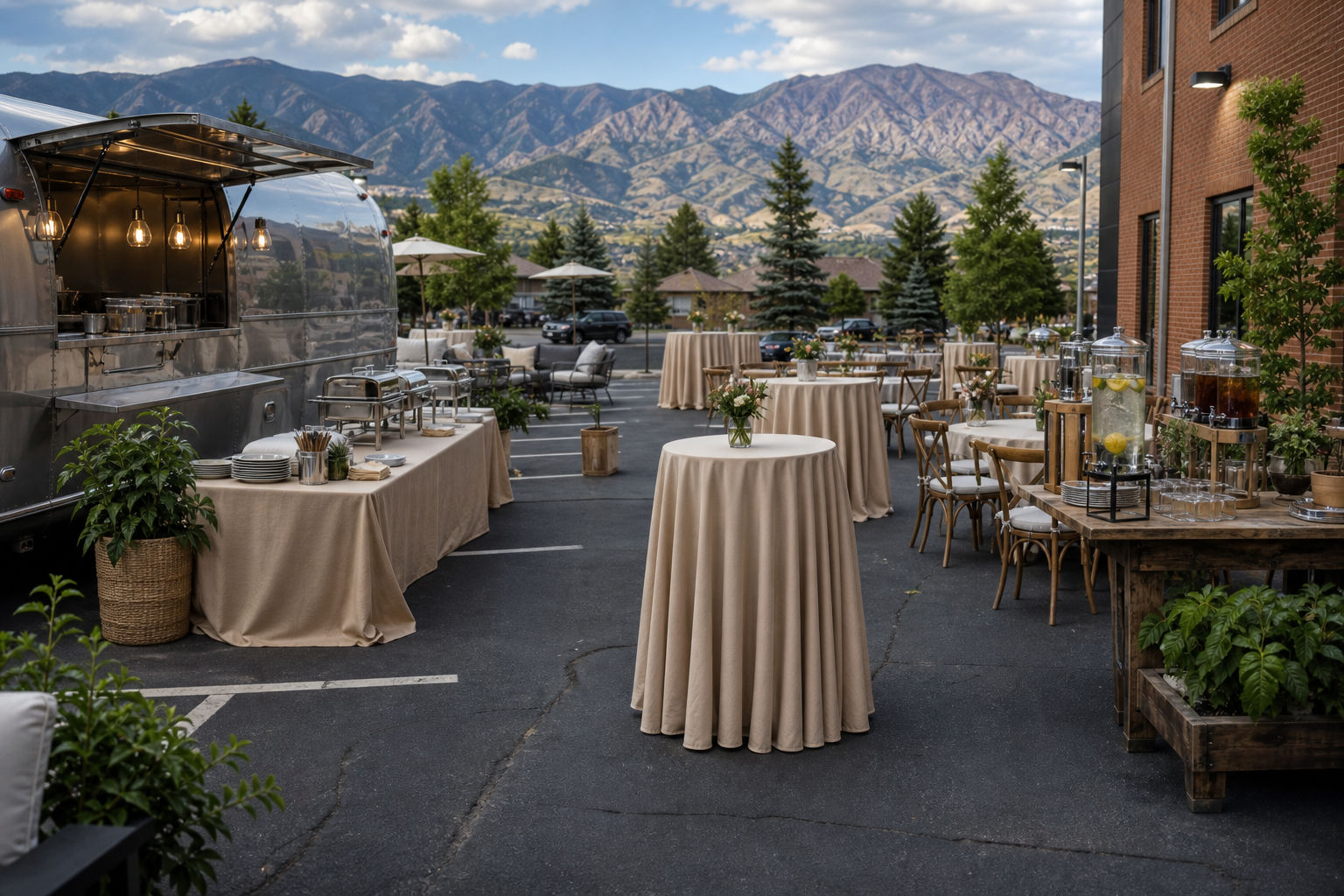
At The Food Truck Family, this is a common planning scenario for clients in Thornton, Denver, and Aurora. As a mobile caterer and event planner, the goal is to make the event feel easy for guests no matter when they arrive. That means thinking beyond a basic menu and deciding when food should be fully stocked, when lines are most likely, how long guests will stay, and how seating and staffing should shift over time. When those details are planned correctly, the event feels relaxed instead of crowded, understocked, or uneven.
Start with arrival patterns, not just the invitation time
The biggest scheduling mistake for staggered events is assuming the invitation time tells the whole story. In reality, hosts need to estimate when guests are most likely to appear. A graduation party from 1:00 to 5:00 may see a first wave from close family at 1:00, a larger social wave from friends around 2:00 or 3:00, and a final group of neighbors or coworkers later in the afternoon. A company open house may have lunch-hour traffic in one burst and after-work attendance in another. Planning around these waves helps determine how much food should be ready at each stage and when service support needs to be strongest.
Professional planners usually map the event into service periods instead of treating the full event as one continuous block. For example, there may be an opening window, a peak service window, a steady mid-event period, and a closing period. This approach is especially important for larger community and corporate functions. If you are planning a business event, it also helps to understand the operational issues covered in Corporate Event Planning Mistakes That Cause Delays, Crowding, and Guest Frustration, since timing errors often create the longest lines and the most avoidable bottlenecks.
Design service windows that match guest flow
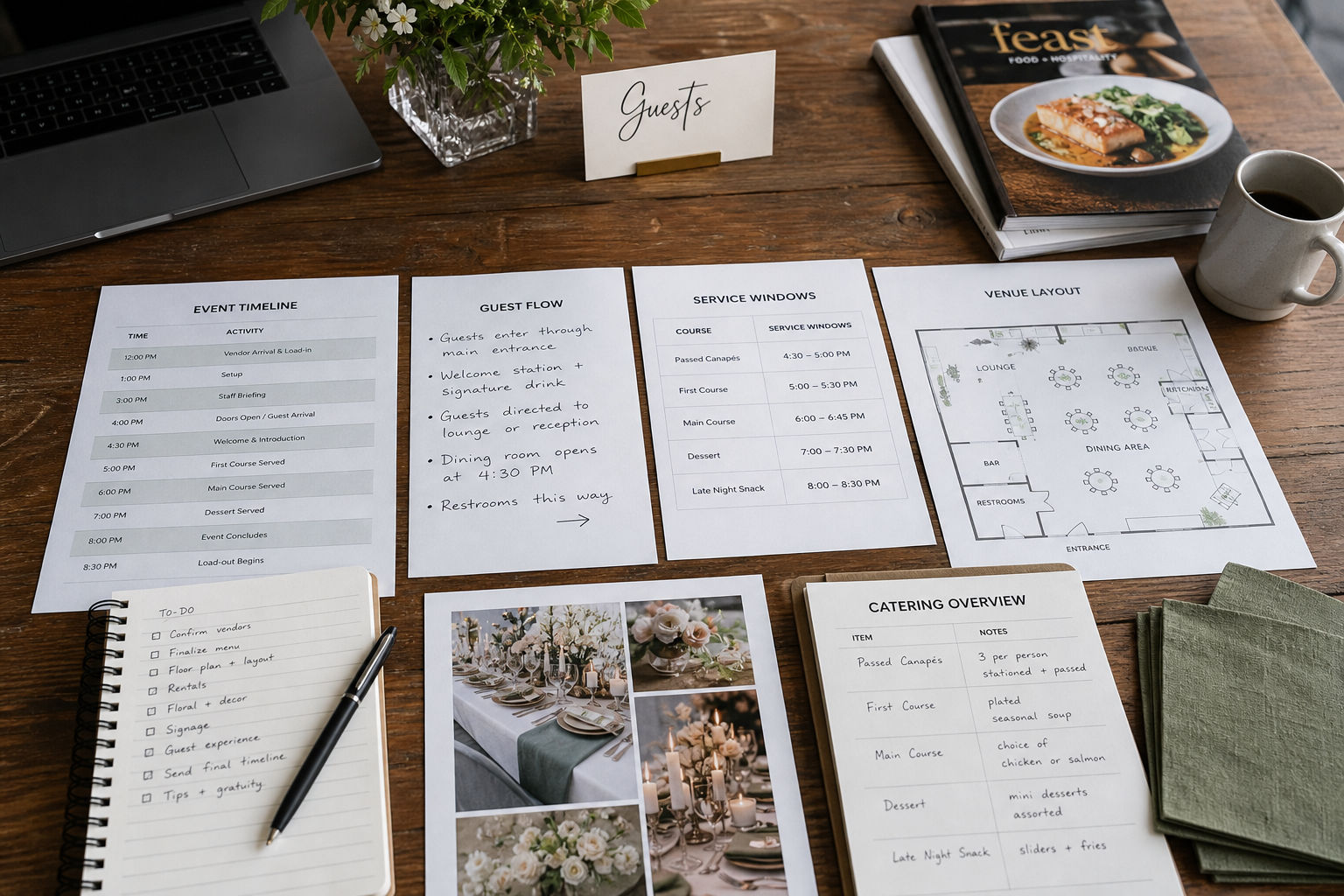
Once likely arrival waves are identified, the next step is building service windows that support them. For drop-in events, the best setup usually avoids a single short meal period. Instead, food service is structured to stay attractive and efficient across a broader timeframe. That may mean opening with lighter offerings, moving into the highest-volume production during the busiest hour, and then maintaining a refreshed but slightly reduced service setup later on. The point is to keep the event from feeling picked over at the end or overbuilt too early.
With mobile catering, this timing can be especially effective because production can be paced. Rather than placing every item out at once, service can be replenished in planned intervals so food quality stays high. This is also where menu design matters. Some items hold well across longer windows, while others should be prepared closer to each peak. If your guest list includes a range of dietary needs, menu and service timing should be coordinated together, as explained in How to Plan an Event Menu and Service Style Around Guest Dietary Needs Without Slowing Down the Event.
- Opening window: establish immediate availability for early arrivals
- Peak window: maximize speed, stock, and staffing for the largest wave
- Mid-event window: maintain choice and quality without overloading tables
- Closing window: keep service appealing for late guests while reducing waste
Plan seating for turnover, not just total headcount
For staggered attendance, seating should be based on how guests use the space, not simply on the total number invited. If 120 people are invited to a backyard celebration in Westminster or Broomfield, it does not necessarily mean 120 seats are required at one time. Some guests will stand and socialize, some will stay for only 30 minutes, and others may rotate through eating areas quickly. A good planner estimates the likely overlap between waves and provides enough seating for comfort during the busiest period rather than trying to seat every invited guest simultaneously.
This is why layout matters as much as timing. Dining tables, cocktail tables, shaded standing areas, and clear walkways all work together to reduce crowding. At private homes, especially for backyard celebrations, a site review can reveal where guests will naturally gather and where traffic jams may occur near gates, patios, or service points. That is one reason site planning is so important, and it is explored further in How an Event Planner Structures a Site Visit for Backyard Weddings and Private Parties With Mobile Catering.
Use replenishment timing to keep the event fresh from start to finish
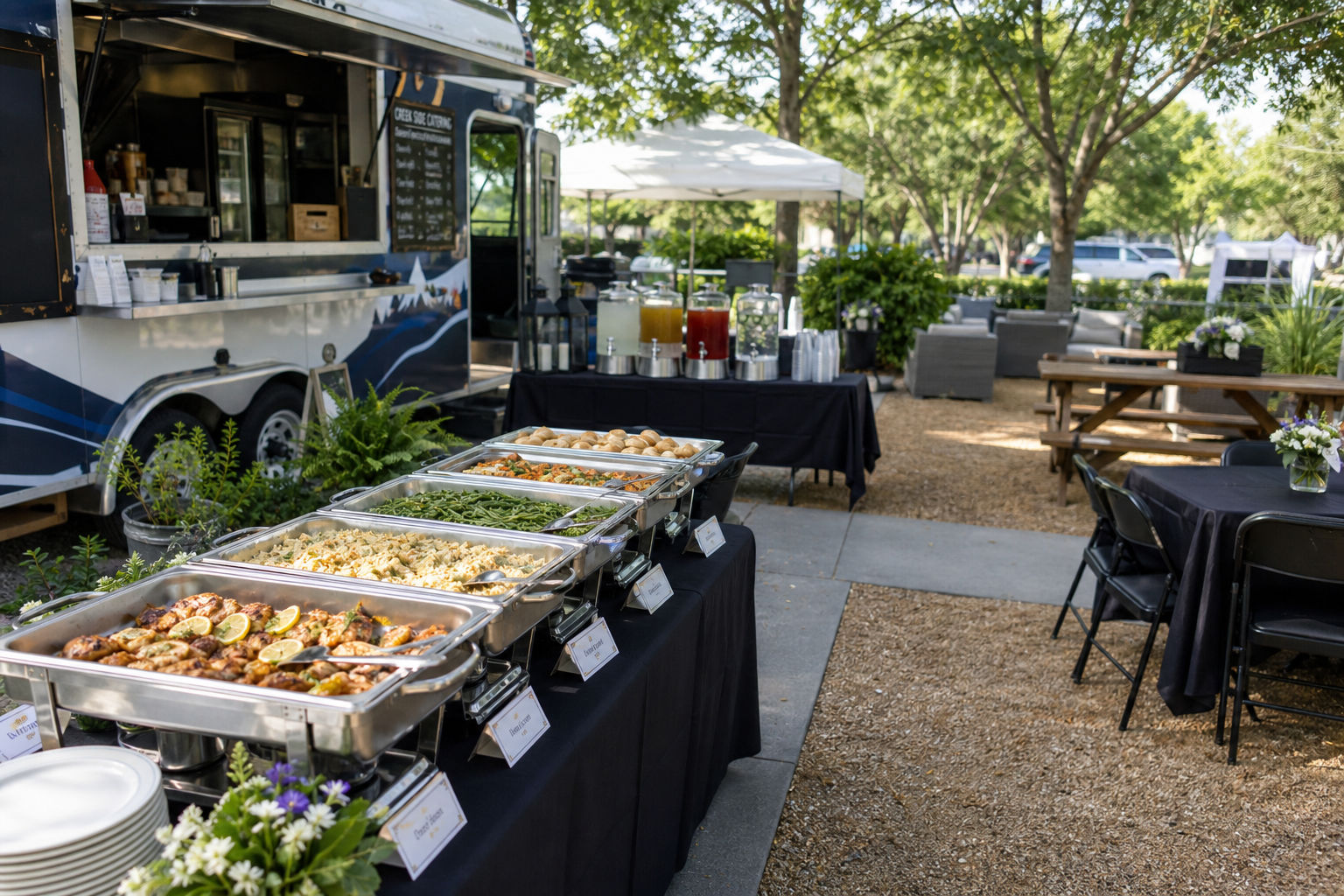
One of the clearest signs of weak scheduling is a buffet or service station that looks full at the beginning and tired by the middle. For wave-based attendance, replenishment should be intentional. That means deciding in advance when food is refilled, when backup inventory is brought forward, and when presentation is reset so late-arriving guests do not feel like they missed the best part of the event. This applies to beverages, disposables, condiments, and dessert just as much as the main meal.
Replenishment planning is especially useful for school, church, and neighborhood events with broad arrival windows. If the event serves several hundred people over multiple hours, the service line often needs to feel newly ready more than once. The same principle is discussed in How Event Planners Design Staggered Service for School, Church, and Community Events With Large Guest Counts, where staggered flow is essential to maintaining speed and guest comfort.
Adjust staffing by hour, not just by event size
Staffing for staggered events should follow the same logic as food service: stronger support during peaks, leaner coverage during slower periods, and enough flexibility to respond if a wave arrives earlier or later than expected. A four-hour event does not need the exact same labor intensity from minute one to minute 240. During peak arrival times, more help may be needed for line management, beverage restocking, trash removal, guest guidance, and resetting service areas. During slower periods, fewer active touchpoints may be necessary.
This is where experienced event management makes a visible difference. Homeowners in Arvada, Lakewood, and Littleton often benefit from having a team that watches the pace of the event rather than leaving family members to solve problems in real time. Local business owners also benefit because well-timed staffing protects the guest experience without making the event feel over-managed. The result is a gathering that stays orderly and welcoming from the first arrivals to the final departures.
Build a timeline around comfort, not just logistics
The best staggered-event schedules do more than move food and people efficiently. They protect the overall mood of the event. Guests should not feel rushed if they arrive early, neglected if they arrive late, or boxed into long lines during the busiest hour. That means the timeline should include not only service openings and refill times, but also trash checks, seating resets, shade or weather adjustments, and transitions between food, dessert, and wrap-up. In Colorado, seasonal conditions can affect those timing decisions significantly, especially for outdoor events, as covered in Colorado Event Planning by Season: What Changes for Spring, Summer, Fall, and Winter Private Events.
For private hosts, this kind of planning removes guesswork. For business hosts, it helps protect brand perception and guest satisfaction. Whether the event is a graduation party in Northglenn, a neighborhood celebration in Commerce City, or a company gathering in Centennial, a wave-based schedule makes the experience smoother for everyone. The key is recognizing that a drop-in event is not less structured than a formal one. It simply needs a different kind of structure.
How The Food Truck Family helps local hosts plan staggered events
The Food Truck Family helps homeowners and local businesses plan events where attendance rises and falls throughout the day. As a caterer, mobile caterer, and event planning partner serving Thornton, Denver, Aurora, Westminster, and surrounding communities, the team can help shape service windows, menu pacing, seating flow, replenishment plans, and staffing support for events that do not follow a single arrival moment. That approach helps keep food quality high, lines manageable, and guests comfortable throughout the event.
If you are planning a graduation party, open house, neighborhood gathering, or company event with staggered attendance, the right schedule can make the difference between a stressful day and a well-paced one. Thoughtful planning allows every guest to feel welcomed, whether they arrive in the first 15 minutes or the last hour.
Source: plan your business event operations carefully