How to Plan an Event Menu and Service Style Around Guest Dietary Needs Without Slowing Down the Event
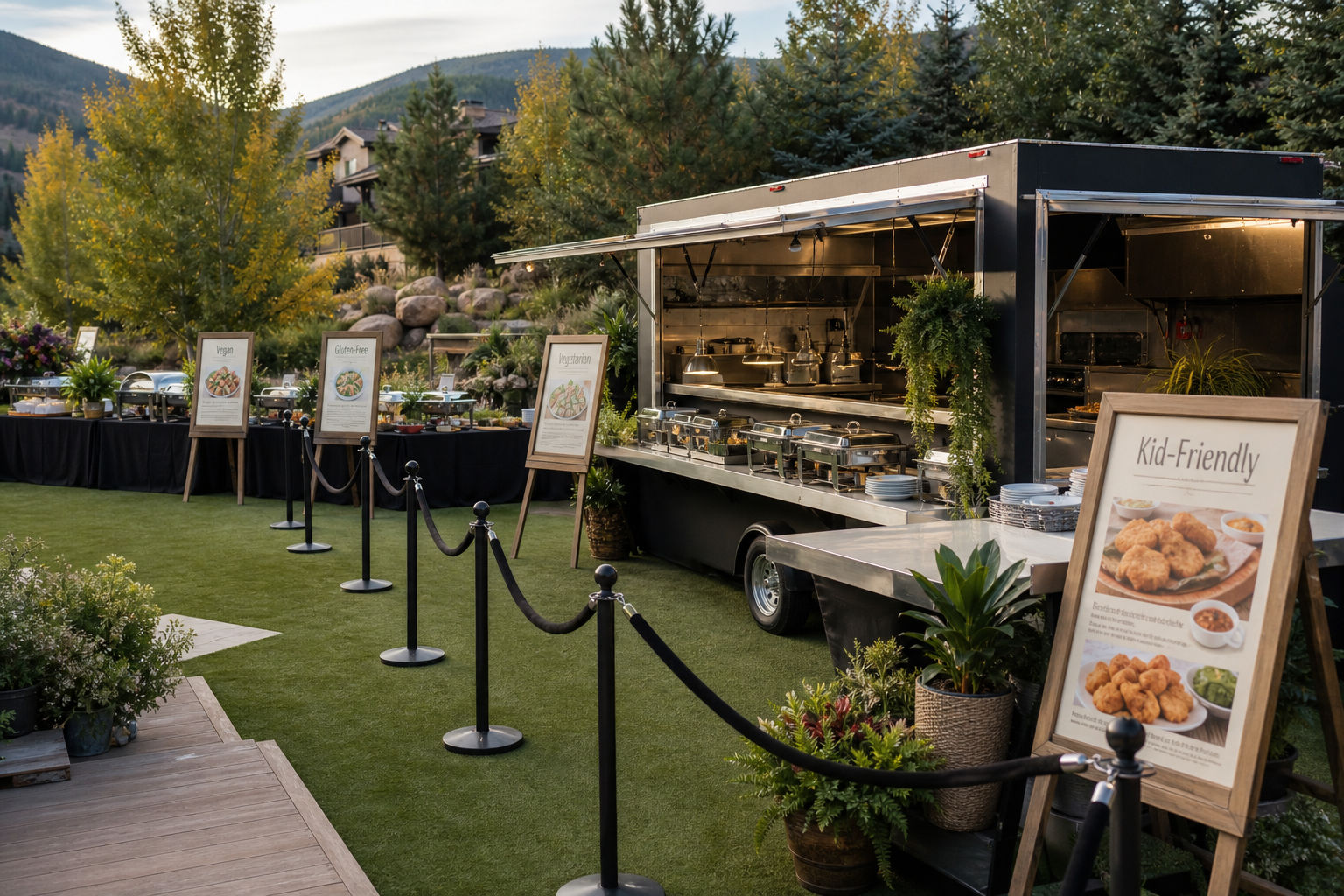
What You'll Learn
- Build inclusive menus without overcomplicating service
- Use signage and station design to reduce guest confusion
- Prevent delays by matching menu choices to service style
- Coordinate allergy-sensitive meals with clearer event flow
- Keep kids and adults moving through service efficiently
Why dietary planning affects event speed
When an event menu includes vegetarian, vegan, gluten-free, allergy-sensitive, and kid-friendly needs, the challenge is not only what to serve. It is also how to serve it without slowing down the entire event. For homeowners planning backyard celebrations in Thornton or business owners organizing staff gatherings in Denver, meal service can quickly become the moment when a well-planned event starts to feel disorganized. Guests hesitate in line, ask repeated questions, or leave unsure whether a dish fits their needs.
The most effective solution is to plan the menu and the service style together. A mobile caterer and event planner should look at the guest mix, timeline, venue access, and service format at the same time. That is especially important for weddings, neighborhood events, school functions, and company parties where large groups move through service in waves. If you are managing a higher guest count, the planning principles in How Event Planners Design Staggered Service for School, Church, and Community Events With Large Guest Counts pair well with dietary planning because they reduce congestion before it starts.
Start with a menu framework, not a long list of special meals
One of the biggest mistakes event hosts make is treating every dietary request as a separate meal track. That approach creates too many custom handoffs and increases the chance of errors. A better strategy is to build a menu framework with overlap across categories. For example, a grain bowl, taco, slider, or pasta station can often be structured so that vegetarian and vegan guests have a clear base option, gluten-free guests have an alternate vessel or starch, and allergy-sensitive guests can avoid specific toppings more easily.
From an event-planning perspective, the goal is to keep the number of decisions a guest must make in line as low as possible. A compact menu with clearly defined options moves faster than a broad menu with many substitutions. In Aurora, Westminster, and Broomfield, where events may range from backyard parties to office lunches, this kind of menu engineering helps guests feel considered without creating a separate queue for every preference.
- Choose dishes with adaptable bases and toppings
- Limit on-the-spot substitutions during peak service
- Use ingredients that serve multiple dietary categories
- Separate true allergy protocols from preference-based requests
Match the service style to the guest list
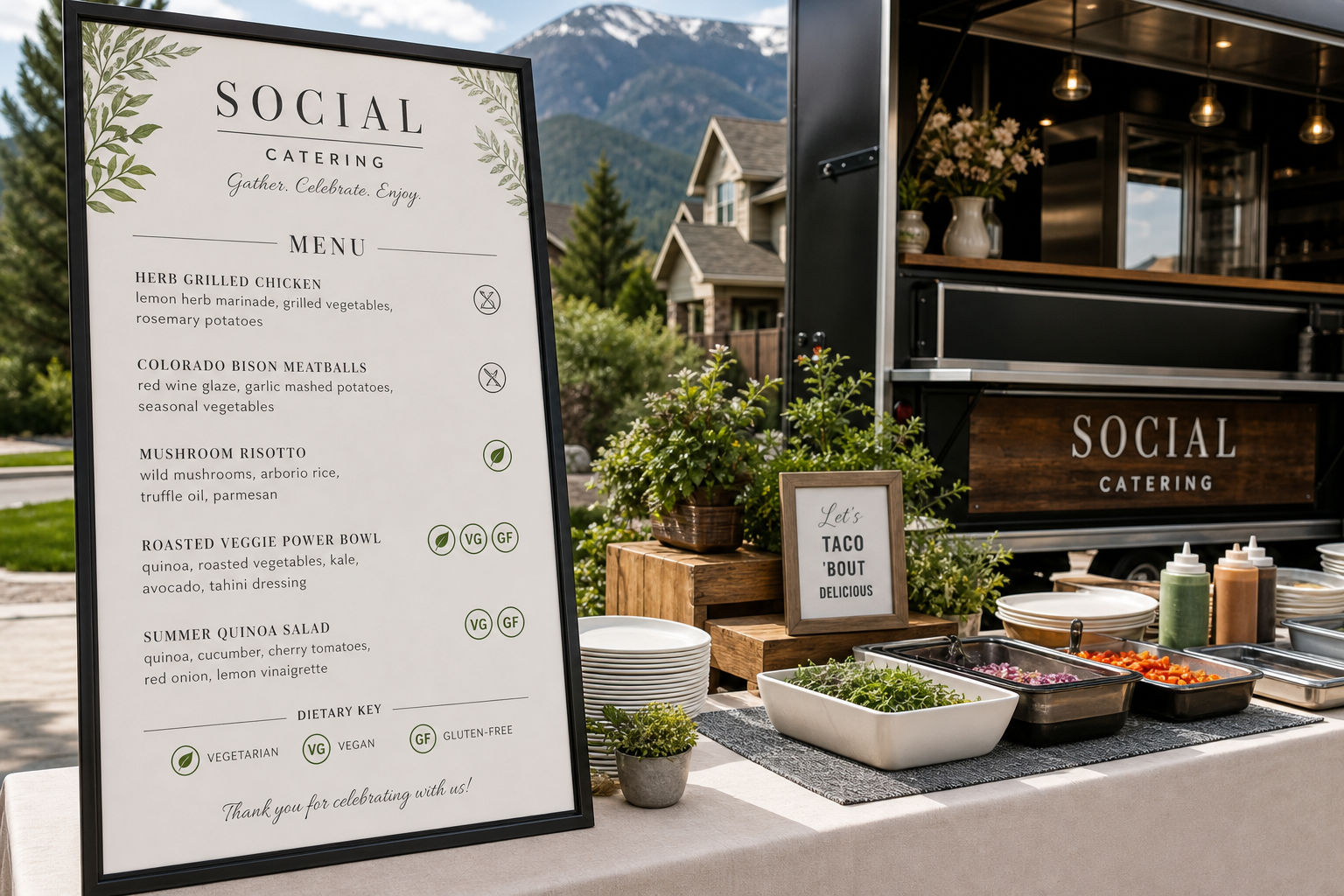
Not every service format handles dietary variety equally well. Buffet lines can work when dishes are labeled clearly and arranged in the right order, but they can also create backups if guests stop to inspect every tray. Individually packaged meals can reduce uncertainty, though they require accurate guest counts and labeling in advance. Food truck service can be highly efficient when the menu is intentionally narrowed and ordering is simplified. For weddings and private parties, planners often compare service styles based on layout, timing, and guest movement before finalizing the menu.
That is why site logistics matter. A backyard event in Lakewood may need a different service setup than a corporate event in Littleton or a wedding in Castle Rock. Entry points, line space, shade, parking, power access, and guest circulation all affect how dietary accommodations should be presented. If the event is taking place at a private residence, How an Event Planner Structures a Site Visit for Backyard Weddings and Private Parties With Mobile Catering is helpful for understanding how planners evaluate the property before service begins.
Service styles that often work well
- Preselected meal counts for weddings and formal events
- Dual-line buffet setups with mirrored menu offerings
- Station service with one clearly marked allergy-friendly lane
- Kid meal pickup tables placed away from the main line
Use signage to answer questions before guests reach the front
Signage is one of the most overlooked tools in event efficiency. Good signs reduce repetitive questions, help guests self-identify their best option, and support staff who are managing line speed. Instead of relying on verbal explanations at the service window, planners should use concise labels that identify major dietary categories clearly. Signs should be easy to read from a short distance and consistent across stations.
Useful signage does not need to be complicated. In most cases, guests benefit from seeing straightforward markers such as vegetarian, vegan, gluten-free option available, or contains dairy. For allergy-sensitive planning, signs should never replace direct communication, but they do help reduce uncertainty and prevent guests from holding up the line while they sort through ingredients. For family events in Arvada, Commerce City, or Northglenn, separate kid-friendly signage can also keep parents from stopping the main line to ask what is mild, plain, or easy to serve to younger guests.
Build a service flow that separates decisions from pickup
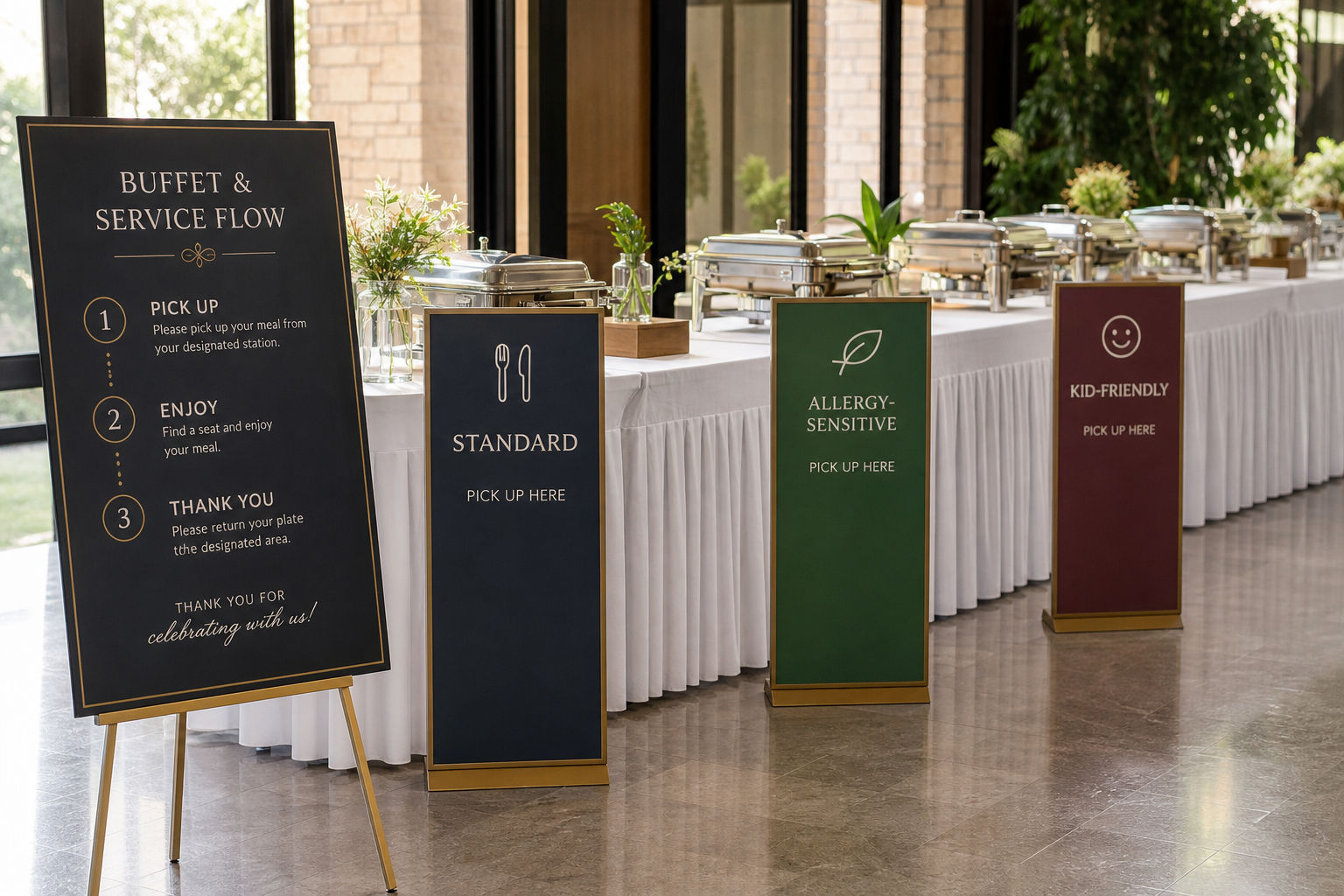
Efficient events are designed so guests make choices before they reach the point of service. That may mean sending menu details in advance, collecting RSVPs with dietary notes, posting menus at the start of the line, or assigning attendants to guide guests before they order. The less time each person spends deciding at the front, the smoother the event feels for everyone behind them.
For larger gatherings in Centennial, Parker, or Lone Tree, planners may create separate paths for guests with prearranged allergy-sensitive meals, while the main line handles standard service. That keeps careful meal handoff procedures from interrupting the pace of general service. At weddings, welcome parties, and brunches, this level of coordination is especially helpful because timeline pressure is higher and guests are often moving between multiple event moments. Hosts planning multi-day celebrations may also find value in How to Plan a Wedding Welcome Party or Day-After Brunch Without Creating Vendor and Timeline Conflicts, since meal timing and vendor coordination directly affect service flow.
Simple ways planners reduce line delays
- Collect dietary information during RSVP or registration
- Confirm which requests are preferences versus medically necessary
- Finalize signage language before event day
- Stage serving utensils, napkins, and condiments away from the ordering point
- Assign one staff contact for allergy-sensitive guest questions
Plan for Colorado conditions and local event realities
In the Denver metro area, outdoor events add another layer to menu and service planning. Heat, wind, cold, and sudden weather shifts can affect both food quality and guest behavior. A menu that works well indoors may slow down outside if lids blow away, sauces become difficult to manage, or guests cluster under one covered area. Seasonal planning matters when selecting dishes, serving containers, and queue layouts. For hosts scheduling events across different times of year, Colorado Event Planning by Season: What Changes for Spring, Summer, Fall, and Winter Private Events offers useful context.
Parking and guest arrival patterns also influence mealtime flow more than many people expect. If guests arrive in uneven waves because of limited access or drop-off congestion, the food service plan should account for that. A mobile caterer that also understands event management can coordinate arrival timing, line setup, and meal release so dietary accommodations remain organized even when the event site is busy. That is one reason local hosts often benefit from reviewing What an Event Planner Recommends for Parking, Drop-Off, and Traffic Control at Home-Based Events while building the overall event plan.
What hosts should ask before booking
Before hiring a mobile caterer or event planner, ask how they handle dietary variety during active service, not just whether they offer those menu options. The right partner should be able to explain how dietary needs are collected, how menu items are labeled, how allergy-sensitive meals are separated, and how service flow is protected during peak demand. For business owners planning office events and homeowners planning weddings or milestone parties, these questions reveal whether the team is thinking beyond the menu itself.
The Food Truck Family supports events across Thornton, Denver, Aurora, Westminster, Broomfield, and surrounding communities with a planning-first approach to mobile catering. When menu design, signage, and guest flow are coordinated from the beginning, dietary accommodations become part of a smooth event experience rather than a last-minute obstacle. The result is a service style that feels inclusive, organized, and easier for guests to navigate.
Source: how to manage food allergies