Planning a Wedding or Private Party at a Park or Public Space in Denver: What an Event Planner Handles Before Event Day
What You'll Learn
- Understand the permit and approval steps for public-space events
- Learn how access, parking, and load-in affect catering service
- See why power, restroom, and waste planning matter early
- Know how guest wayfinding improves timing and overall experience
- Find out what an event planner coordinates before event day
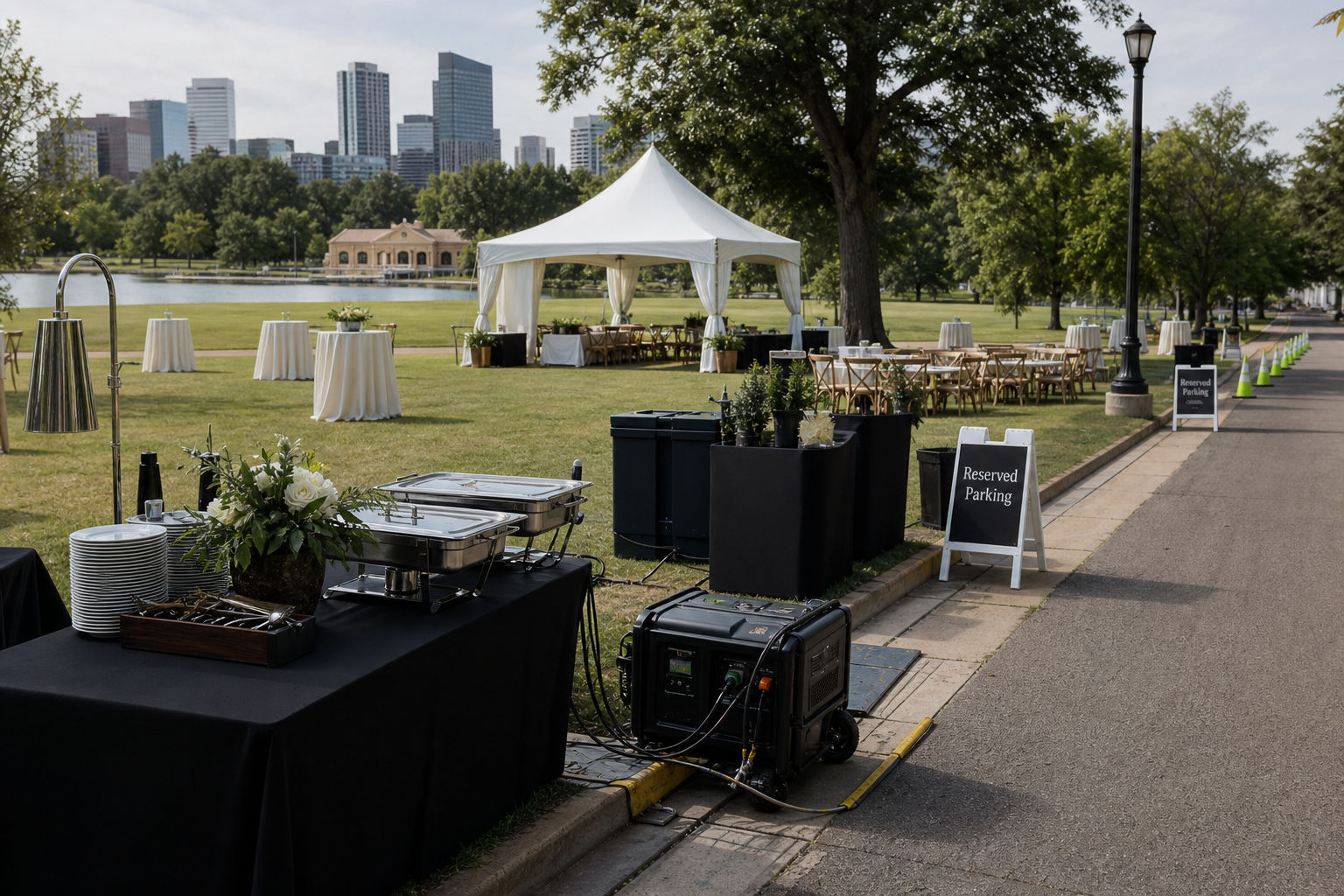
Denver-area parks, open spaces, and public venues can create a memorable setting for weddings, milestone birthdays, company gatherings, and neighborhood celebrations. They also introduce a planning layer that many hosts underestimate. When catering is involved, especially mobile catering, the event has to work not just for guests but for vehicles, equipment, food safety, timelines, and public-space rules. That is why early coordination matters. A professional event planner helps translate a beautiful location into a functional event site long before guests arrive.
For clients in Denver, Aurora, and Thornton, The Food Truck Family approaches public-space events by looking at the site through an operations lens. A park may seem simple on a tour, but questions quickly follow: Where can vendors park? How far is the service area from the curb? Is a permit required for amplified sound, alcohol, or food service? Are there restrooms nearby, and are they sufficient for the guest count? These details shape setup time, staffing, menu execution, and the overall guest experience.
Permits come first, not last
One of the biggest mistakes hosts make is treating permits as a final checklist item. In public spaces, permits often determine whether the event can happen as envisioned at all. Depending on the location, planners may need to confirm rules related to reservations, catering, alcohol, tents, generators, amplified music, open flames, vehicle access, and event hours. Some spaces also have insurance requirements or restrictions on where service equipment can be placed.
Early permit review helps avoid expensive changes later. If a park does not allow a food truck to drive onto a service road, for example, the catering plan may need to shift to a different service format or a different location entirely. If alcohol service requires added approvals, that affects the timeline for vendors and hosts. This is one reason site visits are so valuable. If you are comparing public-space planning to residential events, our post on how an event planner structures a site visit for backyard weddings and private parties with mobile catering shows how logistics reviews prevent surprises before contracts and timelines are finalized.
Access and load-in shape the entire service plan
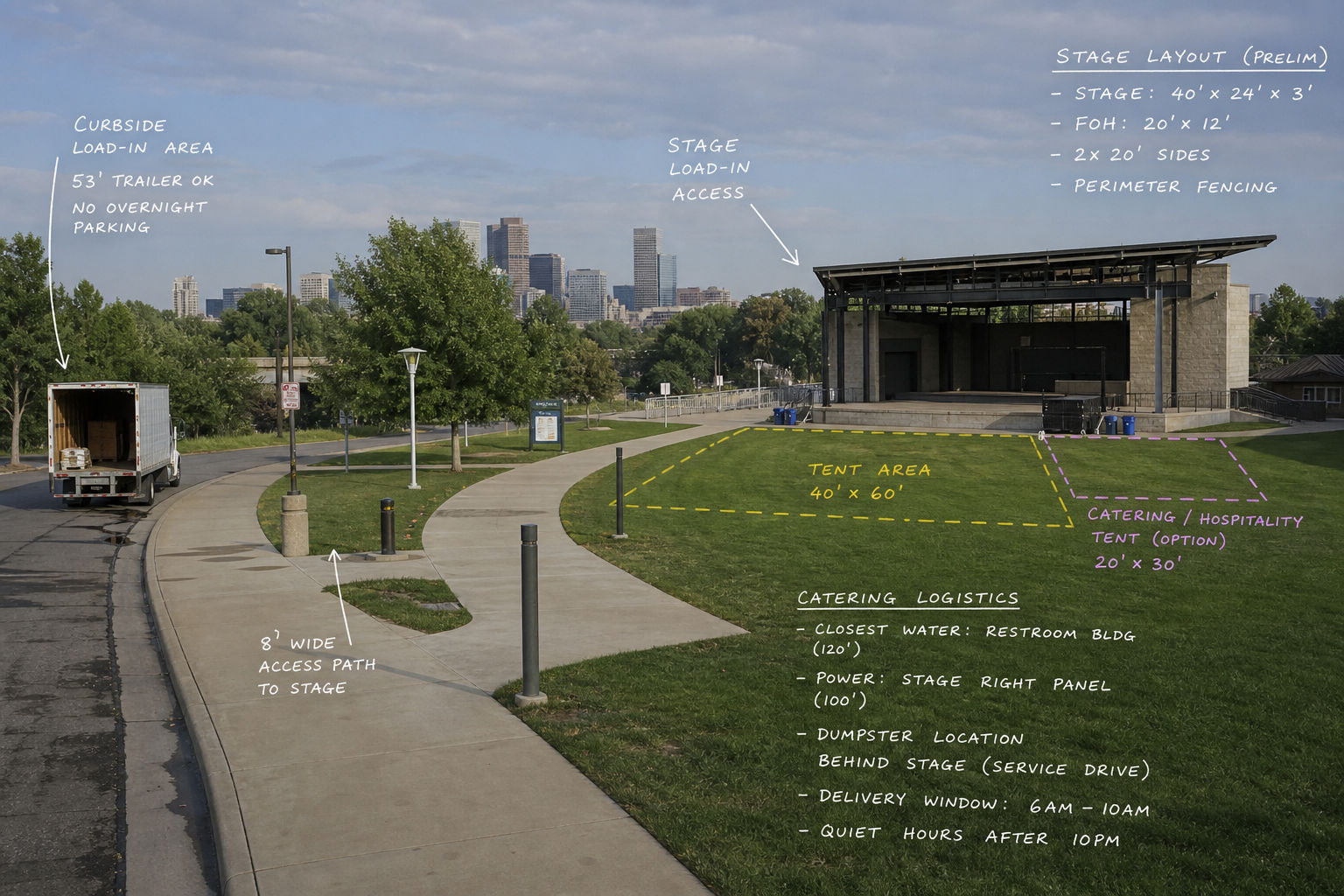
In a restaurant or private venue, the path from kitchen to guest is usually built in. In a park, that path may include gates, sidewalks, grass, distance from parking areas, or time-limited access windows. Event planners work backward from service time to determine how vendors will arrive, unload, stage equipment, and exit without disrupting the event or violating site rules.
For mobile caterers, access is not a minor detail. Vehicle height clearance, turning radius, surface conditions, and proximity to the serving area all affect what can be executed efficiently. Even when a food truck is not the service format, mobile catering still requires tables, holding equipment, beverage stations, disposables, waste containers, and staff circulation space. A planner identifies where each element belongs so service feels seamless instead of improvised.
- Confirm vendor entry points and any locked gate access
- Map unloading distance from curb or lot to service area
- Review surface conditions for carts, dollies, and equipment
- Check setup and breakdown time restrictions
- Coordinate where support vehicles can wait or park
Parking and traffic need a guest-centered plan
Public spaces often have limited parking, shared lots, or competing activity from other visitors. That makes guest arrival planning especially important for weddings and private parties. A planner helps evaluate whether the site can support the expected guest count and whether overflow parking, rideshare instructions, shuttle service, or staggered arrivals should be built into communications.
This is not only about convenience. Parking affects punctuality, ceremony timing, elderly guest access, vendor setup, and neighborhood relations. For events in Westminster, Lakewood, or busy Denver park areas, a clear parking strategy can be the difference between a smooth welcome and a stressful start. If you are also considering a home-based celebration, our article on what an event planner recommends for parking, drop-off, and traffic control at home-based events explains how arrival logistics directly influence guest flow and service timing.
Power, lighting, and utilities should never be assumed
Many hosts assume a public venue will have accessible power nearby. Sometimes it does, but that does not mean it is adequate, permitted for event use, or conveniently located. Event planners confirm whether power is available, how much is available, who has access to it, and whether backup solutions are needed. This matters for catering equipment, beverage service, lighting, DJ or sound support, and any warming or refrigeration requirements.
Utility planning also extends beyond electricity. Water access, handwashing needs, waste removal, and gray-area questions such as extension cord routing all need answers in advance. If the event runs into evening hours, planners also evaluate ambient lighting and safe path illumination for guests walking to restrooms or parking areas. A scenic lawn can feel very different after sunset, especially for formal events where guests may be in dress shoes or navigating uneven ground.
Restroom planning affects comfort, timing, and perception
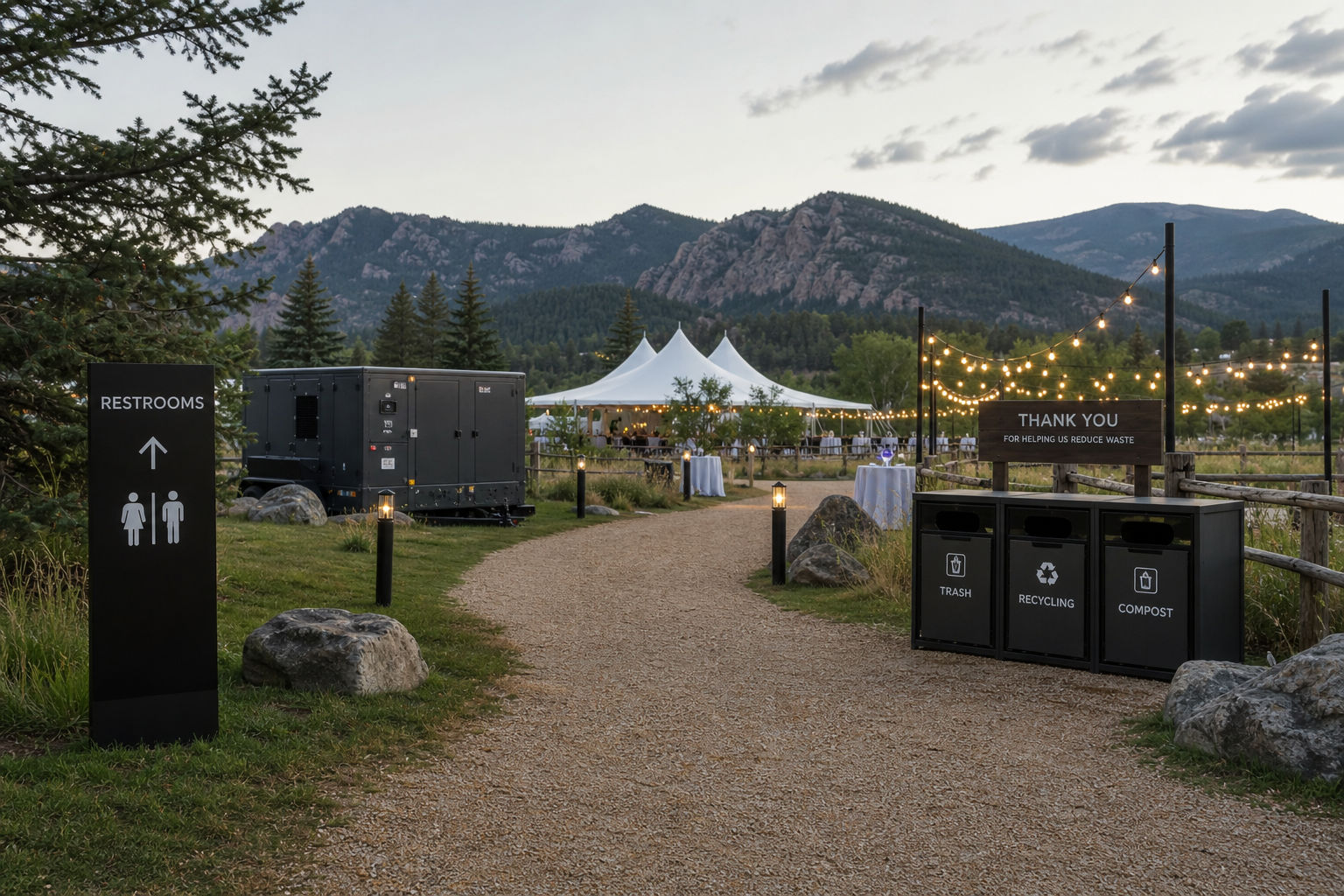
Restrooms are one of the most overlooked parts of outdoor event planning, yet guests notice restroom issues immediately. The planner evaluates both quantity and quality: how many restrooms are available, how far they are from the event, whether they are accessible, how they will be maintained during the event, and whether supplemental restroom trailers are appropriate. The answer depends on guest count, event duration, alcohol service, and the formality of the event.
For weddings and polished private parties, restroom planning is part of the guest experience, not just a compliance concern. Long lines can interrupt dinner service, delay toasts, and create frustration. Remote restroom locations can also complicate wayfinding and accessibility. A planner helps hosts think through these issues at the same time as catering and layout so the site functions as a complete event environment.
Wayfinding keeps guests moving with confidence
Public spaces often involve multiple entrances, shared paths, and large open areas that can confuse guests who are unfamiliar with the site. Event planners create a wayfinding plan that begins before arrival and continues through the event footprint. That may include pre-event directions, parking instructions, rideshare drop-off guidance, map graphics, signage placement, and on-site staffing at key points.
Good wayfinding supports more than convenience. It helps ceremonies start on time, keeps lines organized at food service, and reduces the number of calls and texts the host receives while trying to enjoy the event. For larger guest counts or community-style gatherings, service pacing becomes especially important. Our article on how event planners design staggered service for school, church, and community events with large guest counts offers useful insight into how layout and guest movement influence food service efficiency.
Seasonal conditions change the plan in Colorado
In the Denver metro area, weather and seasonal conditions can alter almost every logistics decision. Wind, heat, afternoon storms, early sunsets, and ground conditions all affect public-space events. A planner accounts for shade, guest comfort, tenting rules, backup surfaces, beverage needs, and service timing based on the season and the site. What works well in a June park event may be a poor fit in October or early spring.
That is why early planning should include contingency thinking, not just the ideal scenario. For more on how local conditions affect private events across the year, see Colorado event planning by season: what changes for spring, summer, fall, and winter private events. Hosts planning a full wedding weekend may also benefit from how to plan a wedding welcome party or day-after brunch without creating vendor and timeline conflicts, especially when multiple locations and service windows are involved.
What an event planner is really coordinating before event day
By the time a public-space event feels effortless, a substantial amount of behind-the-scenes coordination has already happened. An event planner is aligning the venue rules, catering format, service timeline, guest flow, site layout, vendor access, contingency plans, and communication details into one workable system. This preparation protects both the guest experience and the catering execution.
- Review site rules, permits, and reservation requirements
- Conduct or coordinate a logistics-focused site visit
- Build a layout for service, seating, and circulation
- Confirm parking, drop-off, and vendor access plans
- Plan utilities, restrooms, waste, and backup options
- Create guest instructions and day-of wayfinding details
For homeowners and business hosts in Denver, Broomfield, Arvada, and surrounding communities, this is where working with an experienced mobile caterer and planning partner adds real value. The Food Truck Family helps clients think beyond the menu and prepare the site itself for successful service. When the operational details are handled early, event day can focus on hospitality, celebration, and the experience guests will remember.
Source: Denver Parks & Recreation permits