What an Event Planner Needs From Your Venue Walkthrough Before a Wedding or Private Party
What You'll Learn
- Understand how walkthroughs shape timing and guest flow
- Learn what planners check for catering access and setup
- Ask better questions about parking, restrooms, and vendors
- Avoid venue issues that create delays on event day
Before a wedding reception, milestone birthday, company gathering, or private party is approved, a professional venue walkthrough answers a simple question: can this site support the event you want to host without creating avoidable problems? For couples and hosts, the walkthrough is where ideas become operational decisions. For a mobile caterer and event planning team like The Food Truck Family, it is the step that reveals how service will move, where guests may bottleneck, whether vendors can load in efficiently, and how the property will function once real people, equipment, food, and timelines are added.
That matters whether the event is in Thornton, Denver, Aurora, or a smaller nearby community. A venue may look perfect in photos and still create issues with parking, restroom access, power, lighting, weather backup, or catering placement. A walkthrough helps identify those details early, while there is still time to adjust the layout, revise the service plan, or choose a better site. If you are comparing properties, this process also helps you ask sharper questions before signing off.
What a professional venue walkthrough is really for
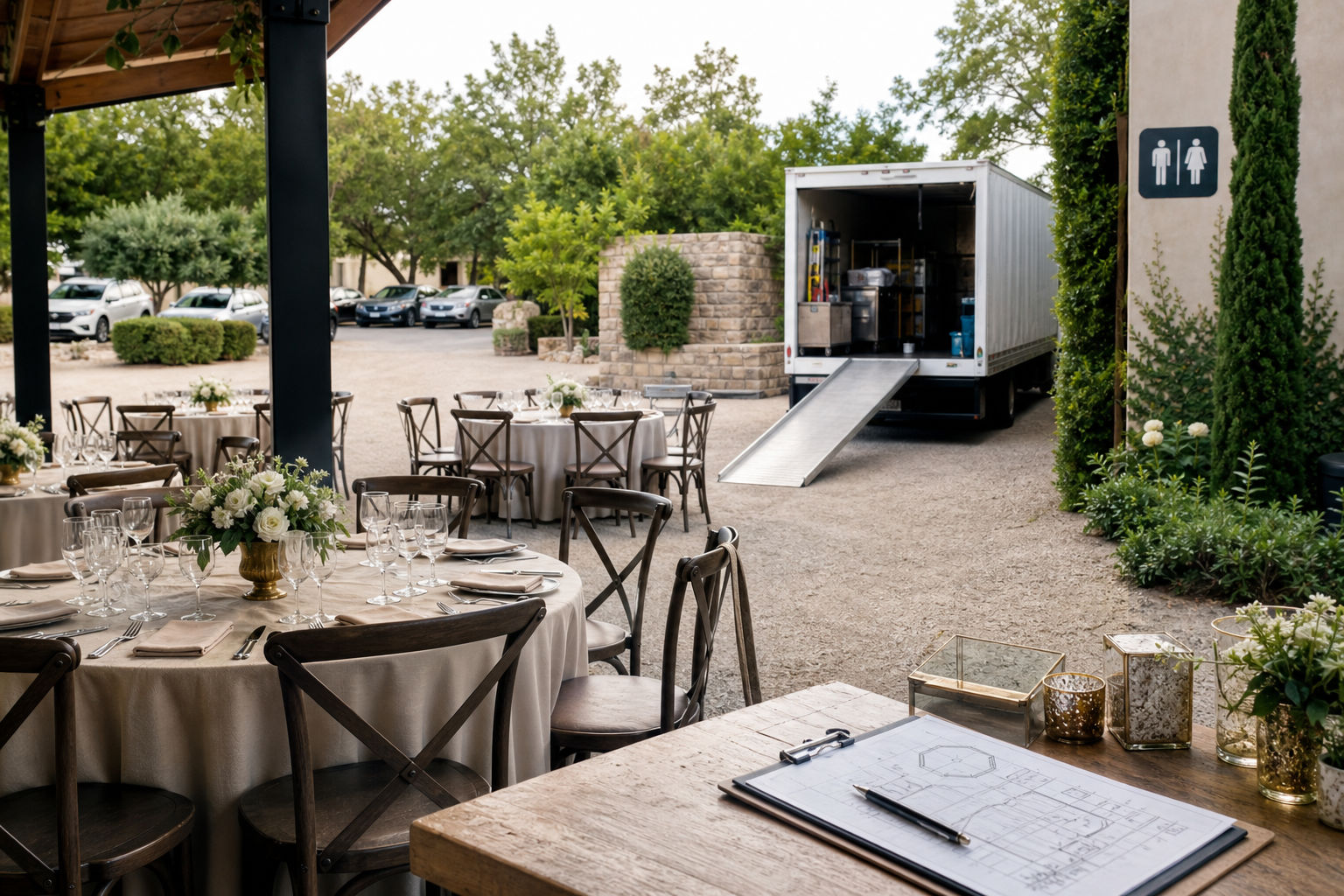
A venue walkthrough is not just a tour. It is a working review of how the event will operate from arrival to breakdown. An experienced planner evaluates the site through the lens of timing, logistics, safety, comfort, and service quality. That includes where guests enter, where catering stages, how trash is handled, where lines may form, how rentals are delivered, and whether the event can stay on schedule without forcing vendors to improvise.
For mobile catering, this is especially important. A food truck or mobile kitchen needs more than a scenic backdrop. It needs enough room to park, safe access to the service area, a stable surface, reliable clearance, and a layout that keeps guests moving without blocking entrances or gathering in unsafe areas. Hosts planning at a home or open-air site may benefit from reading How an Event Planner Structures a Site Visit for Backyard Weddings and Private Parties With Mobile Catering, which covers many of the same logistical principles in residential settings.
The main things your planner is checking during the walkthrough
1. Event timing and transitions
One of the first goals is to map the event timeline against the physical space. Where will guests gather before the ceremony or main program? How far is the walk from cocktails to dinner? Can toasts happen without interrupting service? Is there enough room for a line to form without backing into a bar, hallway, or entrance? A good walkthrough helps the planner spot timing conflicts before they become delays.
Even a beautiful venue can fail operationally if transitions are awkward. If guests must cross the catering route to reach seating, or if the dessert display is placed where staff need to replenish beverages, service slows down. This is why event planners study sequence, not just appearance. The same mindset applies to larger events, and many hosts can learn from Corporate Event Planning Mistakes That Cause Delays, Crowding, and Guest Frustration, where crowd flow and timing issues often create the biggest guest complaints.
2. Vendor placement and working space
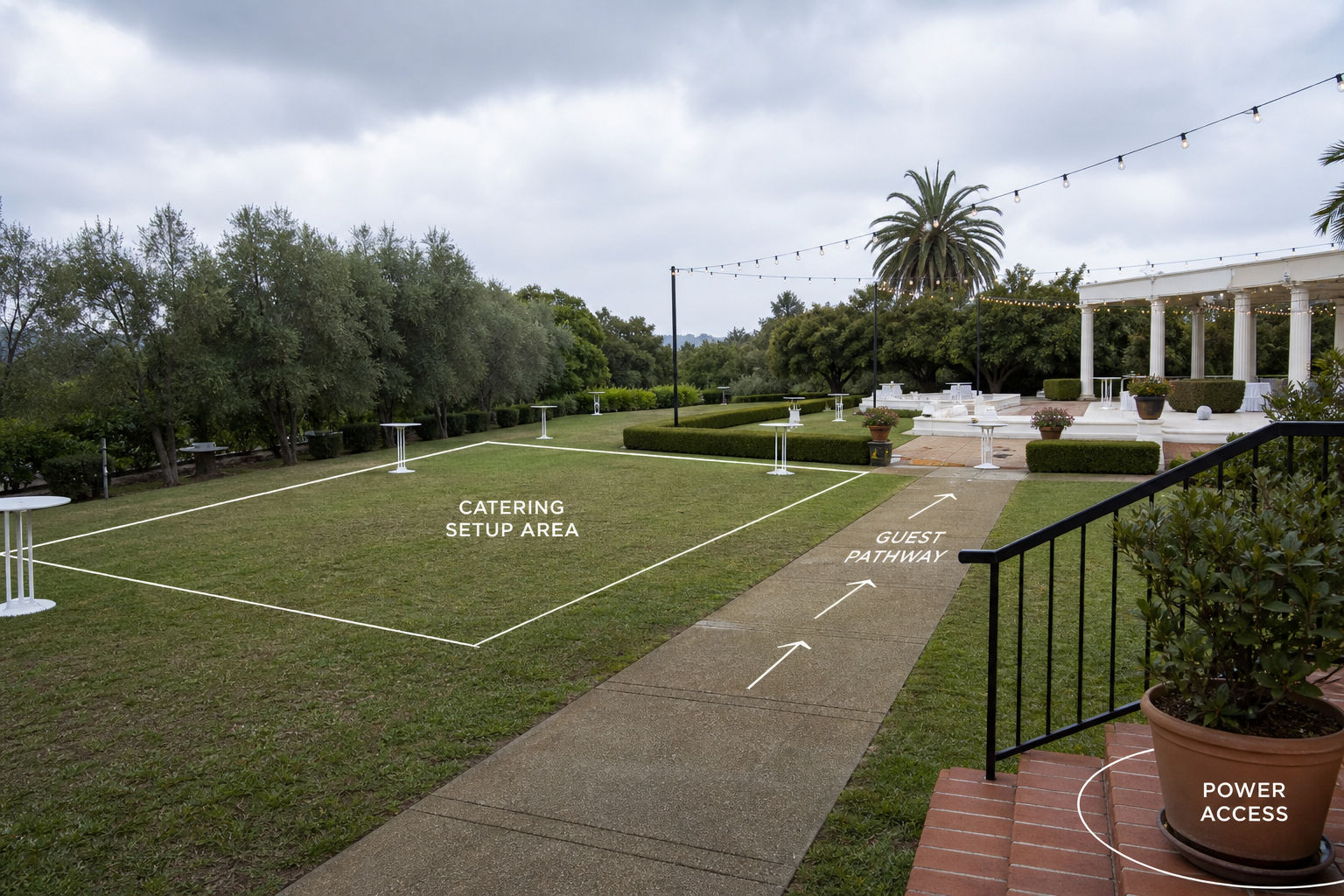
Your planner also needs to know where every vendor can realistically work. That includes mobile catering, bartending, rentals, entertainment, florals, photography, and coordination staff. The question is not whether each vendor can technically fit, but whether they can do their job without interfering with one another. A catering team may need a prep area, handoff zone, trash access, and a route for restocking. A DJ may need power and protection from guest traffic. Rental crews may need a clear path for tables, chairs, or tent equipment.
- Load-in and load-out routes for vendors
- Parking or staging space for catering vehicles
- Clearance, slope, and surface conditions
- Power, lighting, and weather protection needs
- Backup locations if the original plan changes
3. Guest flow, lines, and comfort
Guest flow is one of the clearest signs of good planning. During a walkthrough, the planner studies how people will move between parking, check-in, ceremony, bar, buffet or truck service, seating, restrooms, and exits. The goal is to reduce congestion and keep guests comfortable. This is particularly important for weddings, school functions, and community events where multiple groups may move at once.
If menu service is part of the plan, the venue walkthrough also helps determine whether a single service line, dual-sided line, staggered release, or station-based setup makes the most sense. Dietary accommodations may need a separate pickup point or clearer signage. For hosts still deciding on service style, How to Plan an Event Menu and Service Style Around Guest Dietary Needs Without Slowing Down the Event is a useful next read.
4. Restroom access and sanitation planning
Restrooms are easy to overlook when touring a venue, but they matter to every event. A planner checks how many restrooms are available, how far they are from the main activity, whether they are accessible, and whether guests can reach them without cutting through service areas. If the site is outdoors or remote, portable restroom placement may become part of the operations plan. That decision affects guest comfort, vendor layout, and even where lines form during peak times.
5. Parking, arrival, and neighborhood impact
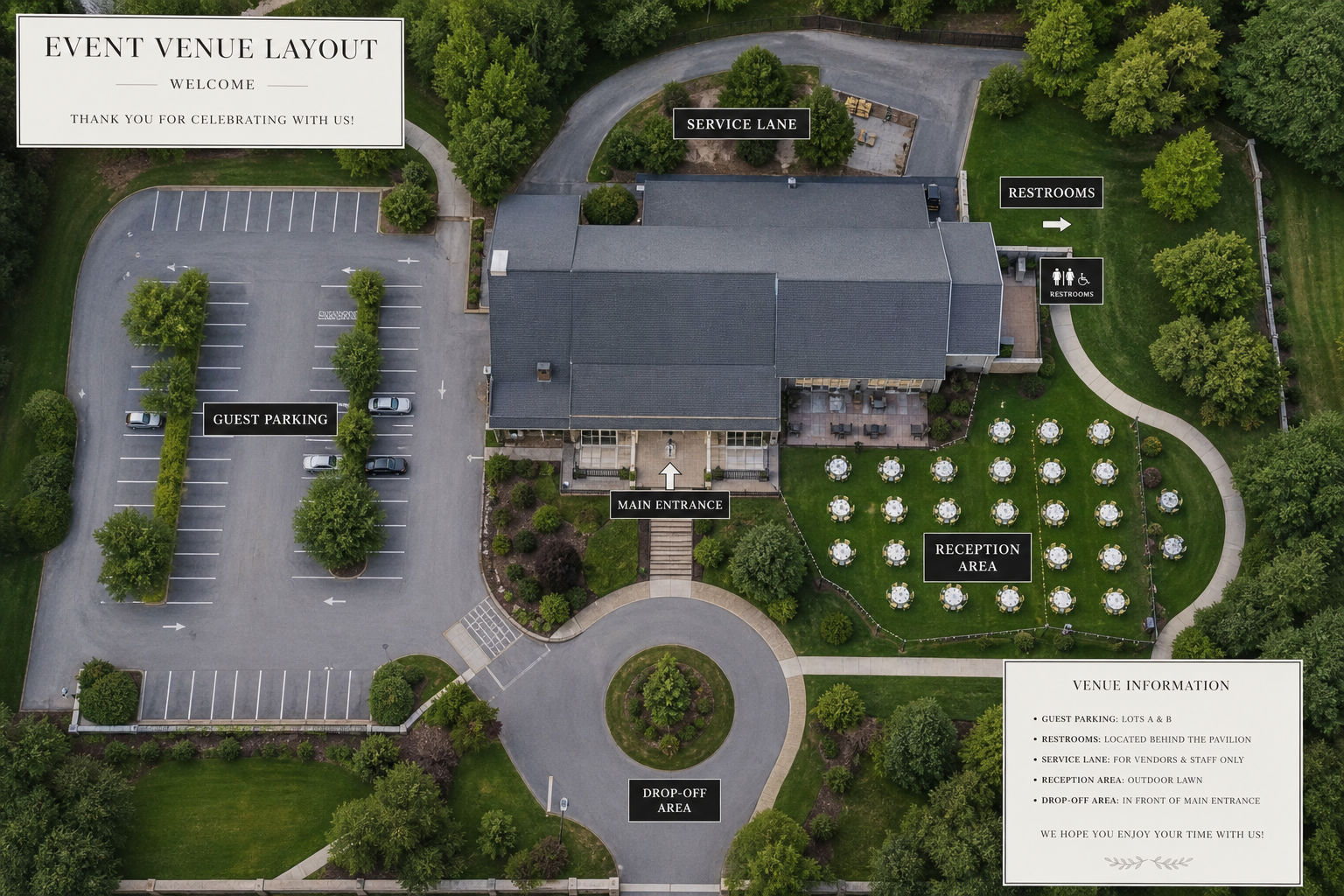
Parking is another major walkthrough topic, especially for private events in Westminster, Broomfield, Lakewood, or Littleton where neighborhood streets, office lots, or shared-use properties may have restrictions. Guests need a simple arrival experience, but vendors also need designated access. A planner will check where guests should park, where rideshare drop-off makes sense, whether valet is needed, and how deliveries can happen without blocking traffic or disrupting nearby businesses or residents.
At public or semi-public sites, your planner may also review permit requirements, curfews, and site rules that affect setup or service. If you are considering a park or public venue, Planning a Wedding or Private Party at a Park or Public Space in Denver: What an Event Planner Handles Before Event Day explains how these approvals fit into the planning process.
How hosts can prepare for the walkthrough
You do not need to know every technical detail before the walkthrough, but you should arrive with a clear picture of your event goals. Estimated guest count, preferred service style, event schedule, alcohol plans, entertainment needs, and any site restrictions all help the planner evaluate the venue accurately. If you are hosting at a residence, think through neighbor access, driveway use, and power availability. If you are hosting at a commercial property, ask what rules apply to catering vehicles, open flame, waste disposal, and after-hours access.
- Where will guests enter, gather, and queue?
- Where can catering park and serve safely?
- What happens if weather changes the plan?
- Are restrooms close enough for the guest count?
- How will vendors load in without crossing guest areas?
Why this matters before you approve a venue
Approving a venue without a serious operational review can lead to expensive adjustments later. You may discover too late that the truck cannot access the service point, guests have to walk too far between key areas, parking is inadequate, or a beautiful courtyard creates line congestion during dinner. A walkthrough brings those realities into focus while there is still room to revise the floor plan, change the timeline, add rentals, or select a different property.
For homeowners and local business owners across Thornton, Denver, Aurora, and surrounding communities, that planning discipline is what turns a promising location into a workable event site. The Food Truck Family approaches walkthroughs with the perspective of both a mobile caterer and event planning partner, helping clients think beyond aesthetics and into guest experience, service efficiency, and practical execution. When the site is evaluated properly, the event runs smoother, vendors coordinate better, and guests spend more time enjoying the occasion instead of waiting, wandering, or wondering where to go next.
Source: prepare for emergencies