How an Event Planner Coordinates Vendor Load-In and Setup for Mobile Catered Events in Thornton and Denver
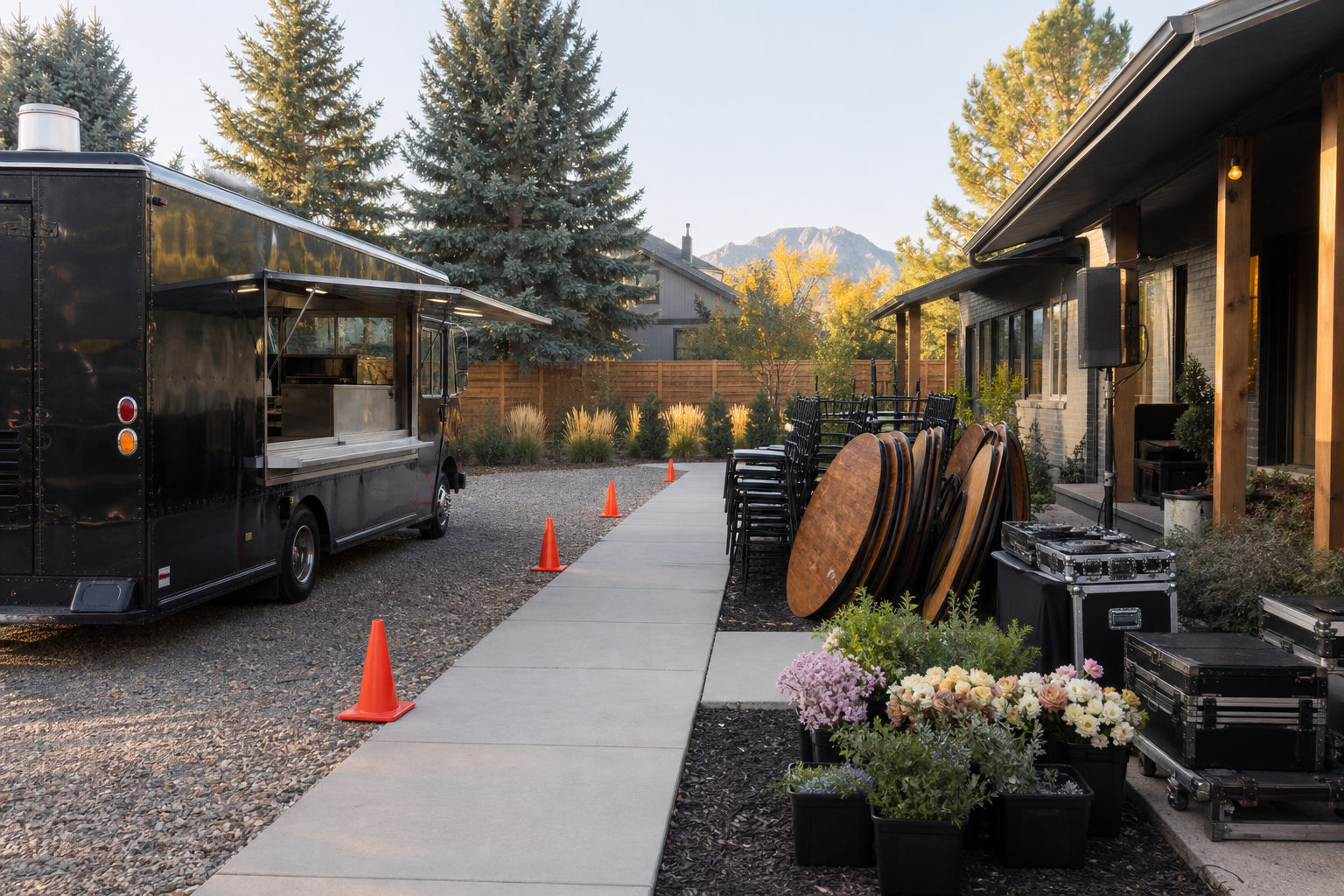
What You'll Learn
- How arrival windows reduce congestion and setup delays
- Why staging zones protect access, safety, and guest flow
- What setup order works best for multi-vendor events
- How planners prevent noise, parking, and power conflicts
- When a site visit reveals hidden load-in problems early
At a mobile catered event, great food is only part of what makes the day feel seamless. The difference between a smooth setup and a stressful scramble usually comes down to load-in planning. For homeowners in Thornton and Denver, and for business owners hosting employee or client events, an event planner helps organize when each vendor arrives, where each vehicle parks, how equipment moves onto the site, and what must be installed first. That planning protects guest experience while keeping driveways, access points, and service paths clear.
For a company like The Food Truck Family, which works as a mobile caterer and event planning partner, load-in coordination is especially important because catering often affects several other vendors at once. Food trucks may need turning clearance, generator spacing, or electrical access. Rental teams may need room for tables, linens, and tent components. DJs, florists, and signage installers all need setup time without blocking one another. When these details are mapped in advance, events in Aurora, Westminster, and Broomfield tend to start on time and feel calm from the first arrival to the first guest served.
Why vendor load-in planning matters more than most hosts expect
Many hosts assume vendors can simply show up a few hours early and work it out on site. In reality, that approach often creates bottlenecks. A florist van may block the route needed for rental carts. A DJ trailer may take the nearest power location before the caterer arrives. A food truck may be parked correctly for service but incorrectly for departure, forcing equipment to be moved during cocktail hour. Those problems do not just slow setup. They can interrupt neighbors, create safety hazards, and distract from the event itself.
A planner approaches the site like an operations map rather than a blank space. That includes identifying entry points, gate widths, slope, pavement conditions, power sources, guest pathways, restroom access, fire lanes, and backup parking. This type of planning often starts during a site visit, much like the process described in How an Event Planner Structures a Site Visit for Backyard Weddings and Private Parties With Mobile Catering. The goal is simple: every vendor should know where to go, what to avoid, and when their work can happen without interfering with someone else.
How planners map arrival windows
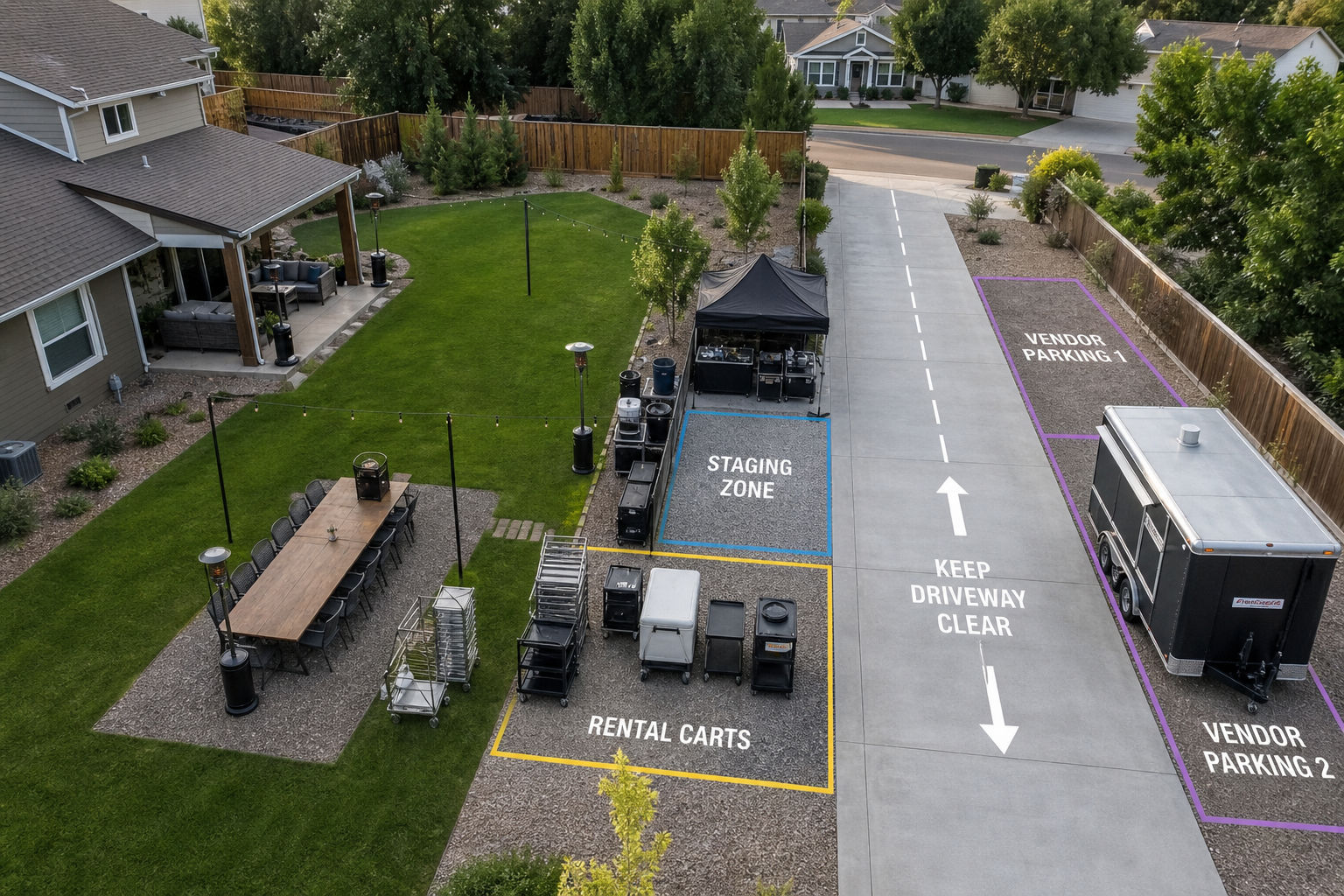
Arrival windows are one of the most effective tools in event management. Instead of telling every vendor to arrive at the same time, a planner builds a sequence based on vehicle size, setup complexity, and site dependency. For example, rental delivery may come first if tables, chairs, or tenting define the event footprint. Florals may follow once key surfaces are in place. The DJ may arrive after power and staging areas are protected. The food truck may arrive once its service lane is clear and any nearby decor is safe from exhaust or heat.
- Large rentals and tenting arrive first if they shape the layout
- Power-dependent vendors are scheduled after access and outlets are confirmed
- Food trucks arrive when their service path and parking position are fully open
- Final-detail vendors, such as florists and signage teams, come after heavy movement ends
This staggered approach is especially useful for school, church, and community events with multiple service points, similar to the coordination described in How Event Planners Design Staggered Service for School, Church, and Community Events With Large Guest Counts. Even for a private backyard celebration in Northglenn or Arvada, staggered arrivals reduce noise, keep neighbors happier, and lower the chance that guests see an unfinished setup area when they arrive.
Why staging areas keep the site organized
A staging area is a designated place for unloading, short-term holding, and equipment sorting before final placement. Without one, vendors tend to spread cases, boxes, florals, cords, and carts wherever there is temporary room. That quickly creates clutter and confusion. A planner defines which driveway section, alley edge, parking lot lane, or side-yard zone can be used for staging, how long each vendor may occupy it, and what must remain clear at all times.
For homeowners, staging plans are often the difference between protecting the property and damaging it. Delicate landscaping, irrigation heads, narrow side yards, and decorative stone paths can all be compromised by repeated equipment trips. For business owners in Denver, Commerce City, or Lakewood, staging plans also help preserve ADA access, delivery routes, and employee parking. An experienced planner does not just assign space; they protect circulation so vendors can unload efficiently without taking over the entire site.
The best setup order for mobile catered events
There is no single setup order for every event, but there is a consistent planning principle: install fixed elements before decorative or guest-facing details. A planner usually starts with access-critical items, then layout-defining rentals, then utilities, then service vendors, and finally finishing touches. This sequence reduces rework. It also keeps vendors from having to move around completed decor or active guest areas later in the day.
- Access control: cones, route markers, gate checks, parking holds
- Large infrastructure: tents, tables, chairs, bars, lounge pieces
- Utilities: power distribution, lighting, extension management, waste stations
- Service vendors: mobile caterer, beverage service, DJ, photo booth
- Final styling: florals, place settings, signage, welcome displays
This is one reason planners are so valuable for wedding weekends and multi-part private celebrations. If a host is also managing a welcome party or brunch, setup and strike windows can easily overlap. The post How to Plan a Wedding Welcome Party or Day-After Brunch Without Creating Vendor and Timeline Conflicts speaks to that challenge. The more moving pieces an event has, the more important it becomes to define setup order before trucks start arriving.
How planners prevent the most common load-in problems
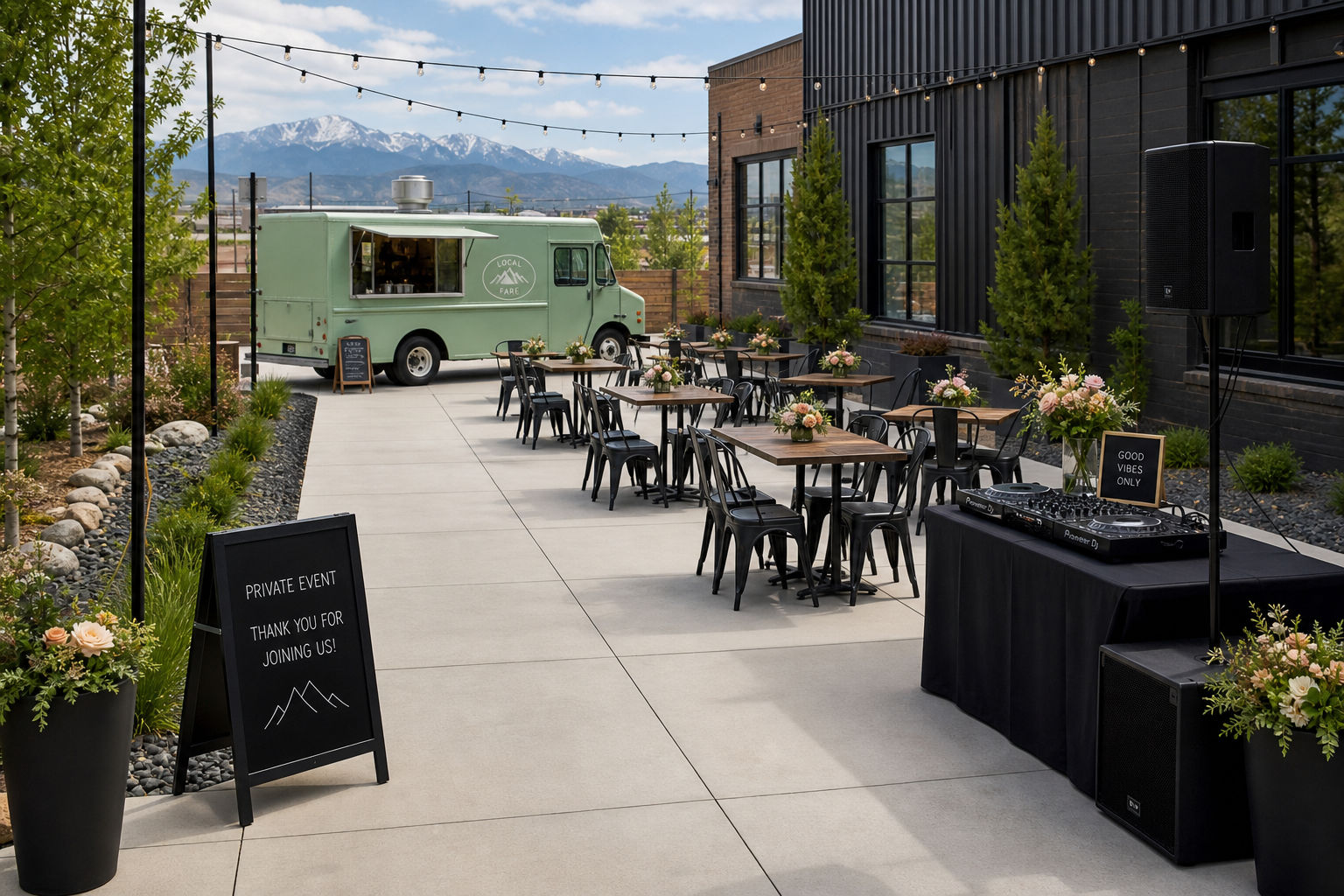
Most event-day disruptions are predictable. The issue is not usually a total surprise; it is a detail that was never assigned. Common examples include blocked garage access, food trucks placed too close to guest seating, extension cords crossing walkways, rental drop-offs arriving during guest arrival, and vendors calling the host because they cannot find the correct entrance. A planner prevents these issues by creating a written timeline, site map, and vendor contact structure so questions are answered before they become delays.
At corporate and business events, this level of organization matters even more because public-facing operations are often still active nearby. If a company in Littleton or Centennial is hosting clients while normal deliveries continue at the building, vendor movement must be tightly controlled. Many of the same issues appear in broader event logistics, as discussed in Corporate Event Planning Mistakes That Cause Delays, Crowding, and Guest Frustration. Good coordination protects both the event and the business environment around it.
What homeowners and business owners can do before hiring vendors
Hosts do not need to solve every operational detail themselves, but they can make planning easier by gathering a few basics early. Share photos of the site, note driveway dimensions, identify any HOA or venue restrictions, list available outlets, and mention quiet-hour expectations or parking limitations. If the event is seasonal, weather also affects load-in timing, turf conditions, and power planning, especially across Colorado. For a useful overview, see Colorado Event Planning by Season: What Changes for Spring, Summer, Fall, and Winter Private Events.
For private hosts planning engagement parties, rehearsal dinners, or backyard celebrations, the same principle applies: the earlier the planner understands site limitations, the better the event will flow. That is particularly true in residential neighborhoods where street parking is limited and guest arrival can overlap with final setup. Homeowners may also benefit from reading What Homeowners Should Know Before Planning a Backyard Engagement Party, Rehearsal Dinner, or Post-Wedding Brunch to understand how layout and timing decisions affect the entire event.
Why load-in planning supports a better guest experience
Guests may never see the load-in schedule, but they feel the results. They notice when pathways are clear, music starts on time, food service opens smoothly, and the property feels orderly instead of crowded. They also notice when a truck is backing up near the patio during cocktail hour or when setup noise continues after the event is supposed to begin. Strong coordination creates a polished experience without drawing attention to the operations behind it.
That is why mobile catering works best when paired with thoughtful event planning. The Food Truck Family helps clients think beyond the menu to the full event flow, including vendor arrival windows, staging areas, and setup order. For events in Thornton, Denver, Aurora, and surrounding communities, that planning helps avoid delays, protects access, and keeps the focus where it belongs: on guests enjoying the event.
Source: walking-working surfaces and clear access considerations