What Homeowners Should Know Before Planning a Backyard Engagement Party, Rehearsal Dinner, or Post-Wedding Brunch
What You'll Learn
- Plan a backyard layout that supports guest flow and service
- Avoid common timing conflicts with wedding-week events
- Understand rentals, power, and access needs before booking
- Reduce parking and neighborhood issues with a clear plan
- Coordinate mobile catering for a polished at-home experience
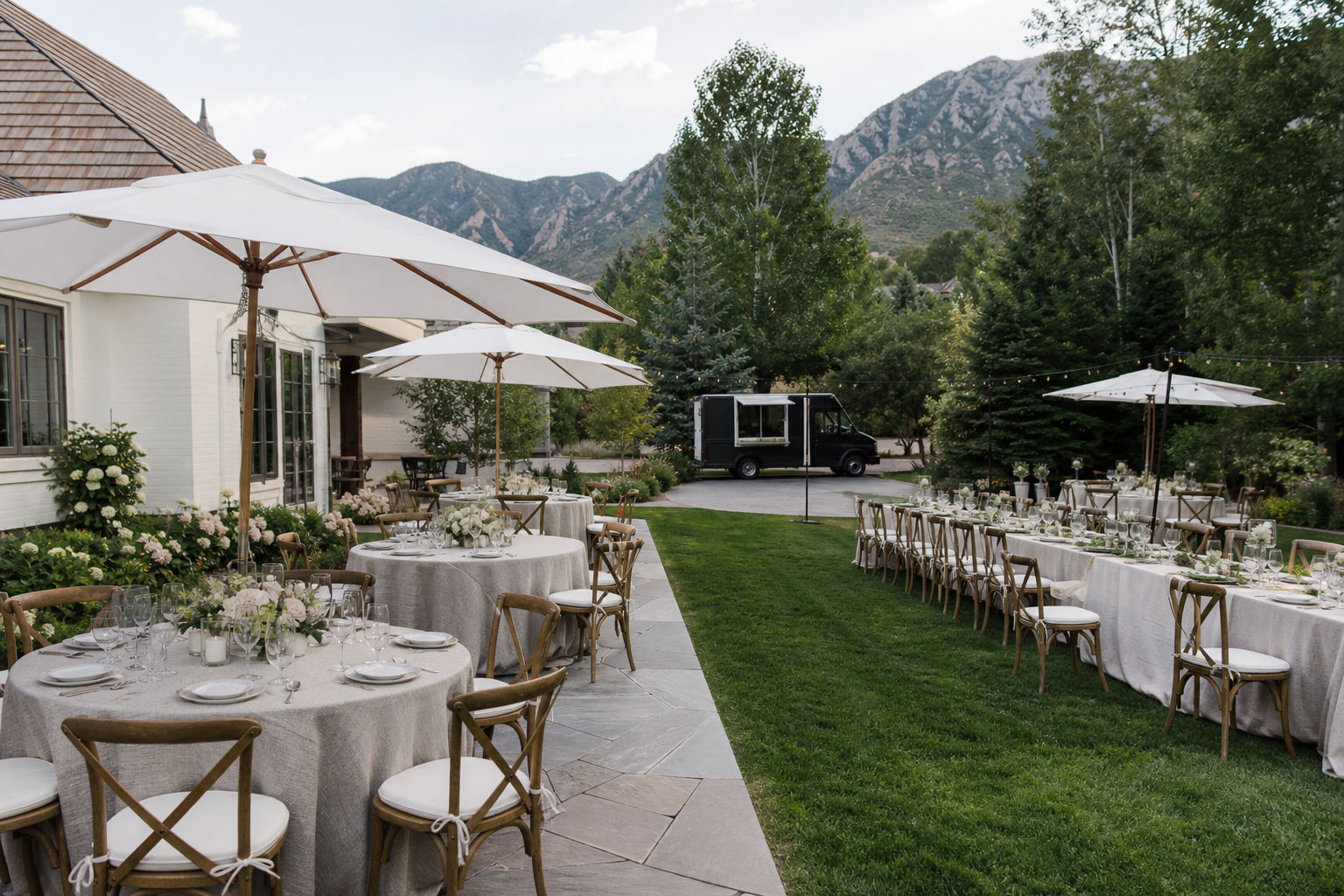
Backyard engagement parties, rehearsal dinners, and post-wedding brunches can feel more personal than a traditional venue, but they also put the homeowner in charge of details that venues usually handle behind the scenes. If you want an event that feels polished without venue-level infrastructure, the key is to plan your property like a temporary event site. That means thinking carefully about guest flow, food service, seating, weather backup, and neighborhood impact before invitations go out.
For homeowners in Thornton, Denver, and Aurora, mobile catering can be an especially practical fit because it brings kitchen capability, staffing, and event support directly to the property. Still, even the best caterer works more effectively when access, utilities, and timing are mapped out in advance. A home-based celebration succeeds when the event experience feels easy to guests while the operations feel manageable to the host.
Start With the Property, Not the Menu
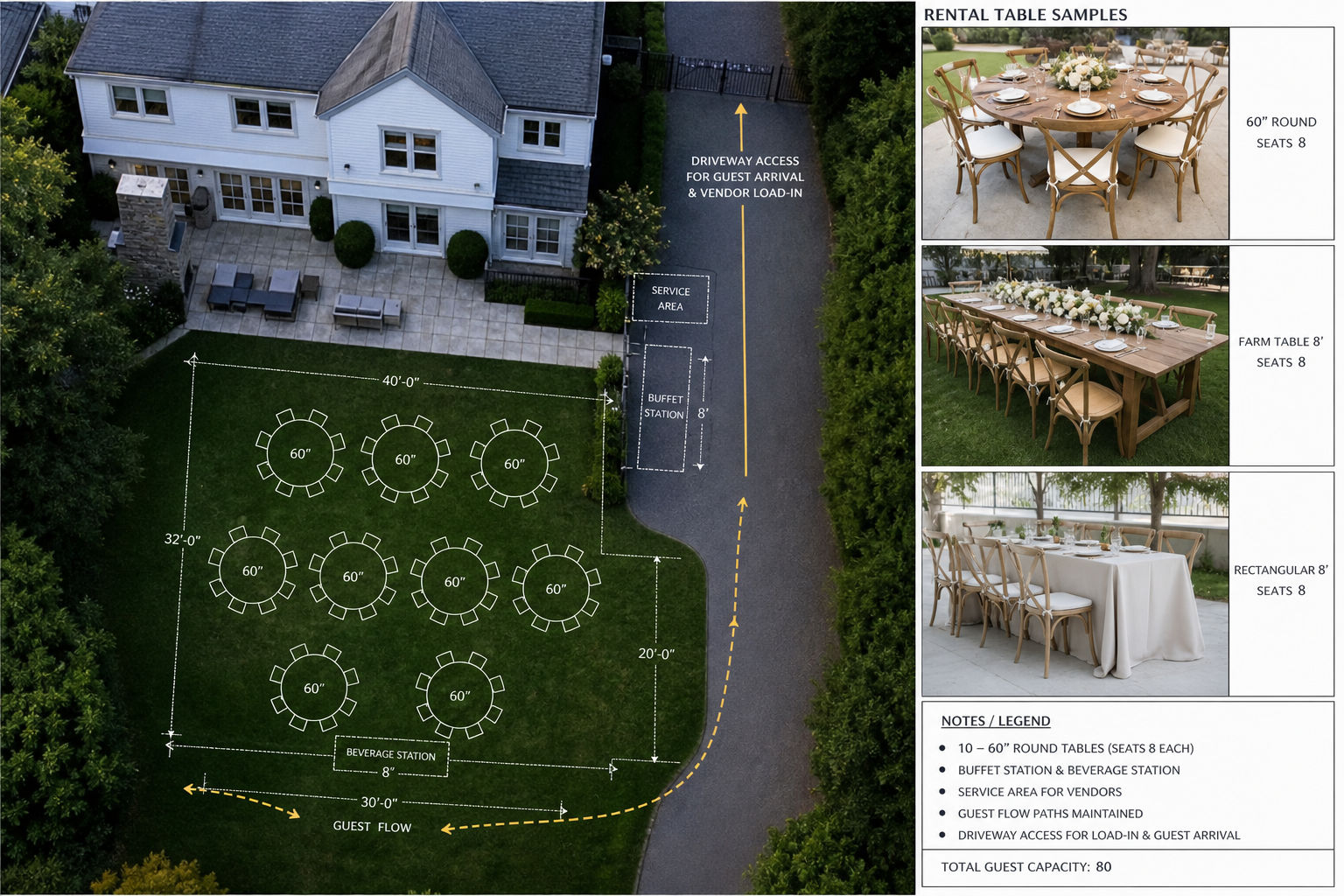
Many hosts begin by choosing dishes or estimating guest count, but the smarter first step is evaluating the property itself. Consider where guests will arrive, where they will gather, how they will move between indoor and outdoor spaces, and where food service can happen without creating bottlenecks. A backyard may be beautiful for photos yet still have narrow side-yard access, uneven surfaces, limited lighting, or no logical place for a bar or buffet.
This is why a site visit matters. A planner or mobile caterer can identify practical issues early, including trailer access, service paths, equipment placement, and whether support areas need to be kept off-limits to guests. If you want a clearer picture of what professionals evaluate before a private event, see How an Event Planner Structures a Site Visit for Backyard Weddings and Private Parties With Mobile Catering.
- Map guest arrival, check-in, and first gathering space
- Separate dining, mingling, and service zones when possible
- Protect kitchen and prep areas from guest traffic
- Confirm level ground for tables, bars, and rental equipment
- Plan lighting for pathways, restrooms, and evening service
Match the Event Format to the Wedding Weekend Timeline
Wedding-related events at home are usually smaller than the main celebration, but they still need structure. An engagement party may work well with open-house timing and lighter seating. A rehearsal dinner often benefits from a defined start, seated meal, and short toasts. A post-wedding brunch typically needs a softer arrival window because guests may be traveling from hotels or recovering from a late reception. The format should reflect not only the mood of the event, but also the amount of energy and setup time the household can realistically support.
Timing becomes especially important when your event sits close to the wedding day. Deliveries, florist pickups, hair and makeup schedules, hotel transportation, and family obligations can create overlap quickly. Hosts in Westminster, Broomfield, and Arvada often underestimate how much pressure builds when a home event competes with the larger wedding timeline. If you are planning a welcome party or brunch around the main event, review How to Plan a Wedding Welcome Party or Day-After Brunch Without Creating Vendor and Timeline Conflicts for a more detailed look at sequencing.
Think Through Rentals and Utility Needs Early
At-home events often require more rentals than homeowners expect. Tables, chairs, linens, shade structures, waste stations, portable bars, handwashing support, and supplemental lighting can all become necessary depending on the guest count and season. Even if you are hiring a mobile caterer, do not assume the property automatically has the power, water access, or staging space needed for seamless service. The goal is to avoid last-minute improvisation that makes the event feel cramped or disorganized.
Colorado weather also affects equipment decisions. Wind, sudden temperature changes, and strong sun can influence tenting, beverage service, food holding, and seating comfort. Seasonal planning matters whether the event is in Lakewood in spring, Littleton in midsummer, or Castle Rock in early fall. For a broader overview of how local conditions change event logistics, see Colorado Event Planning by Season: What Changes for Spring, Summer, Fall, and Winter Private Events.
- Reserve rentals early during peak wedding months
- Ask where delivery trucks will stage and unload
- Verify outlet access and capacity before event day
- Plan trash, recycling, and post-event cleanup flow
- Have a weather adjustment plan for heat, rain, or wind
Parking and Neighborhood Impact Need a Real Plan
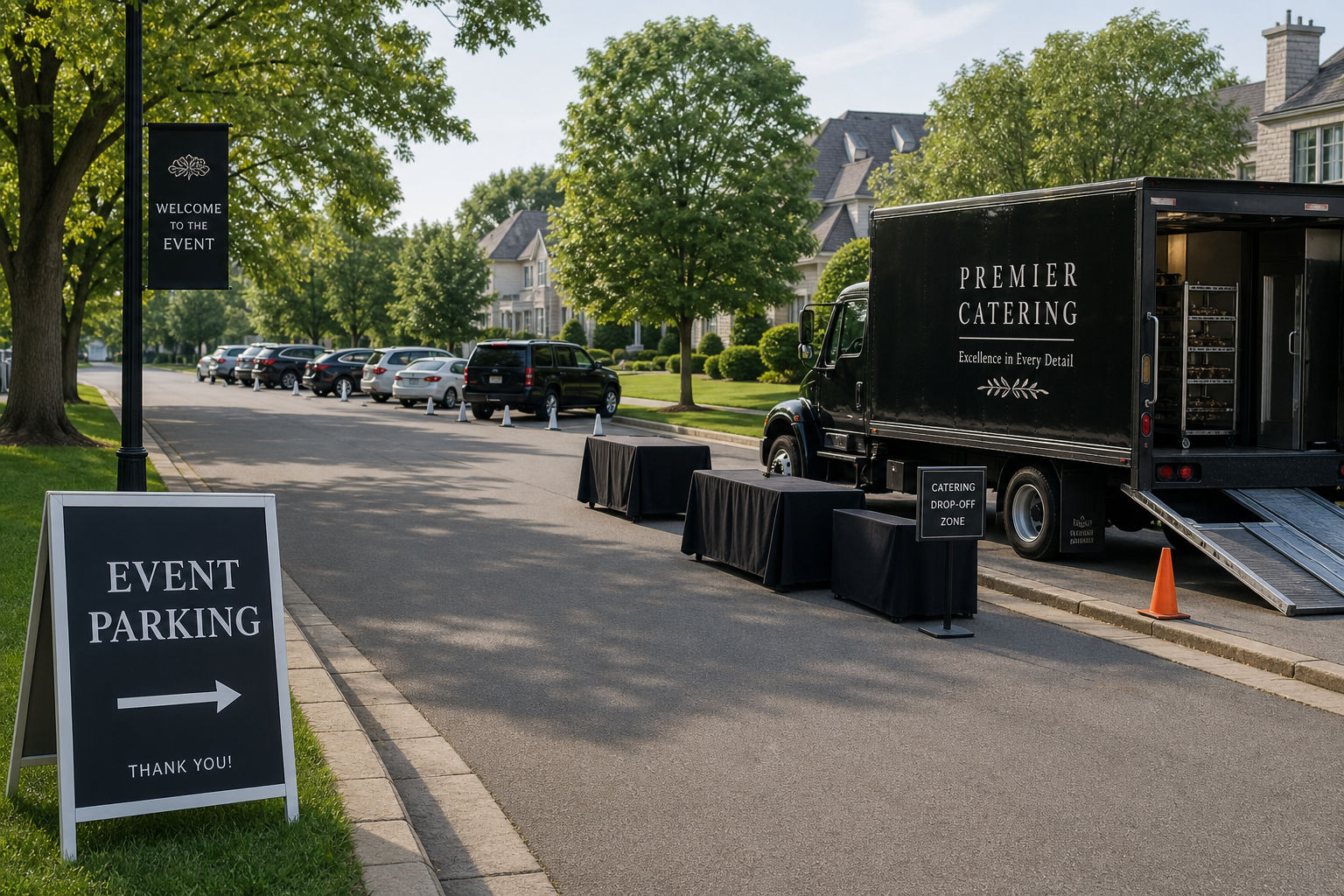
Parking is one of the biggest differences between hosting at home and using a venue. A residential street may seem adequate until guests arrive at once, rideshares stack up, and nearby driveways get blocked. Homeowners should estimate vehicle count, identify legal parking zones, and communicate directions clearly in advance. If the event includes older relatives, out-of-town guests, or formal attire, convenient drop-off becomes just as important as parking itself.
Neighborhood considerations matter too. Noise timing, outdoor music, generator use, lighting spill, and late departures can affect nearby residents. A well-run event feels considerate as well as festive. If you need a deeper framework for guest vehicle flow, read What an Event Planner Recommends for Parking, Drop-Off, and Traffic Control at Home-Based Events. For homeowners in Northglenn, Brighton, or Commerce City, where lot layouts and street widths can vary significantly by neighborhood, that kind of advance planning can prevent avoidable stress.
Mobile Catering Works Best When Access and Service Style Align
Mobile catering is not one-size-fits-all. Some events work beautifully with direct truck service, while others are better served by a hybrid setup that uses the truck for production and a buffet, station, or plated-style service near the dining area. The best choice depends on guest count, yard layout, noise tolerance, distance from the curb, and the tone of the event. A casual engagement party may welcome a more interactive service style, while a rehearsal dinner often needs a cleaner, more structured presentation.
Homeowners should ask practical questions before booking: Where will the vehicle park? How far is service from the guest area? Is there enough turning radius? Will staff need to cross the lawn repeatedly? Are there HOA rules or municipal restrictions that affect curbside setup? These details shape both guest experience and staffing efficiency. Booking early also helps secure the right level of planning support, especially during busy wedding seasons in Centennial, Parker, and Lone Tree. If you are still building your timeline, How Far in Advance Should You Book an Event Planner for Weddings, Company Parties, and Neighborhood Events is a useful reference.
Create a Host-Friendly Plan for the Day Itself
The most successful home events protect the host from becoming the operations manager. That means assigning or hiring support for setup oversight, guest arrival, replenishment, trash monitoring, and breakdown coordination. Even a relatively small brunch can feel demanding if the homeowner is also answering vendor questions, greeting guests, and trying to enjoy family time. A mobile caterer with event planning and management experience can help centralize those moving parts so the event feels intentional instead of improvised.
For homeowners and local business owners alike, the real advantage of professional support is not only the food. It is the ability to translate a private property into a functional event environment with clear timing, smart layout, and realistic logistics. Whether you are hosting in Thornton, Denver, Aurora, or nearby communities, careful planning allows a backyard engagement party, rehearsal dinner, or post-wedding brunch to feel welcoming, efficient, and memorable without asking your home to operate like a full-service venue.
Source: residential pool safety guidance