How an Event Planner Builds a Site Plan for Private Events With Mobile Catering in Thornton and Denver
What You'll Learn
- See how site plans reduce lines, crowding, and guest confusion
- Learn where to place trucks, bars, seating, and trash stations
- Understand layout differences for homes, offices, and public events
- Use practical flow strategies for Thornton and Denver venues
A well-built site plan does more than show where a food truck parks. For private events with mobile catering, it shapes how guests arrive, where they gather, how they order, where they sit, and how they move from one area to the next without confusion. For homeowners in Thornton and Denver and business owners planning events across Westminster, Aurora, and nearby communities, a thoughtful layout can be the difference between a smooth event and one filled with long lines, blocked walkways, and avoidable stress.
At The Food Truck Family, site planning is part of event planning, not an afterthought. Whether the event is a backyard birthday, a corporate appreciation lunch, or a neighborhood celebration, the goal is simple: create a layout that supports service, comfort, and safety. That means mapping guest entry, truck placement, beverage stations, seating, trash collection, and foot traffic based on the property and the event style.
Why a site plan matters for mobile catered events
Mobile catering adds flexibility, but it also adds moving parts. A truck needs access, clearance, and enough room for ordering and pickup. Guests need a natural path from arrival to food to seating. Hosts need service areas that do not interfere with conversations, activities, or presentations. When these elements are not planned together, bottlenecks form quickly, especially at events with staggered arrivals or mixed-age guest lists.
An event planner starts by looking at the entire guest journey. Where will people park or enter? What will they see first? Will they head straight to food, or should they be welcomed into a mingling area first? How far will they carry drinks or plates? Questions like these are similar to the planning framework discussed in Questions an Event Planner Will Ask Before Coordinating a Wedding, Private Party, or Corporate Gathering, because good coordination begins with understanding how the space will actually be used.
The first planning decision: entry and arrival flow
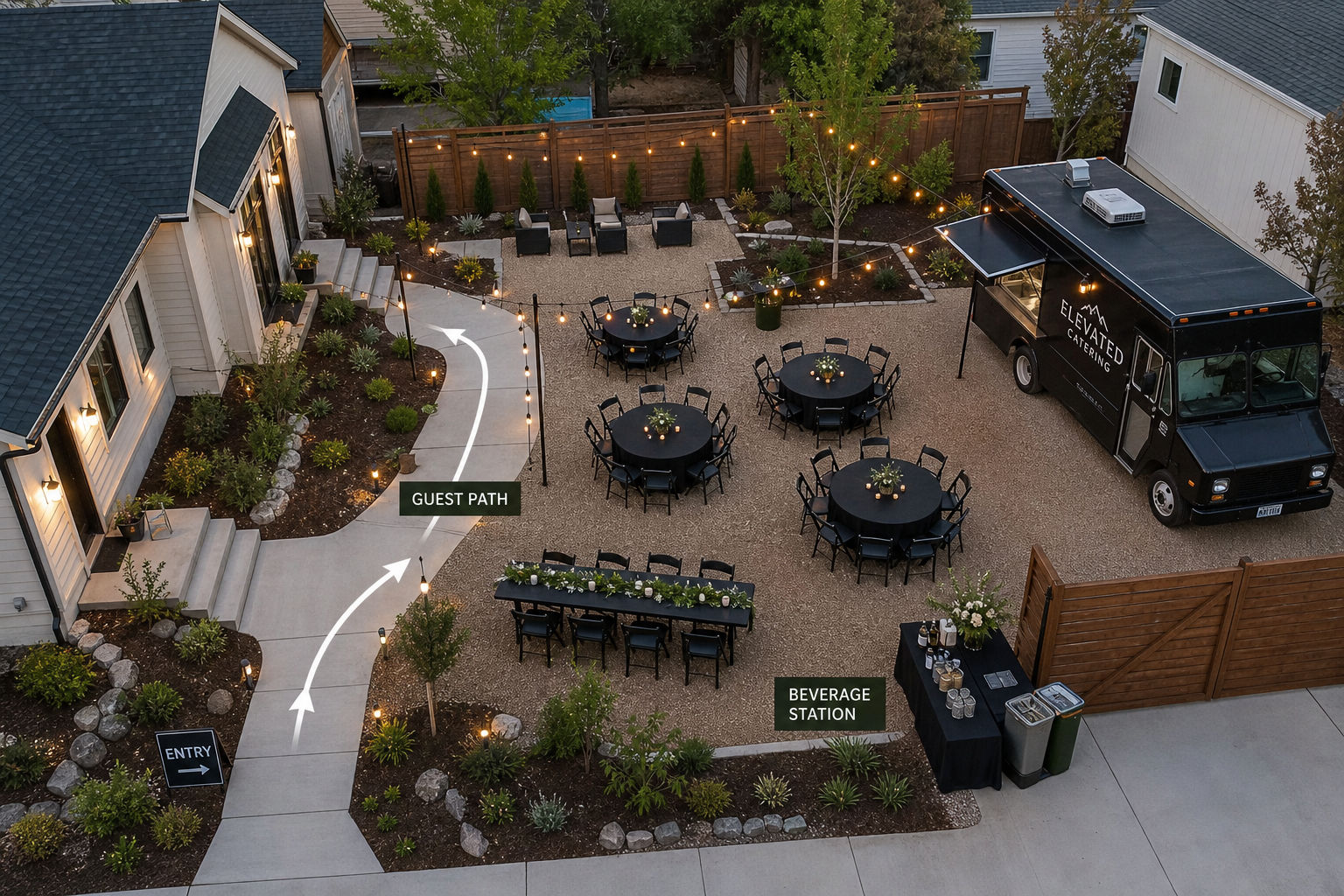
Guest flow begins at the entrance, not at the truck. For a backyard event in Northglenn or Arvada, that may mean separating the side gate used for guest access from the driveway used for truck setup. For a corporate event in Denver or Broomfield, it may mean steering attendees away from loading zones and toward a clear check-in point. The event planner identifies the cleanest path into the event and keeps that path free of service equipment, trash bins, and food lines.
Arrival space should also support the event tone. If guests are expected to mingle before eating, the planner may place beverage service near entry while keeping the truck slightly deeper into the layout. If food service should start immediately, the approach can direct guests toward the truck in a controlled way without forcing them to cross seating or entertainment areas. For open-format gatherings, this kind of sequencing is especially important, much like the approach covered in Event Planning for Open House Parties in Denver: How to Design Guest Flow, Food Service, and Timing That Keeps People Mingling.
Where the truck should go and why placement affects everything
Truck placement is often the anchor of the entire site plan. The truck must be accessible for setup and service, but it should not dominate the event in a way that creates congestion. In residential settings, planners often use a driveway, curbside position, or edge-of-yard placement that allows the service window to face the main event area while preserving open space for guests. On tighter properties in Thornton, Westminster, and older Denver neighborhoods, every foot matters, which is why layout efficiency is so important. For smaller footprints, the same principles in How to Plan a Private Event on a Tight Property Footprint in Thornton, Arvada, and Westminster apply directly.
- Keep a clear queue area in front of the truck
- Avoid placing the truck where lines block entry or exits
- Leave room for guests to step aside after pickup
- Position service so noise and generator output are less disruptive
- Protect nearby seating from crossing traffic
For corporate gatherings, truck placement should also account for building operations. A truck near the main office entrance may be convenient, but not if it blocks employee circulation or delivery access. In community spaces, planners must think even wider: emergency access, pedestrian routes, and shared public areas all affect the final layout.
How seating and beverage stations support better guest movement
Seating should never force guests to walk through active service lines. A practical site plan places tables close enough to the food area for convenience, but far enough away to prevent crowding. For backyard parties, that may mean one main seating cluster and a separate standing cocktail area. For business events, it may mean creating breakaway zones so guests can eat and talk without forming a wall near the truck.
Beverage stations are another common trouble spot. If drinks are placed next to the truck window, guests often combine two lines into one messy cluster. A better plan usually separates beverages from food pickup by several steps or even places them on the opposite side of the seating area. This encourages circulation and reduces idle standing near the service point. At weddings and larger private celebrations, this spacing becomes even more important, as noted in Event Flow Planning for Mobile Catered Weddings in Thornton and North Denver.
Trash, condiments, and support stations should be visible but not central
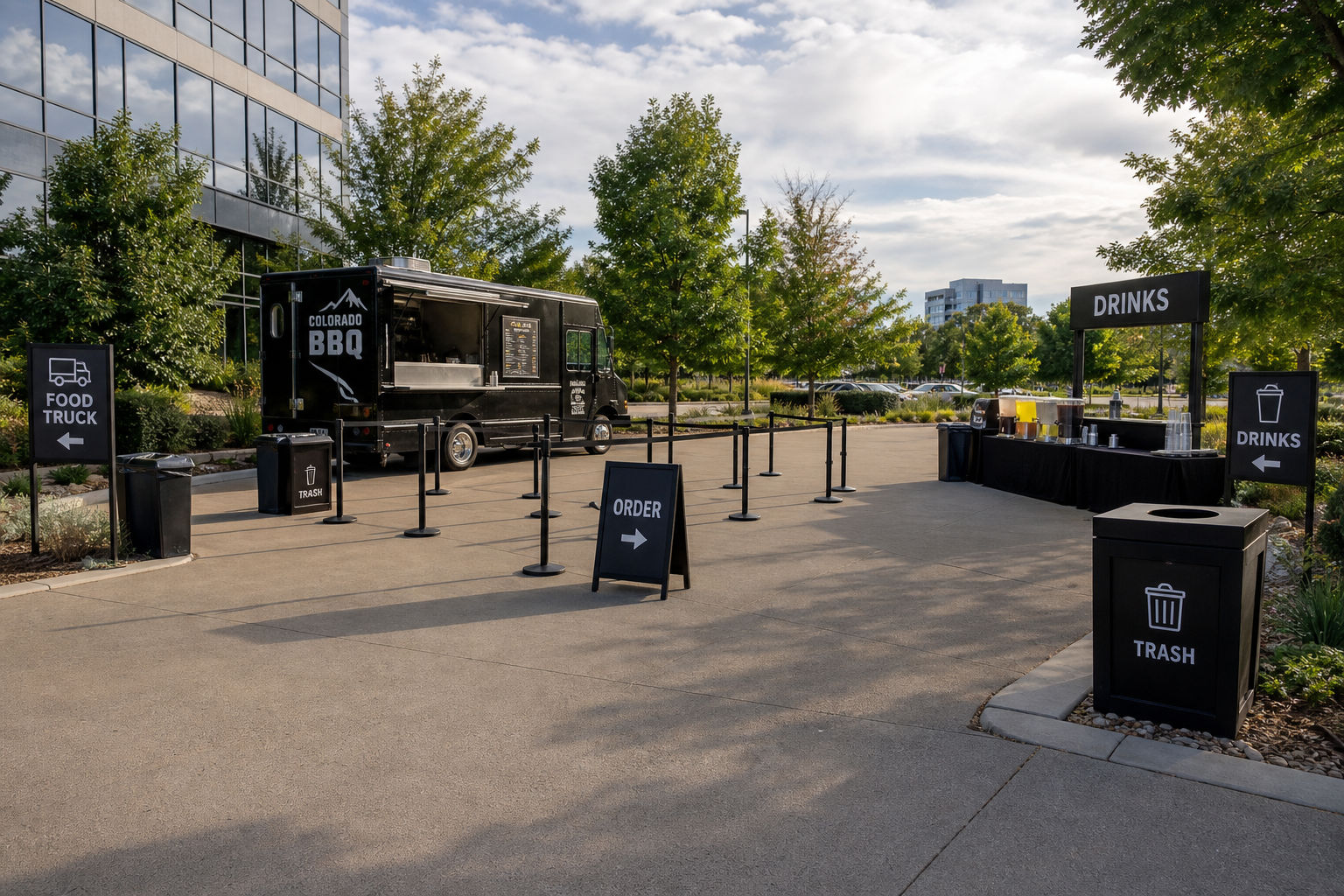
Trash and bussing points are easy to overlook, but they directly affect how clean and comfortable an event feels. The best site plans place trash where guests naturally finish eating or leave a seating area, not directly beside the ordering line. That keeps the service area cleaner and avoids a second cluster of people sorting plates and cups while others are trying to order.
Condiments, utensils, and napkins also need intentional placement. If these items sit at the service window, every guest slows down the line. If they are set just beyond pickup, guests can move forward, customize their meal, and continue on without blocking the next order. For HOA, school, and neighborhood events in places like Commerce City, Brighton, and Lakewood, these support stations are often what keep larger crowds moving steadily, which aligns with the planning logic in Event Planner Advice for HOA, School, and Community Events Using Mobile Catering.
How site plans change by event type
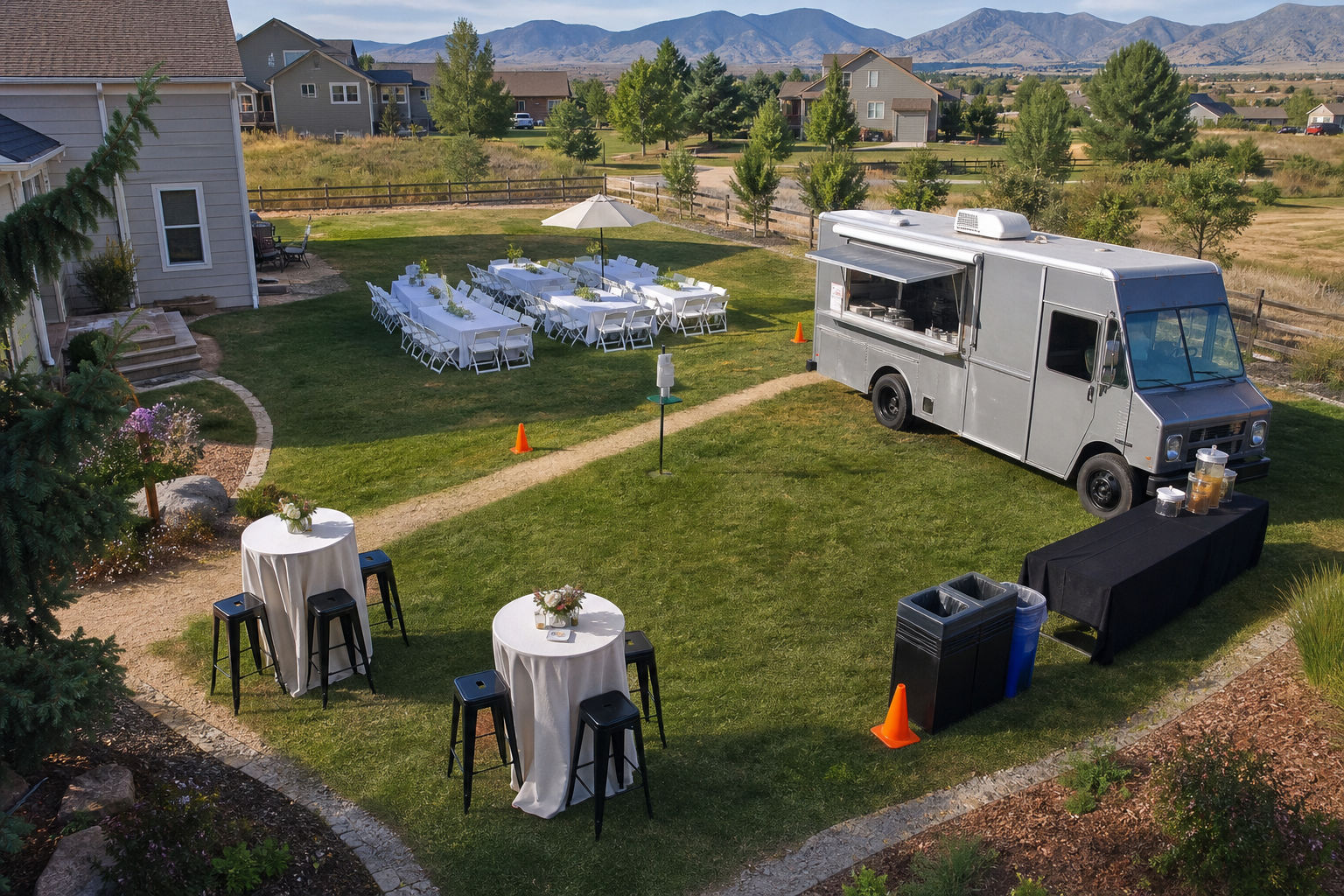
Backyard parties usually need the most creative use of limited space. Fences, patios, gardens, and neighboring homes all influence where guests can gather comfortably. Here, the planner often prioritizes a compact but intuitive layout: direct entry, one controlled food queue, separate drinks, and seating that does not trap guests in a corner.
Corporate gatherings often have more open space but more scheduling pressure. Employees may arrive in waves, lunch windows may be short, and the site may have restrictions around parking lots or building access. In these cases, the planner may widen the queue area, create more standing room, and design traffic patterns that support fast turnover.
Community events require the broadest planning lens. Families, vendors, volunteers, and pass-through visitors all use the space differently. The site plan must separate service zones from gathering zones, preserve visibility, and keep foot traffic from crossing itself. If the event is smaller and the host is deciding how much coordination is necessary, When to Hire an Event Planner for a Small Event and When You Can Keep Coordination Simple can help frame that decision.
What homeowners and business owners should prepare before planning
- Estimate guest count and likely arrival pattern
- Identify all entry points, gates, driveways, and walkways
- Note power access, shade, and any restricted areas
- List priorities such as fast service, mingling, speeches, or seating
- Share photos or a basic sketch of the property or venue
These details help an event planner make practical recommendations early. Sometimes the best fix is shifting the truck 15 feet, moving drinks away from the food line, or rotating seating so guests do not cross the queue to find a table. Small layout adjustments often produce the biggest improvements in comfort and flow.
Better site plans create smoother events
For private events with mobile catering in Thornton, Denver, Aurora, and surrounding areas, a site plan is really a service plan. It tells guests where to go without forcing them to guess, and it helps food service happen efficiently without taking over the entire event. When entry, truck placement, seating, beverage stations, trash, and foot traffic work together, the result feels organized, relaxed, and easy to enjoy.
The Food Truck Family helps homeowners and local businesses think through these details before event day so the layout supports the experience they want to create. Whether you are planning a backyard celebration, a company gathering, or a community event, the right site plan makes mobile catering feel seamless from the first guest arrival to the final cleanup.
Source: Denver Community Planning and Development