Event Planner Advice for HOA, School, and Community Events Using Mobile Catering
What You'll Learn
- Build a site plan that supports safe lines, parking, and service access
- Coordinate vendors and volunteers with clearer timing and communication
- Reduce bottlenecks with smarter guest flow and queue management
- Plan for attendance swings without losing service speed or quality
- Use mobile catering to simplify setup for public-facing community events
HOA gatherings, school functions, and community events have a different level of complexity than a private backyard party. Attendance can shift quickly, guests may arrive in waves, and organizers need to think beyond the menu to include parking, pedestrian safety, service timing, accessibility, and vendor coordination. For neighborhoods in Thornton, Denver, and Westminster, mobile catering can be an efficient solution, but only when the event is planned around the realities of public-facing traffic and shared spaces.
At The Food Truck Family, mobile catering works best when an event planner treats food service as part of the overall site operation, not a standalone add-on. That means mapping where guests enter, where they wait, how they move through the event, and how vehicles, staff, and support vendors operate without creating congestion. For larger gatherings, that planning protects the guest experience while helping organizers stay organized and responsive on event day.
Start with attendance patterns, not just a headcount
One of the most common planning mistakes is relying on a single attendance number without asking when people will actually show up. A school carnival may have a heavy rush right after dismissal. An HOA summer social may peak in the first 90 minutes and then level out. A community movie night may build slowly and then see a surge just before showtime. These patterns affect line length, staffing, queue placement, and how many service points are needed.
Experienced planners ask questions about event timing, age mix, program schedule, and whether guests are free to come and go. If your event includes kids, seniors, and families arriving at different times, service needs to be paced accordingly. For a deeper look at audience planning, see Planning an Event for Mixed Age Groups: How to Balance Kids, Adults, Seniors, and Service Logistics. That same mindset applies to HOA and school events where guest behavior drives operations.
- Estimate total attendance and likely peak service windows
- Identify whether guests arrive all at once or in rolling waves
- Note age groups, mobility needs, and stroller-heavy traffic
- Match food service speed to the event schedule, not just guest count
Build a site layout that supports safety and flow
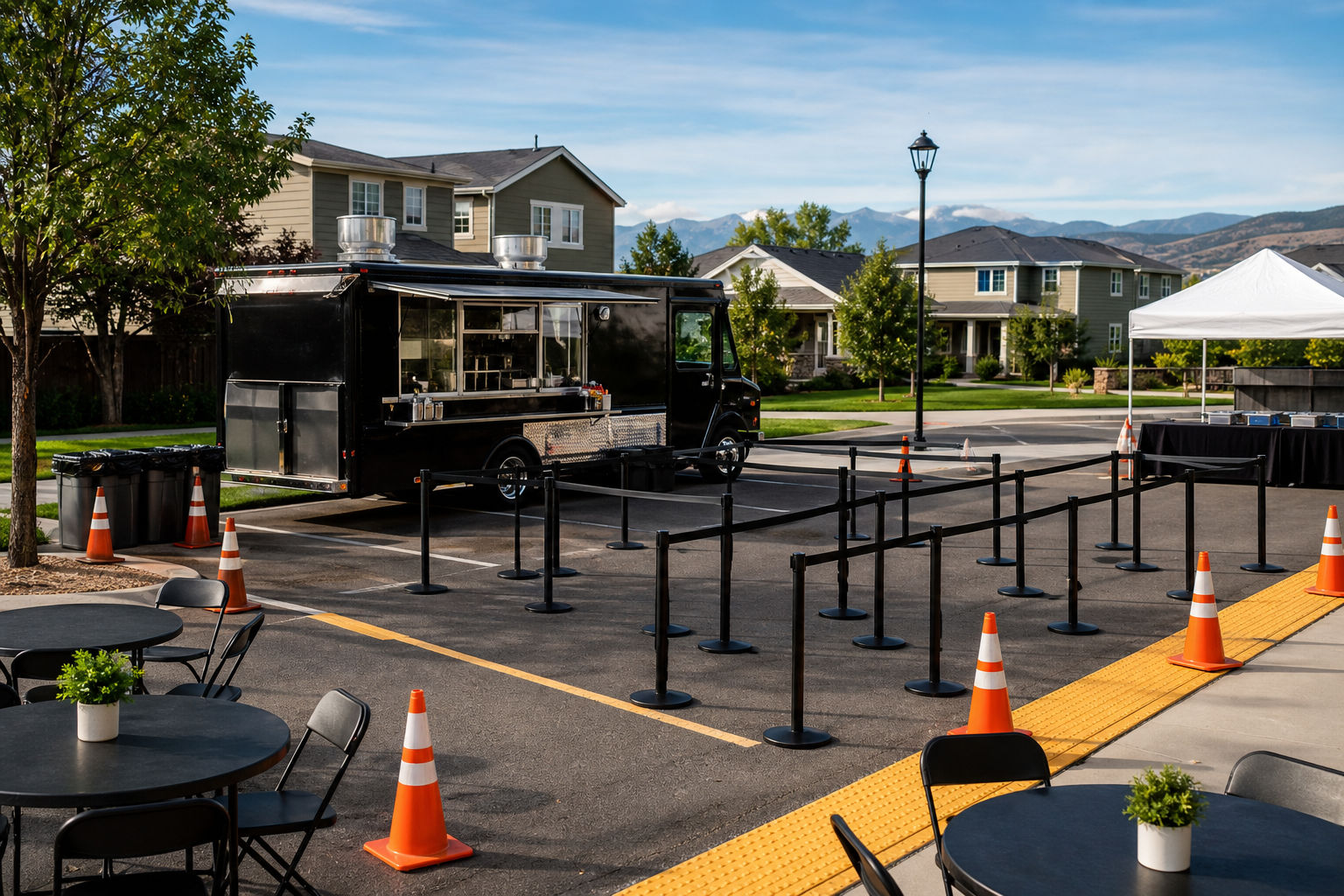
For public-facing events, layout is where good planning becomes visible. Mobile catering vehicles need enough room to park, serve, and operate safely, but they also need separation from guest seating, activity areas, and pedestrian crossing points. In places like Aurora, Arvada, and Broomfield, community events often happen in shared parking lots, school grounds, clubhouses, greenbelts, or common areas where space must be used carefully.
A strong layout plan considers truck placement, line orientation, trash stations, handwashing or sanitation access if needed, ADA-friendly movement paths, and emergency vehicle clearance. If the event footprint is tight, queue direction matters just as much as where the truck parks. Organizers dealing with smaller or irregular sites may also benefit from How to Plan a Private Event on a Tight Property Footprint in Thornton, Arvada, and Westminster, which covers practical space-use decisions that often apply to neighborhood events as well.
Coordinate parking, access, and vehicle movement early
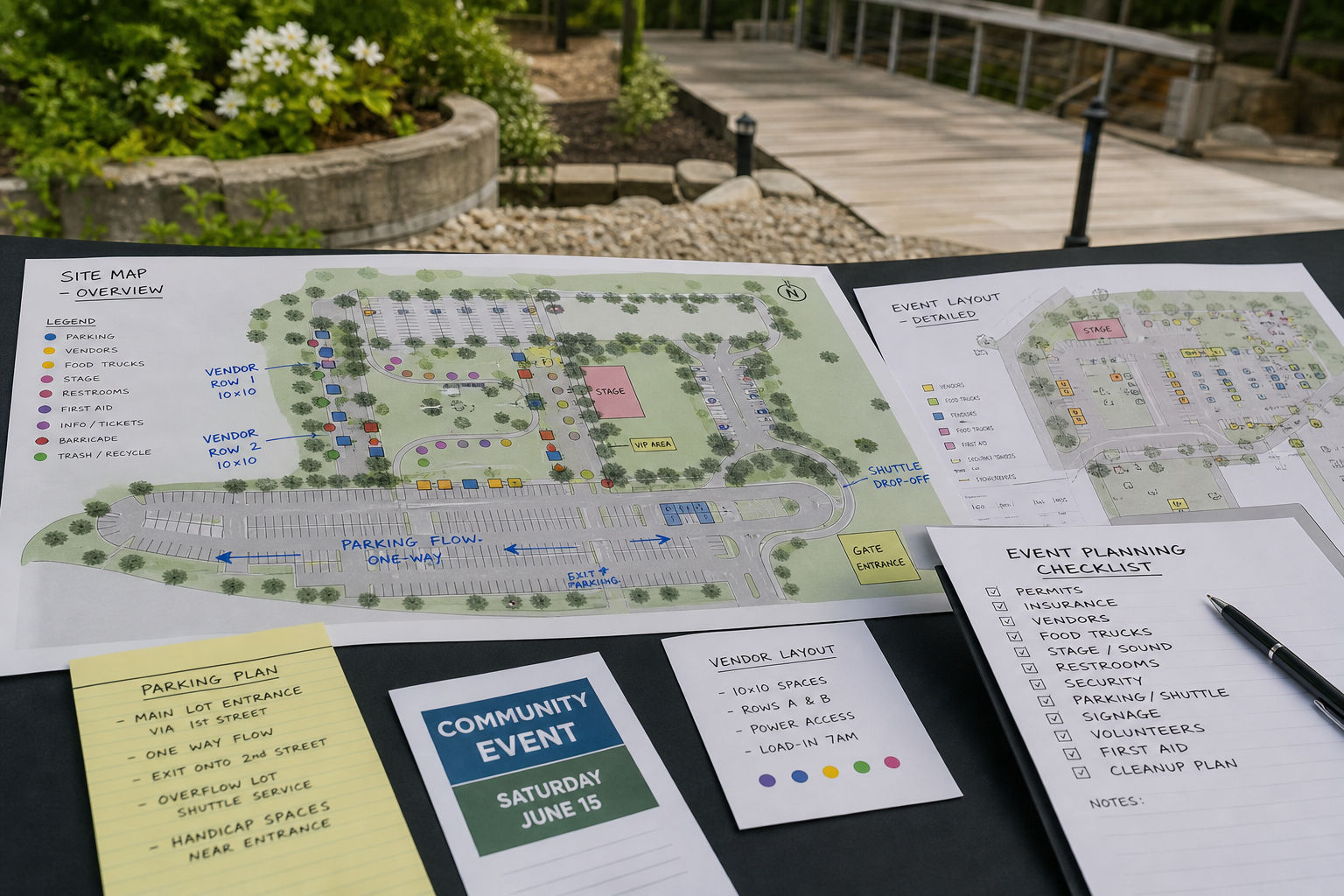
Parking is often the hidden issue that shapes the guest experience. If food trucks are parked in the same area guests expect to use for arrivals, the event can start with confusion before service even begins. Event planners should determine where vendors enter, when they load in, what route they use, and whether any spaces need to be reserved or blocked off in advance. For schools and HOAs, this may also involve communicating with residents, staff, or neighboring properties about temporary changes in access.
Good parking planning also reduces risk. Guests should not have to cross active vendor routes or back-of-house areas to reach food service. If the event includes entertainment, inflatables, check-in, or donation tables, those elements should be arranged so they do not force people to cut through service lines. A mobile caterer and event planner should review turning radius, curb access, surface conditions, power considerations if applicable, and whether weather could affect parking or setup.
Use one communication plan for vendors, staff, and residents
Large community events run better when everyone works from the same plan. That includes the caterer, event volunteers, HOA board members, school administrators, entertainment providers, rental vendors, and any on-site security or facilities contacts. Instead of long message chains, create one simple event brief that covers arrival windows, setup zones, event timeline, service start and end times, weather backup notes, and who has authority to make day-of decisions.
Communication with guests matters too. Residents and attendees should know where to park, where food service will be located, whether tickets or vouchers are required, and when peak activities begin. This is especially important for events in Northglenn, Lakewood, or Littleton where attendance may include both local residents and invited outside guests. If your event involves multiple service areas or staggered food access, the strategy in How Event Planners Coordinate Multi-Point Service for Large Private Parties and Corporate Gatherings offers a useful framework.
- Assign one lead contact for catering and one overall event lead
- Share a final site map and timeline with all vendors
- Send guest-facing instructions 3 to 7 days before the event
- Confirm weather, arrival, and emergency contacts the day before
Plan service timing around the program schedule
At neighborhood and school events, the program often drives demand. If raffle drawings, performances, speeches, or a movie start at a fixed time, guests usually try to get food immediately before or after that moment. An event planner should identify those demand spikes and either open service early, add a second service point, or spread activity timing so lines stay manageable. This is where mobile catering can be especially effective because it allows service to be positioned close to the action without requiring a full traditional kitchen setup.
Timing also changes by daypart. Morning teacher appreciation events, midday school functions, and evening HOA socials have different pacing, beverage needs, and guest expectations. If your event is not centered on dinner service, review Morning and Midday Event Planning: What Changes When Your Catered Event Is Not Held at Dinner Time. Matching the service model to the schedule is one of the fastest ways to improve line speed and guest satisfaction.
Design guest flow so people keep moving
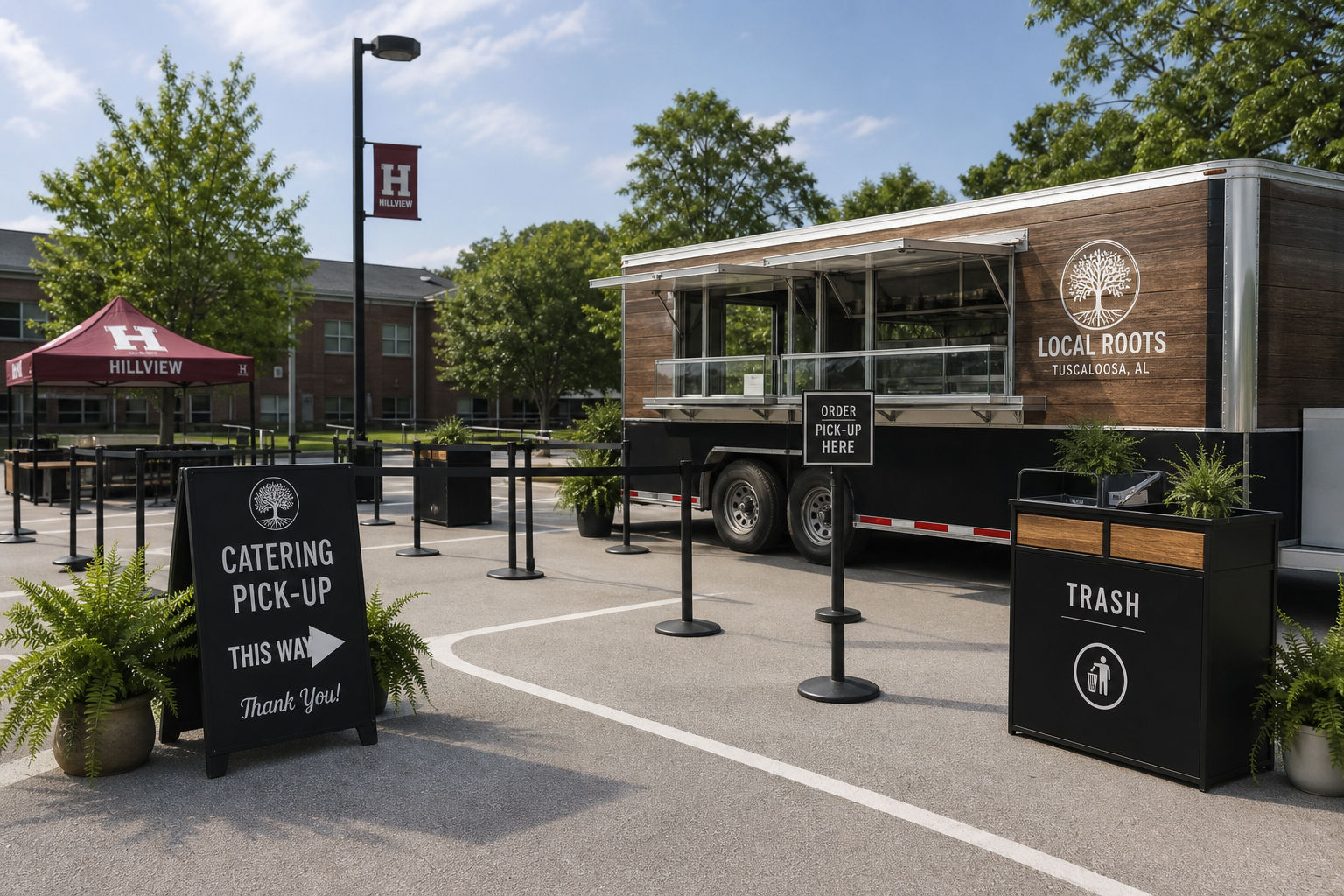
Guest flow is about more than avoiding long lines. It is about helping attendees understand where to go next without friction. A well-planned community event creates clear movement from arrival to check-in, food service, seating, activities, restrooms, and exit. Signage, spacing, and queue direction all influence whether guests feel relaxed or crowded. For open-format gatherings, many of the same principles discussed in Event Planning for Open House Parties in Denver: How to Design Guest Flow, Food Service, and Timing That Keeps People Mingling apply to larger public-facing events too.
For HOA and school settings, it often helps to separate high-energy activity zones from food pickup lines. Keep seating close enough to food service for convenience, but not so close that seated guests block circulation. Trash and condiment stations should be intuitive and easy to access without sending guests backward through the line. If voucher distribution or meal counts are part of the event, place that checkpoint before the queue begins so service remains smooth once guests reach the truck.
Work with a caterer that thinks like an event partner
The most successful community events happen when the caterer is involved early enough to help shape logistics, not just show up to serve. A mobile caterer with event planning experience can help estimate throughput, advise on placement, identify service bottlenecks, and coordinate with rentals or other vendors. That is especially valuable for organizers who may only run one or two major public events each year and need practical guidance from a team that understands both food service and event operations.
If you are organizing an HOA social in Thornton, a school event in Denver, or a neighborhood gathering in Westminster, The Food Truck Family can help you think through layout, service timing, communication, and day-of coordination. And if you are still in the early planning stage, Questions an Event Planner Will Ask Before Coordinating a Wedding, Private Party, or Corporate Gathering is a helpful starting point for understanding the details that make larger events run smoothly.
Source: National Fire Protection Association