When to Hire an Event Planner for a Small Event and When You Can Keep Coordination Simple
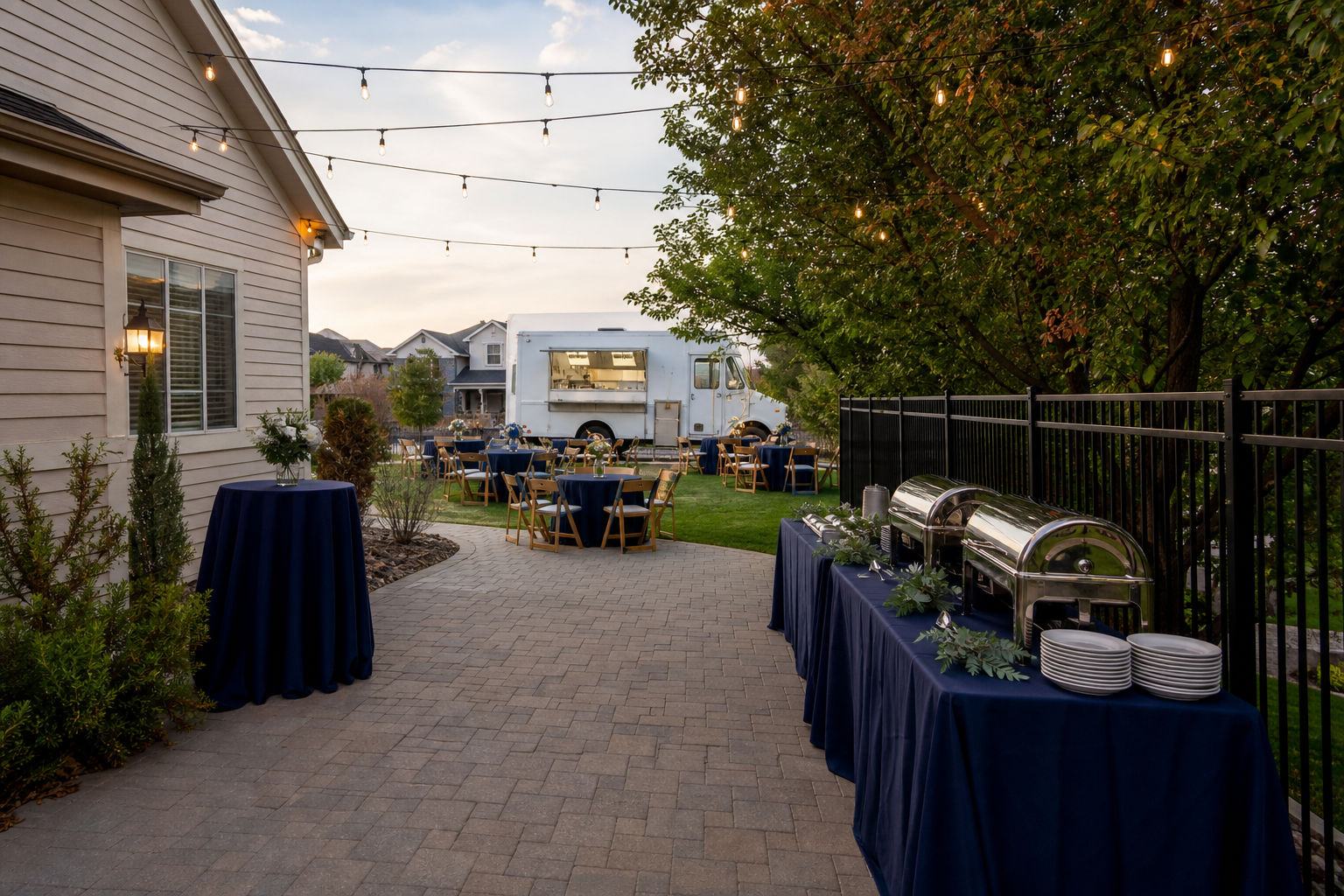
What You'll Learn
- Know which small events benefit most from professional planning
- Spot vendor, venue, and timeline issues before they create stress
- Use a simple framework to decide between DIY and expert help
- Plan guest flow and food service more confidently for local events
Small events can look simple on paper and still become complicated fast. A birthday in Thornton, a baby shower in Westminster, an office lunch in Denver, or an open house in Arvada may only involve a modest guest count, but coordination demands can rise quickly once food service, timing, parking, rentals, cleanup, and vendor communication enter the picture. The question is not whether your event is important enough for professional help. The better question is whether the logistics are simple enough to manage comfortably on your own.
For homeowners and business owners, hiring an event planner is usually worth it when there are multiple moving parts, limited setup time, or a strong need for the host to stay focused on guests instead of operations. For more straightforward gatherings, a capable mobile caterer with a clear service plan may be all you need. The goal is to match the level of support to the level of complexity so your event feels polished without overbuilding the process.
When a Small Event Can Stay Simple
Many smaller events do not require a dedicated planner. If you are hosting 15 to 35 guests at home or in a workplace break room, using one food provider, offering a limited beverage setup, and keeping the schedule flexible, coordination can often remain manageable. This is especially true when the venue is familiar, access is easy, and there are no unusual restrictions around parking, power, trash, or service windows.
- Guest count is modest and arrivals are spread out
- You are working with one primary food vendor
- The venue is your home, office, or another familiar space
- There is no formal program, speech schedule, or multiple service moments
- Setup and breakdown can happen without tight time pressure
Examples include a casual birthday, a neighborhood graduation gathering, a simple bridal shower, or a staff appreciation lunch with one menu and one serving window. In these cases, a mobile caterer that can guide timing, layout, and service flow may cover most of what you need. If your event is earlier in the day, the planning details can shift in subtle but important ways, as discussed in Morning and Midday Event Planning: What Changes When Your Catered Event Is Not Held at Dinner Time.
When Hiring an Event Planner Becomes the Smarter Choice
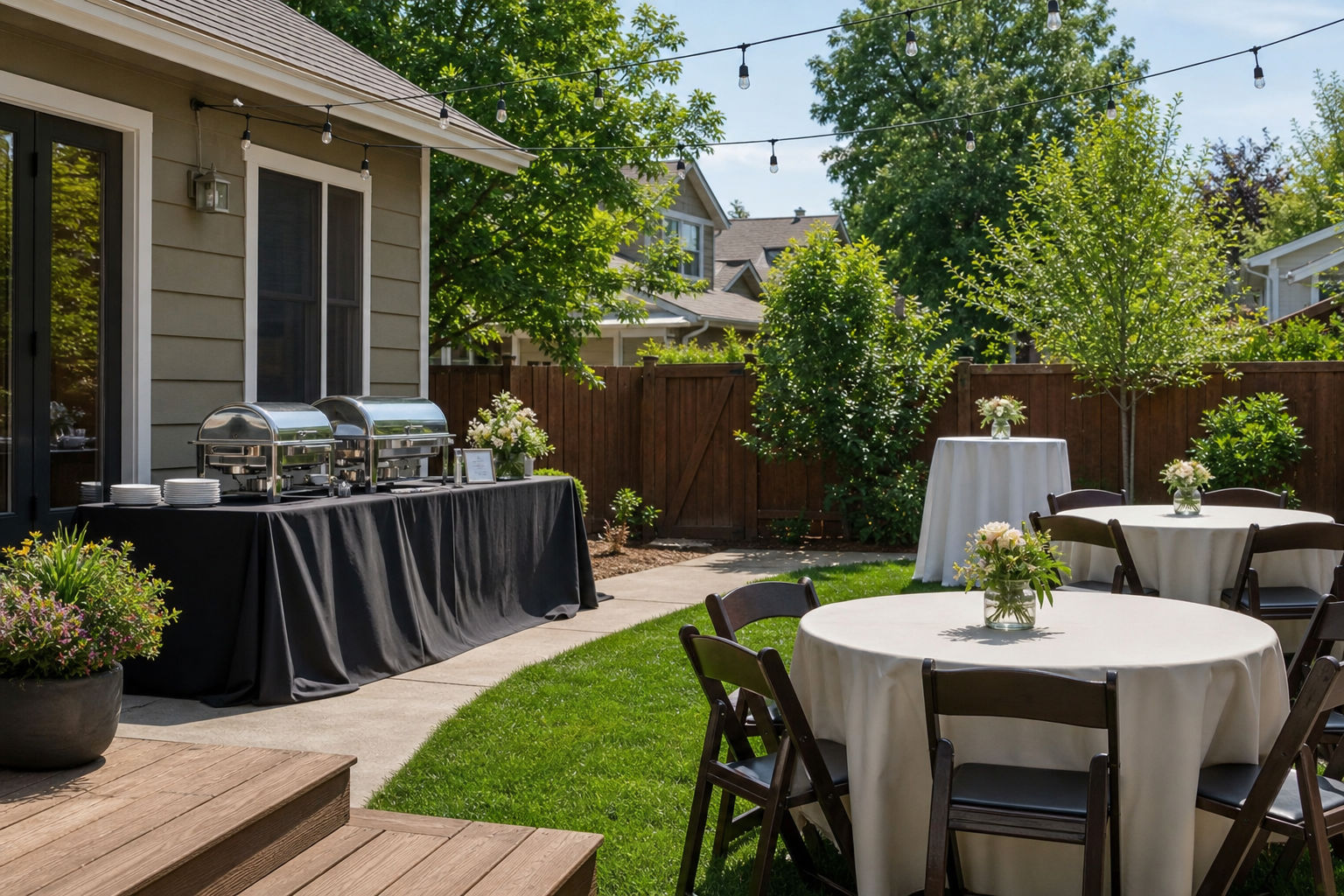
A small event deserves professional planning when the host cannot also serve as the coordinator. That usually happens when the event has more than one vendor, a firm timeline, a venue with operating rules, or onsite logistics that need active management. Even at 30 or 40 guests, complexity can outweigh size. A compact event at a restricted property can be harder to run than a larger, more casual gathering in an open backyard.
Professional planning is especially valuable if your event includes rentals, décor delivery, alcohol service, entertainment, check-in, assigned activity timing, or separate food and dessert providers. It also helps when the site is not designed for events, such as a narrow residential lot, a shared commercial parking area, or a business lobby with limited access hours. For tighter sites in places like Thornton, Arvada, and Westminster, the physical layout itself can be the deciding factor, which is why How to Plan a Private Event on a Tight Property Footprint in Thornton, Arvada, and Westminster is useful reading.
Signs your small event needs planning support
- More than two vendors need to arrive, set up, and depart in sequence
- The venue has rules for permits, noise, access, parking, or insurance
- You need guests to move smoothly between spaces or service stations
- The schedule includes speeches, presentations, games, or formal moments
- You want to be present with guests instead of managing problems in real time
Five Decision Factors That Matter Most
1. Guest count is only one part of the equation
People often use guest count as the main decision point, but 25 guests can still create real coordination pressure if everyone arrives at once, parks in a tight area, and expects food service on a narrow timeline. On the other hand, 60 guests in a relaxed open house format may be easy to manage if traffic is staggered and service is continuous. The event format matters as much as the number of attendees.
2. Multiple vendors increase the chance of delays
Each added vendor creates another handoff, another arrival window, and another opportunity for miscommunication. A food truck, rental company, florist, dessert vendor, and photographer may all be excellent individually, but someone still has to coordinate site access, unloading order, staging areas, and timing. If your event involves several suppliers, planning oversight can protect the guest experience and reduce last-minute calls.
3. Venue restrictions can make a simple event complex
Homeowners associations, office parks, apartment communities, and public-facing business locations often have restrictions that affect event service. These may include parking limits, generator rules, fire lane access, trash disposal requirements, or fixed setup times. An event planner or experienced event management partner can identify those issues early and build a plan around them. If your gathering is community-facing, Event Planner Advice for HOA, School, and Community Events Using Mobile Catering offers helpful context.
4. Timelines matter more than most hosts expect
Even a casual event needs a timeline when there is a clear start, food service window, and cleanup deadline. Open houses, office appreciation events, and showers often feel informal, but they still benefit from a realistic sequence for setup, guest arrival, service, replenishment, and breakdown. For events built around circulation and staggered attendance, the timing plan should support movement rather than interrupt it. That is especially true for residential and real estate style gatherings, as covered in Event Planning for Open House Parties in Denver: How to Design Guest Flow, Food Service, and Timing That Keeps People Mingling.
5. On-site logistics determine how relaxed the event feels
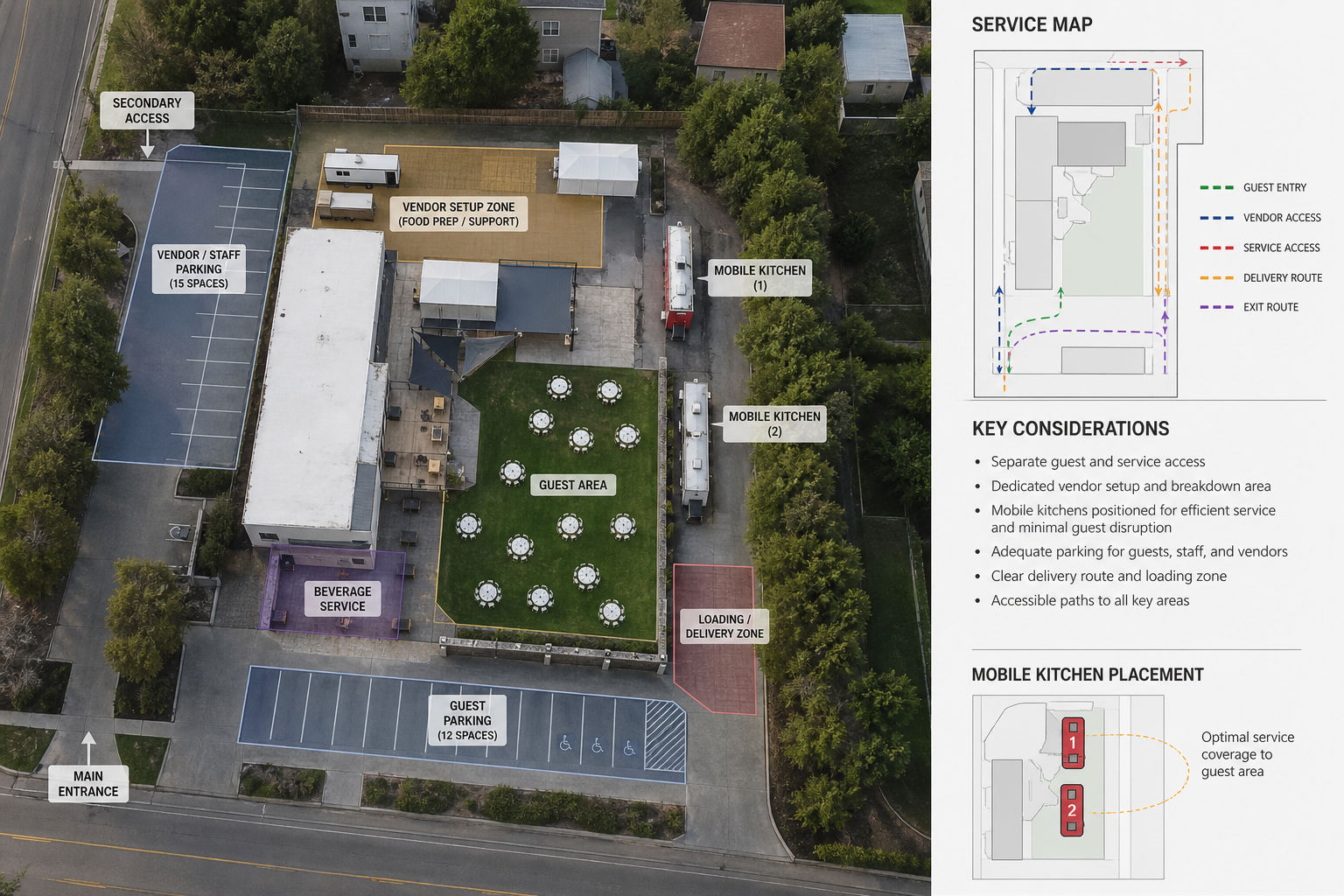
Guest flow, serving lines, beverage placement, shade, trash management, and restocking are easy to underestimate. These details are often the difference between an event that feels smooth and one that feels crowded or disorganized. If your guests will be spread across multiple areas, or if food needs to be served in more than one location, professional coordination adds real value. The same is true when you are trying to host while also representing your business to clients, staff, or partners.
For business owners in Aurora, Lakewood, or Centennial, this is often where outside help pays off. Your team should not spend the event directing vendors, answering setup questions, and solving service bottlenecks. A coordinated plan lets the event support your brand instead of distracting from it. And if your service model is more complex, with multiple serving points or larger circulation patterns, How Event Planners Coordinate Multi-Point Service for Large Private Parties and Corporate Gatherings shows what that process can involve.
A Practical Way to Decide
If your event has one food provider, one straightforward service window, a familiar venue, and no formal program, you can likely keep coordination simple. If it has a restricted site, several vendors, a fixed timeline, or a host who cannot be interrupted, planning support is a smart investment. Another useful test is to ask what happens if one vendor is late, weather shifts, or guest arrival changes suddenly. If the answer is unclear, professional coordination is probably worth it.
The best planning support is not always full-scale event production. Sometimes you need strategic pre-event guidance, a service timeline, a site walkthrough, or day-of management rather than end-to-end planning. An experienced mobile caterer and event partner can help you choose the right level of involvement based on your guest count, property layout, and goals. If you want to understand what a planner will typically review before committing, see Questions an Event Planner Will Ask Before Coordinating a Wedding, Private Party, or Corporate Gathering.
How The Food Truck Family Helps Local Hosts Make the Right Call
The Food Truck Family supports events across Thornton, Denver, Aurora, Westminster, Broomfield, and nearby communities with mobile catering and event planning insight tailored to the site and service style. That means helping clients avoid overcomplicating simple events while stepping in with stronger coordination when the property, timeline, or vendor mix calls for it. Whether you are planning a home celebration, business lunch, shower, open house, or private party, the right approach starts with an honest look at logistics.
If you are unsure whether your event needs full planning or just experienced catering coordination, start by mapping guest flow, service timing, access, and venue rules. Once those pieces are clear, the right level of support usually becomes obvious. A well-run small event should feel easy for guests and manageable for the host, and that is exactly what thoughtful planning is meant to achieve.
Source: prepare for emergencies and disruptions