How to Plan Guest Counts, Service Windows, and Seating for a Mobile Catered Event
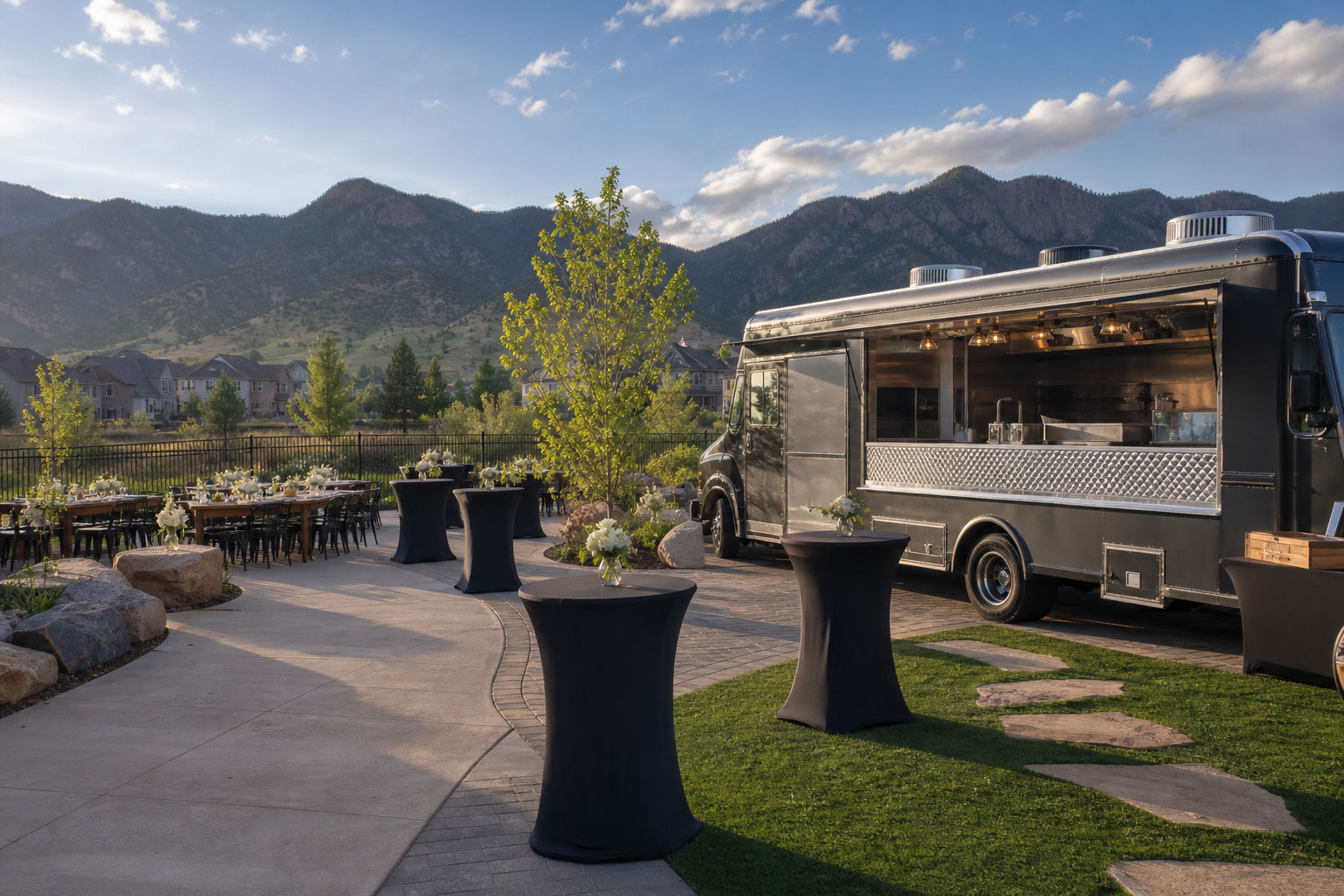
What You'll Learn
- Estimate guest counts with practical buffers
- Match service windows to menu and event goals
- Plan seating that supports flow and comfort
- Reduce lines and timing issues before event day
- Build a smoother guest experience from start to finish
A successful mobile catered event is not built on food alone. It depends on how well guest counts, service timing, seating, and movement all work together. For homeowners planning backyard celebrations and business owners organizing staff lunches, client events, or community gatherings in Thornton, Denver, and Aurora, the biggest problems usually come from small planning gaps: too few seats, service starting too late, or a guest count that changes without the layout changing with it. A strong event plan closes those gaps before the first plate is served.
At The Food Truck Family, mobile catering works best when attendance estimates are translated into a clear operating plan. That means deciding not only how many people may attend, but when they will arrive, how quickly they need to eat, where they will sit or stand, and how the service line will move. This is the same planning mindset event professionals use when designing private parties, corporate functions, and weddings across Westminster, Broomfield, and Northglenn.
Start With the Right Guest Count, Not Just the Invitation List
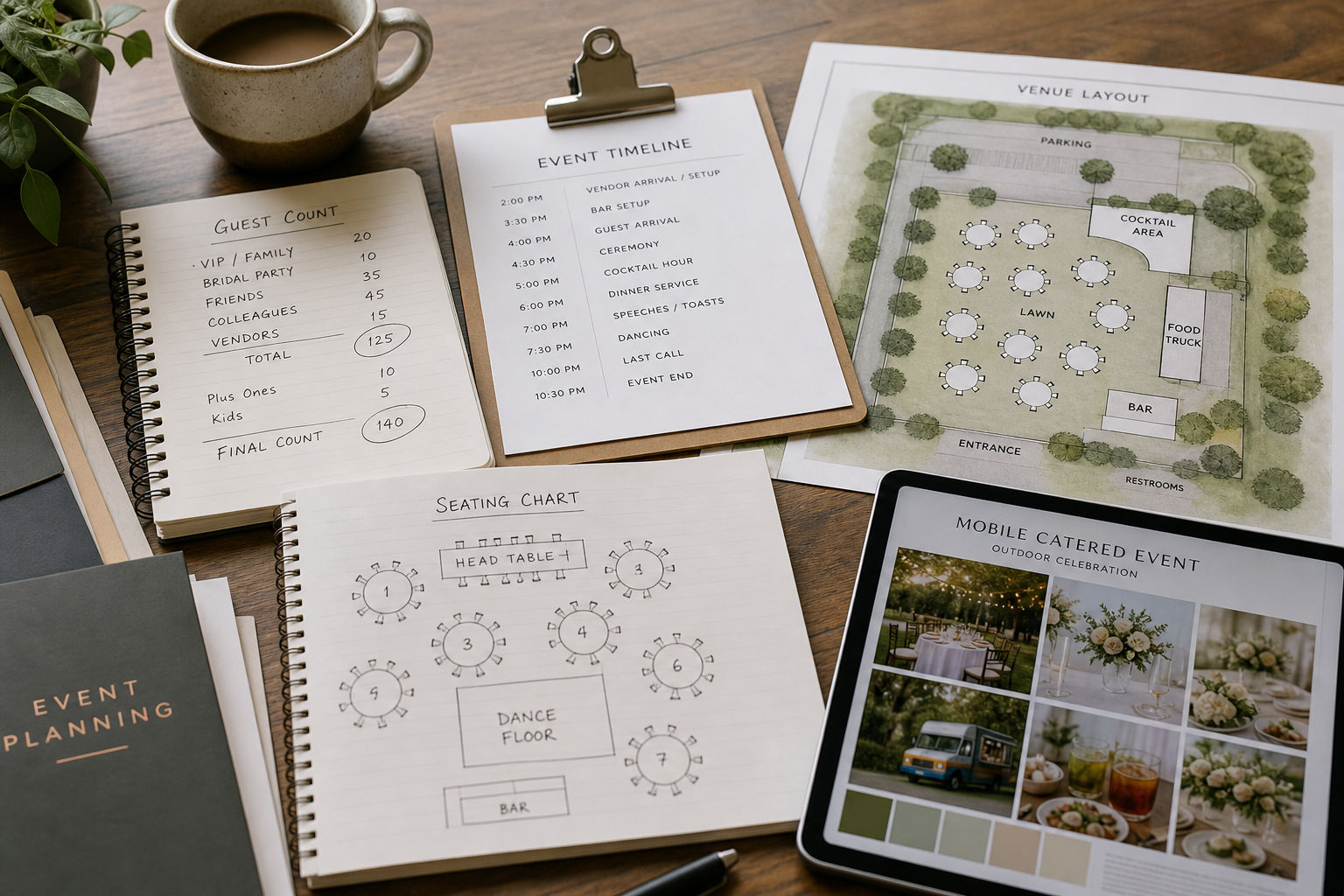
Many hosts begin with an invitation list and treat that number as the event count. In practice, planners separate that into several numbers: invited guests, expected attendance, confirmed attendance, and peak-time demand. A neighborhood open house may have 120 invitees but only 70 expected attendees. A company appreciation event may have 150 employees, yet only 110 may eat within the main lunch window. Those distinctions matter because a mobile caterer needs to prepare for real service demand, not just a broad estimate.
The best approach is to build in a reasonable planning buffer. If RSVPs are still moving, a caterer and planner may create one version of the plan for the minimum count and another for a likely final count. This helps avoid overloading the service line or underestimating seating. If you are still early in the planning process, the questions covered in Questions an Event Planner Will Ask Before Coordinating a Wedding, Private Party, or Corporate Gathering can help you define your attendance assumptions more accurately.
- Separate invited guests from likely attendees
- Identify how many guests will eat during the busiest window
- Track adults, children, vendors, and staff separately
- Update the site and seating plan when counts change
Build the Service Window Around Guest Behavior
Service windows are often planned too loosely. Hosts may say dinner starts at 6:00, but that does not explain whether 40 guests arrive at once, whether speeches happen before ordering, or whether guests will trickle in over an hour. For a mobile catered event, the service window should reflect actual guest behavior. A wedding dinner has different timing needs than a school event, HOA gathering, or office lunch. The more specific the timing, the easier it is to keep lines manageable and guests comfortable.
For example, a private party in Arvada might work well with an open 90-minute service period, while a corporate event in Commerce City may need a compressed lunch service so employees can return to work on time. A planner will look at menu format, number of guests, order complexity, and whether guests are released all at once or by group. If the event includes multiple phases, such as ceremony, cocktail hour, and dinner, timing should be coordinated so one part of the event does not create avoidable delays in the next. Hosts planning wedding-related timelines may also find Planning a Wedding With Mobile Catering: How to Coordinate Ceremony Timing, Cocktail Hour, and Dinner Service useful.
Match Seating to Event Style and Meal Timing
Seating is not only about having enough chairs. It is about supporting the kind of experience you want guests to have. A fully seated dinner requires a different layout than a casual standing reception with scattered cocktail tables. If your service plan encourages guests to eat in waves, you may not need one seat per attendee at the same moment. But if everyone is released to dine at once, underestimating seating can create confusion, table crowding, and guests balancing meals wherever they can find space.
Planners typically look at the event format first: plated-style pacing, buffet rhythm, food truck ordering, family event grazing, or short-break corporate dining. Then they consider guest demographics, including older adults, young children, and anyone who will need easier access or more stable seating. A backyard celebration in Littleton may need shaded seating clusters near the service area, while a business event in Lakewood may need a faster turnover layout with clear standing areas and a smaller seated section. Good seating design supports comfort without slowing service flow.
Common seating questions to answer early
- Will most guests eat at the same time or in waves?
- Do older guests or families need priority seating?
- How far will guests carry food from service to tables?
- Will tables interfere with ordering lines or truck access?
Use a Site Plan to Prevent Bottlenecks
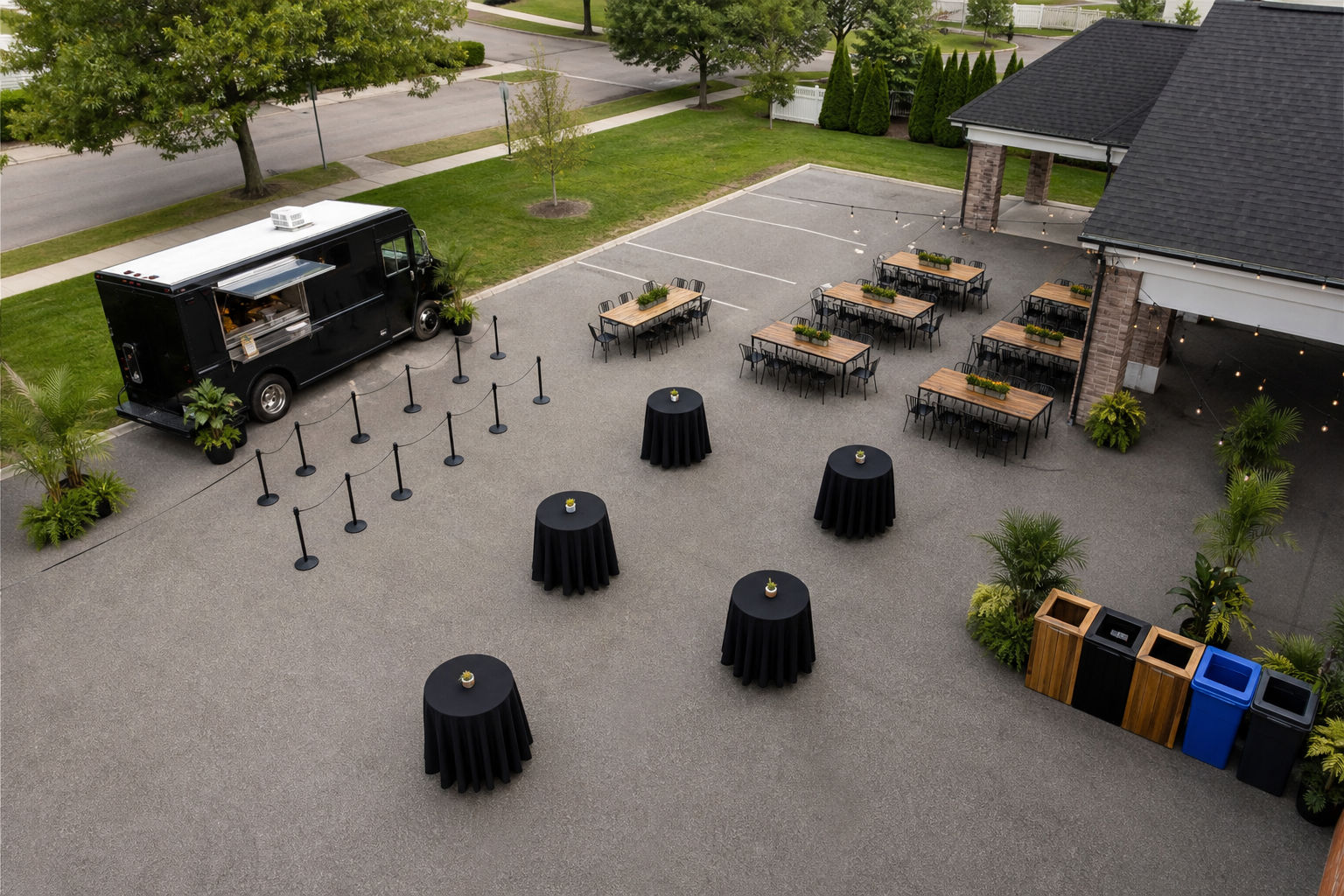
Once guest count, service timing, and seating style are defined, the next step is layout. Mobile catered events perform best when the truck, queue, pickup area, trash stations, beverage setup, and seating all have clear relationships to one another. A poor layout can create long lines even when the food service itself is efficient. Guests may cross in front of the ordering area, bunch near the pickup point, or block access to tables. These are avoidable issues when the site is mapped in advance.
This is especially important for properties and venues in Denver, Brighton, and Centennial where access points, parking, and outdoor surfaces may vary. A site walk or simple diagram often reveals where guests will naturally gather and where the line should be directed instead. Hosts who want a closer look at how this works can read How an Event Planner Builds a Site Plan for Private Events With Mobile Catering in Thornton and Denver. For weddings, Event Flow Planning for Mobile Catered Weddings in Thornton and North Denver shows how layout and timing work together.
Plan for Peaks, Not Averages
One of the most common mistakes in event planning is assuming guests will spread themselves out evenly. They rarely do. Most events have peaks: right after a ceremony, immediately after announcements, at the start of a lunch break, or when a community event reaches its busiest period. If you plan only for the average pace, the guest experience can suffer during those concentrated moments. Long lines, limited seating, and delayed transitions tend to show up at the peak, not during the quiet parts of the event.
That is why experienced planners work backward from the busiest 20 to 30 minutes of the event. They ask how many guests could join the line at once, how many seats should be available nearby, and whether the event schedule should stagger access. For HOA, school, and neighborhood events in Parker, Lone Tree, or Wheat Ridge, this type of planning can make the difference between a welcoming atmosphere and a congested one. If you are organizing a broader community gathering, Event Planner Advice for HOA, School, and Community Events Using Mobile Catering offers additional guidance.
Know When You Need More Coordination
Not every event needs full-scale planning support, but many hosts underestimate how quickly logistics become complex. Once you add a narrow service window, a larger guest count, limited parking, speeches, multiple vendors, or venue restrictions, coordination becomes much more important. Smaller events can often stay simple with a clear count, clean layout, and straightforward service plan. Larger or more layered events usually benefit from dedicated planning so the host is not managing line flow, seating issues, and schedule adjustments in real time.
If you are unsure where your event falls, When to Hire an Event Planner for a Small Event and When You Can Keep Coordination Simple can help you decide. The key is to make those decisions early enough to shape the site plan, not after invitations are out and rentals are already booked.
A Better Guest Experience Starts With the Plan
When guest counts, service windows, and seating are planned together, the event feels easier for everyone. Guests know where to go, lines move more predictably, seating feels intentional, and the host spends less time solving preventable problems. That is the value of working with a mobile caterer that also understands event flow. The Food Truck Family helps clients across Thornton, Denver, Aurora, and surrounding communities turn rough attendance estimates into a practical service plan that supports the full event experience, not just the menu.
Source: food truck and mobile food establishment guidance