How an Event Planner Organizes Restroom, Handwashing, and Sanitation Logistics for Takeout Restaurant Events in Centennial
What You'll Learn
- Plan restroom access before guest counts lock in
- Match handwashing setup to food service volume
- Reduce lines, odors, and preventable guest complaints
- Support cleaner, smoother takeout restaurant events
- Understand practical sanitation details for home events
When hosts plan a takeout restaurant event in Centennial, they often focus on menu choices, timing, and seating first. Yet some of the most important details for guest comfort happen behind the scenes: restroom access, handwashing capacity, trash control, and sanitation planning around food service. For backyard weddings, private parties, and home-based celebrations, these logistics directly affect how polished the event feels. A well-organized plan protects the guest experience, helps the property function smoothly, and keeps a takeout restaurant setup in Centennial running without the preventable problems that can distract from the occasion.
Why sanitation logistics matter more than most hosts expect
At a home event, guests notice comfort issues quickly. If restroom lines are too long, if there is no visible place to wash hands before eating, or if trash builds up near service areas, the event can feel disorganized even when the food is excellent. That is why experienced planners treat sanitation as part of event flow, not an afterthought. Many of the same planning habits used for layout and timing also apply here. For example, if you are already thinking about guest movement, it helps to review ideas like reception floor plan strategies that support smooth event flow and site access planning for mobile catered events, because restroom placement and handwashing access should fit naturally into the overall layout.
For a takeout restaurant event in Centennial, sanitation planning is especially important when food is being served outdoors or in a mixed indoor-outdoor setting. Guests may be moving between the driveway, backyard, patio, and interior restroom. Without a clear plan, that movement creates congestion, wet floors, long waits, and confusion about where guests should go. A planner helps hosts decide what the property can realistically support and when supplemental solutions make sense.
Start with a realistic restroom capacity check
The first question is simple: can the home restroom setup handle the event size and duration? For a smaller gathering, indoor restrooms may be enough. For a larger backyard wedding or an extended private party, relying only on the home can create line backups and extra wear on the property. A planner looks at guest count, event length, age range, alcohol service, and whether the event is mostly outdoors. Those factors help determine whether hosts should use existing restrooms only, add a portable restroom option, or designate separate guest and household bathrooms.
- Estimate peak restroom demand, not just total attendance
- Separate guest access from private household areas when possible
- Consider one restroom path in and another path out if space allows
- Plan lighting and signage for evening use
- Schedule restocking checks during the event
These details become more important when timing is compressed around mealtimes or toasts. If many guests stand up at once, lines form fast. That is why timeline planning and sanitation planning should work together. Hosts can benefit from reading what to ask before hiring an event planner for a backyard wedding or private party and a step-by-step event planning timeline for family celebrations to understand how service pacing affects guest demand for restrooms and washing stations.
When portable restroom options make sense
Portable restrooms are not only for very large public events. In many cases, they are the practical answer for a refined private event at home. If the property has limited indoor access, if the event will keep guests outdoors for most of the day, or if the host wants to reduce traffic through the house, a portable unit can improve the experience. The key is placement. It should be convenient enough to use, but not so close to dining or social areas that it becomes visually or functionally disruptive.
For a takeout restaurant event in Centennial, a planner usually considers walking distance, surface stability, privacy, and service truck access before recommending portable restroom placement. This is where broader event logistics matter. If a property already has challenges with access or circulation, the host may also find it useful to review how to plan around venue restrictions and operating limits and how to organize seating, service, and guest flow without a formal dinner. Even though every event is different, the same principle applies: supporting convenience without interrupting the event atmosphere.
Handwashing stations should be visible, easy, and close to food
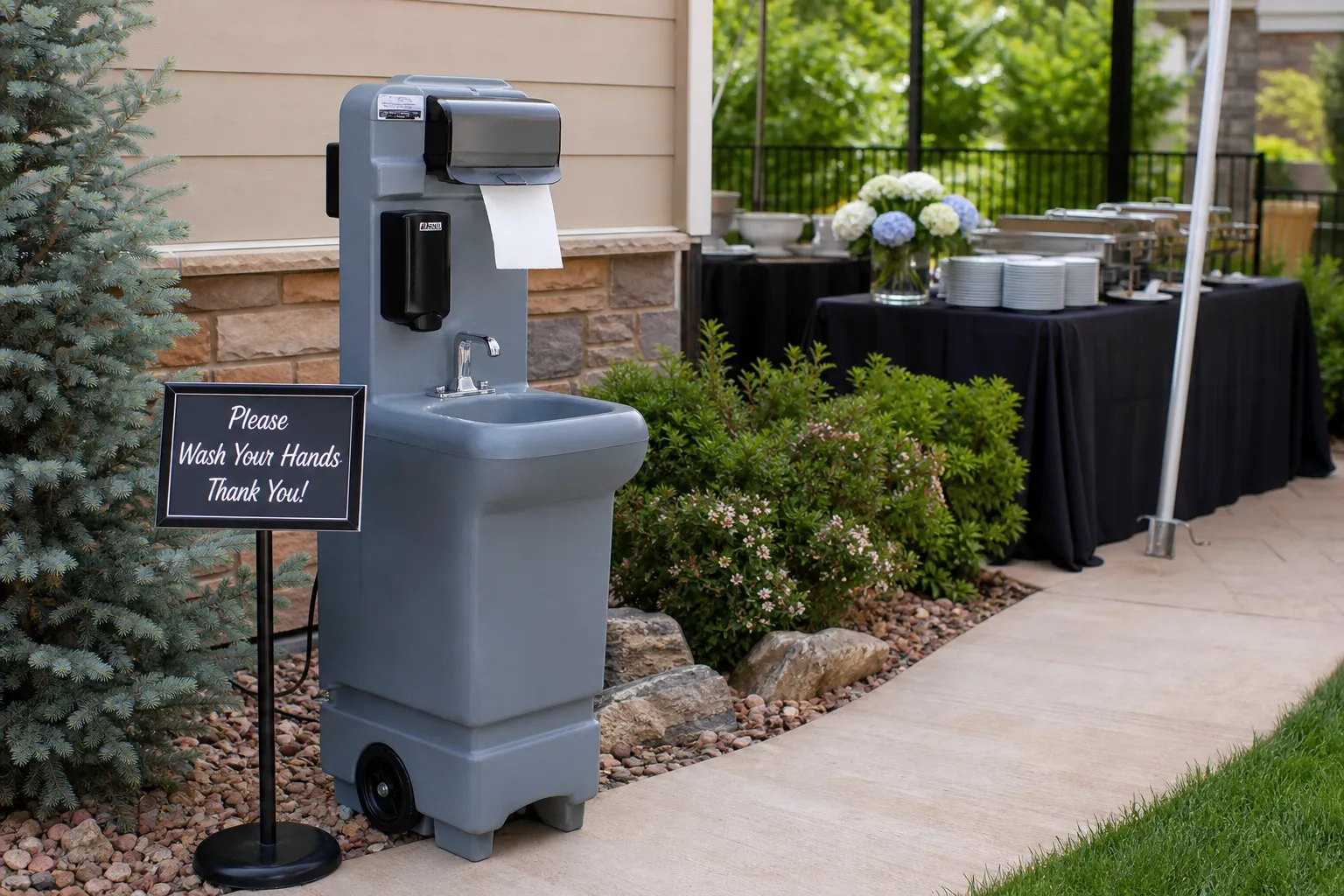
Guests are far more likely to wash their hands when the station is obvious and convenient. That means a handwashing plan should not depend only on interior bathrooms, especially for outdoor gatherings. A simple, well-placed handwashing station near the food pickup or dining area can improve cleanliness and reduce traffic into the home. It also helps before dessert service, after lawn games, and during child-focused family events where sticky hands are almost guaranteed.
For hosts using a takeout restaurant format in Centennial, handwashing access should be considered part of the serving setup itself. If guests are collecting plated meals, boxed meals, or self-serve extras, place handwashing within a short walk of that path. Stock soap, paper towels, and a trash receptacle, and assign someone to monitor supplies. An event planner also looks at drainage, refill needs, and whether children, older adults, or guests with mobility concerns can use the station comfortably. Accessibility matters in sanitation planning just as much as it matters in seating and circulation, and hosts can learn from guidance on preparing for guest accessibility needs.
Food-service sanitation planning goes beyond the food table
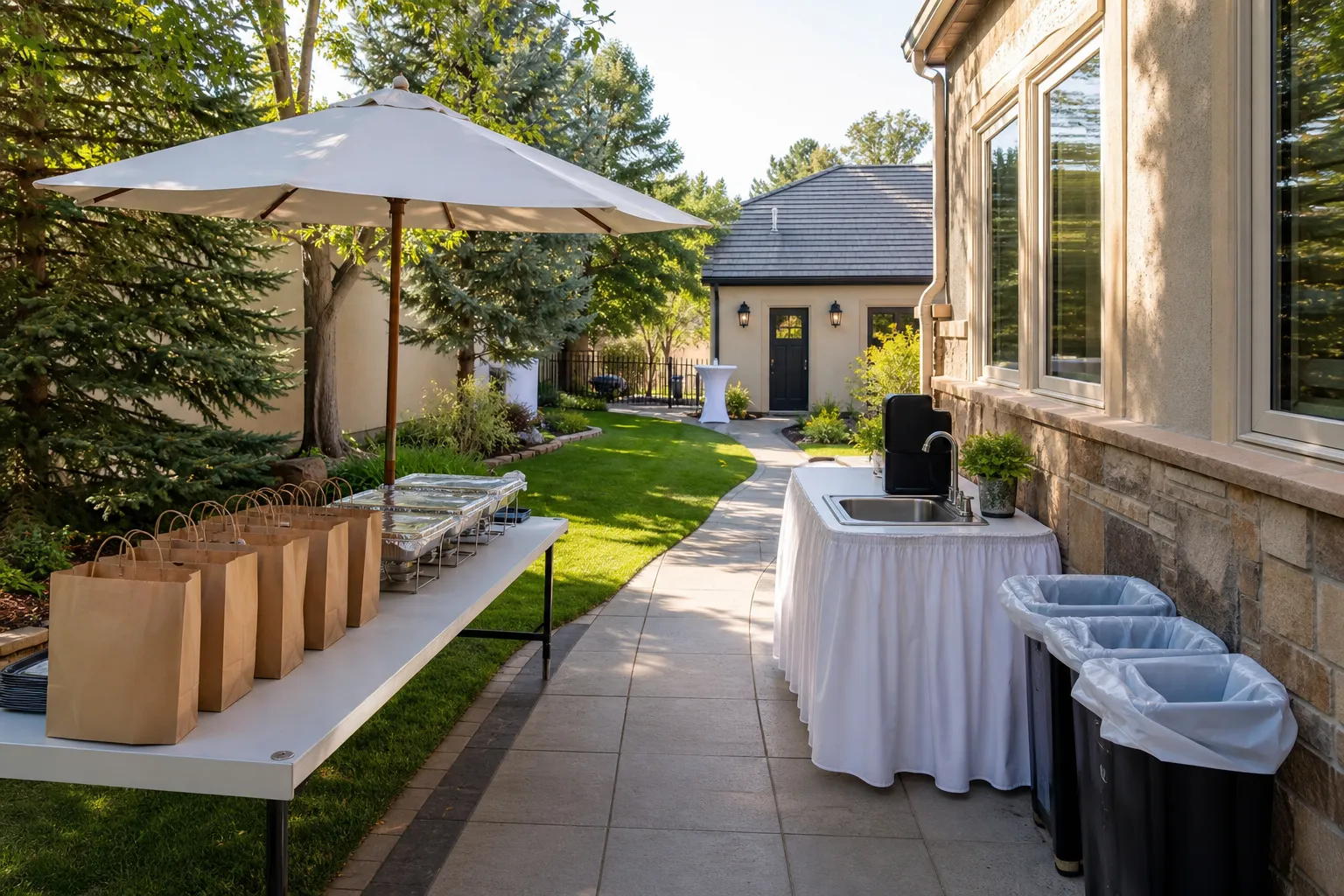
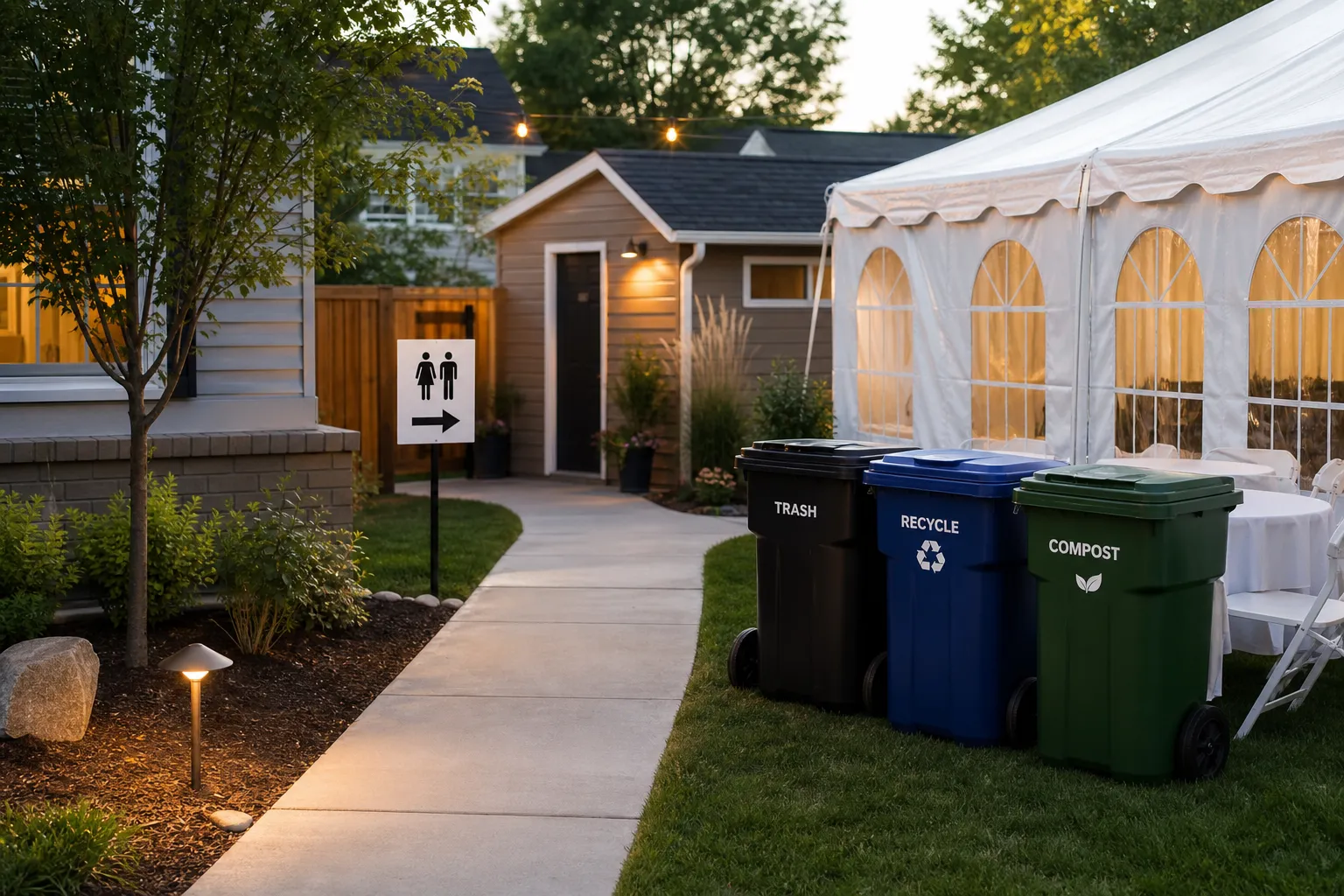
Clean food service depends on more than serving utensils and a tidy buffet. Hosts should think through where guests set down used items, where spills are most likely, and how trash will be removed before bins overflow. At home events, sanitation often breaks down because disposal points are too few or too far away. A planner usually recommends multiple waste stations with clear sorting, liners, and placement near high-use zones rather than a single trash area hidden in one corner.
For a takeout restaurant event in Centennial, food-service sanitation also includes the route from pickup to eating area. If sauces, drinks, or desserts are carried across uneven ground, spills become more likely. If condiment tables are placed in a bottleneck, guests cluster and handling increases. These are small details, but they shape whether the event feels smooth or chaotic. Business owners planning hosted gatherings can also benefit from what local business owners should prepare before hiring an event planner, because operational thinking often improves private event execution too.
How a planner helps hosts avoid common home-event problems
An event planner brings structure to decisions that many hosts make too late. Instead of waiting until the week of the event to wonder whether one bathroom is enough or where guests will wash up, the planner maps those answers early. That includes estimating demand, identifying supply needs, coordinating setup timing, and making sure sanitation supports the event schedule rather than competing with it. For office-hosted or mixed-use properties, lessons from planning employee appreciation events before the caterer arrives can also be useful, because comfort logistics and service readiness always work best when handled in advance.
In practical terms, a good plan reduces guest confusion, protects the property, and creates a more professional experience. It also helps the host stay present. Instead of restocking soap, answering restroom questions, or dealing with overflowing trash during the event, the host can focus on guests. That shift is often what separates a stressful gathering from a polished one.
A simple sanitation checklist for hosts
- Confirm expected guest count and event duration
- Assess whether home restrooms alone are sufficient
- Decide if a portable restroom is needed
- Place at least one visible handwashing station near food service
- Stock soap, paper towels, toilet paper, and backup supplies
- Add enough trash and recycling points near active guest areas
- Plan lighting, signage, and cleanup responsibilities
Conclusion
Restroom access, handwashing, and sanitation planning may not be the first things hosts think about, but they are essential to a successful takeout restaurant event in Centennial. When these details are handled early, guests stay more comfortable, food service runs more smoothly, and the event feels better organized from start to finish. For homeowners and local business owners alike, thoughtful sanitation logistics are one of the simplest ways to protect the guest experience and make a takeout restaurant event in Centennial feel well run for everyone involved.
Source: handwashing guidance
Frequently Asked Questions
The Food Truck Family with a hands-on approach shaped by a genuine passion for bringing people together through great food and smooth event experiences. Drawn to catering and mobile food service by the energy of celebrations and community gatherings, focuses on making each event feel well cared for from start to finish. The interest in this work comes from the simple idea that good food and thoughtful service can turn any occasion into something memorable. Customers can expect each truck to be approachable, detail-minded, and committed to making planning easier, whether they need catering, delivery, or support for a larger event. They bring a practical, customer-first mindset to every order and every celebration in Colorado.
- Specialized in catering services
- Experienced in mobile catering and event catering
- Offers event planning and event management services
- Provides wedding, party, takeout, and meal delivery services