How Event Planners Solve Parking, Power, and Site Access Challenges for Mobile Catered Events
What You'll Learn
- Avoid setup delays with smarter parking and access planning
- Reduce power and service disruptions before event day
- Prevent venue conflicts with clear site logistics
- Improve guest flow at homes, offices, and outdoor spaces
Why logistics decide whether a mobile catered event feels effortless
Guests usually notice the food, the timing, and the overall atmosphere. What they do not always see is the logistical planning that makes a mobile catered event run on schedule. For events at homes, office lots, parks, and private venues, the biggest challenges often have nothing to do with the menu. They come down to where a truck can park, how equipment will be powered, and whether the service team can access the site without disrupting guests, neighbors, or other vendors. That is where a professional event planner adds real value.
At The Food Truck Family, event planning is not treated as an extra step. It is part of delivering reliable mobile catering throughout Thornton, Denver, Aurora, Westminster, and surrounding communities. When a planner evaluates the site in advance, confirms logistics with the property owner, and coordinates setup details early, the event is far less likely to experience delays, service interruptions, or last-minute venue conflicts. For homeowners and business owners, that means less stress and a smoother event from arrival through cleanup.
Parking is more than finding a place to stop
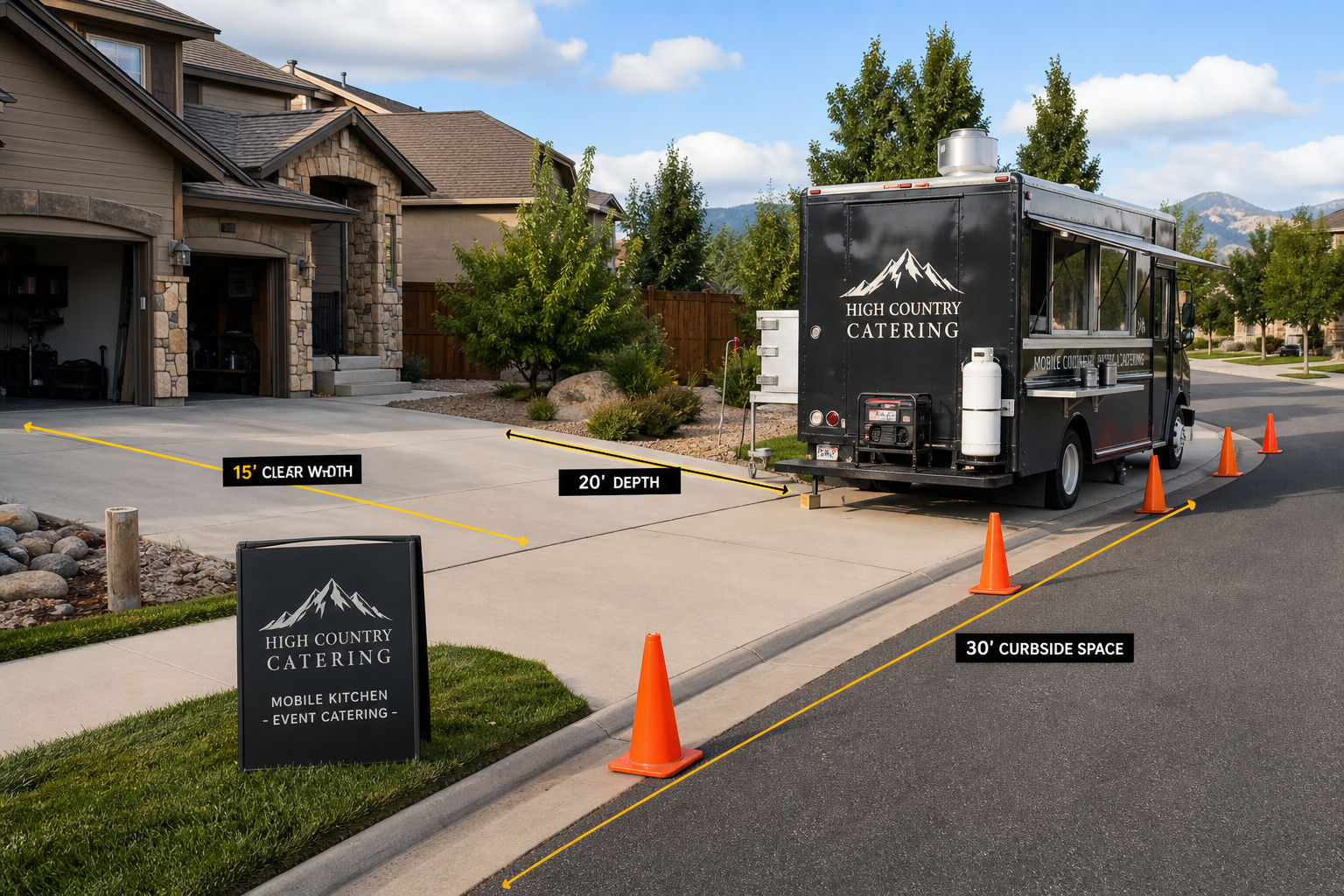
Parking sounds simple until event day reveals tight driveways, restricted office lots, shared private roads, or neighborhood congestion. A mobile caterer needs enough space not only to park, but also to operate safely and efficiently. Trucks may require clearance for doors, serving windows, ramps, generators, or prep access. If the assigned location is too narrow, too sloped, or too far from the service area, setup can take longer and guest service can slow down.
A skilled planner looks at parking from several angles: vehicle size, turning radius, arrival route, load-in timing, guest traffic, and local restrictions. In residential areas like Northglenn, Arvada, or Brighton, that can mean checking whether street parking is permitted for larger vehicles, whether HOA rules apply, and whether neighbors should be notified. For office events in Denver or Commerce City, it may involve reserving spaces, confirming delivery access, and making sure the truck does not block fire lanes or employee entrances.
- Measure the usable parking footprint, not just the address
- Confirm truck access routes before the day of service
- Reserve space early at office lots and shared venues
- Check HOA, city, or venue restrictions on vehicle placement
How planners reduce parking-related delays
Professional event planners build backup options into the plan. If the first parking area becomes unavailable, there should be a secondary placement strategy that still supports service. They also schedule arrival windows carefully. A truck that arrives too late may compete with guest vehicles. A truck that arrives too early may conflict with rental deliveries or venue access rules. That timing coordination is especially important for weddings and milestone events, where every stage of the day affects the next. If you are planning a reception, our post on wedding reception timelines that work with mobile catering explains how logistics and timing work together.
Power planning prevents service interruptions
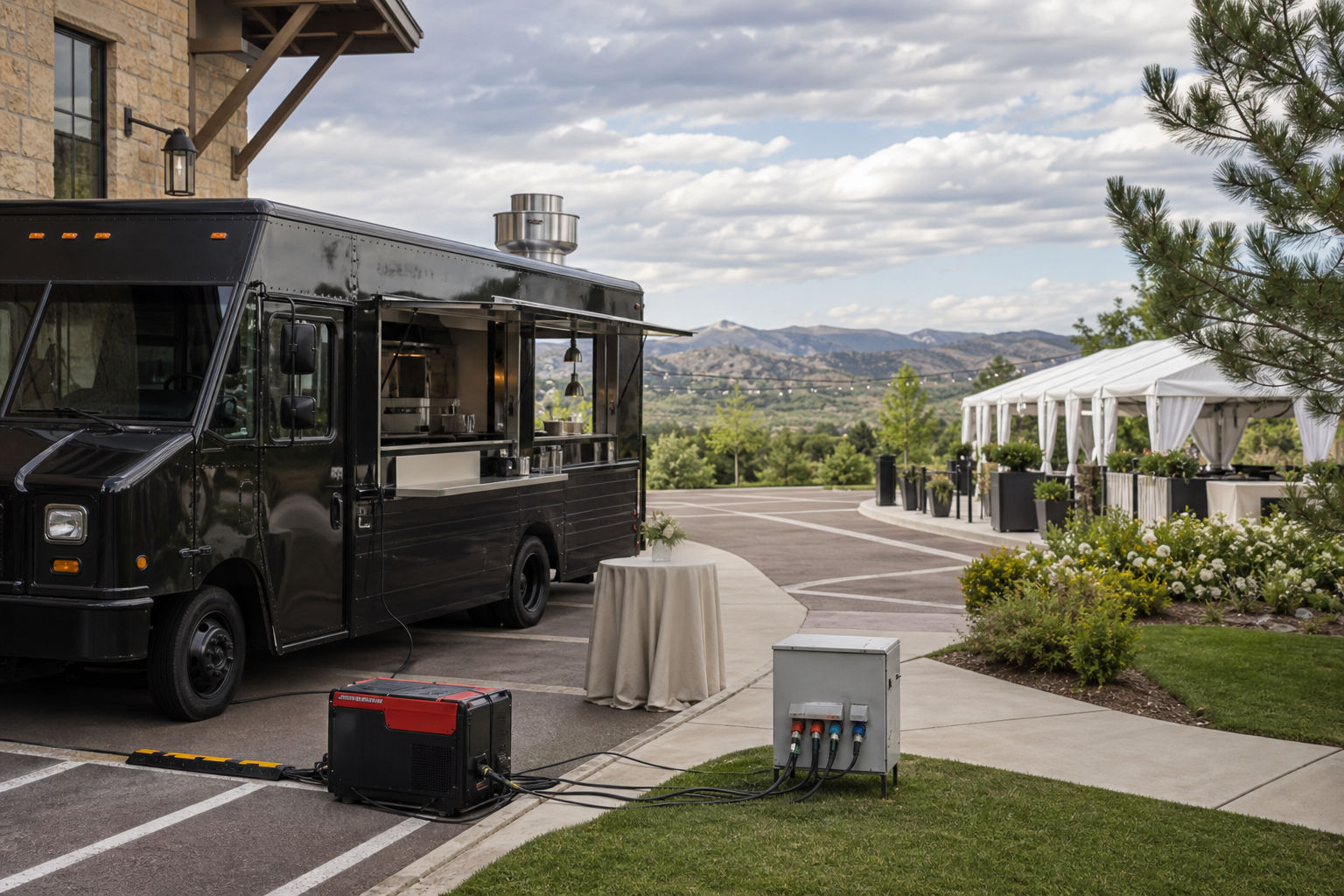
Power is another behind-the-scenes issue that can make or break an event. Some mobile catering setups are self-contained, while others benefit from access to venue power for warming equipment, lighting, refrigeration support, or beverage service. The mistake many hosts make is assuming that any nearby outlet will be enough. In reality, amperage, circuit load, outlet location, extension safety, and weather protection all matter.
An event planner helps determine what power is needed, what the site can actually provide, and what alternatives should be ready if conditions change. At a private home in Littleton or Centennial, that could mean identifying dedicated circuits and making sure household use will not overload them during service. At a park or outdoor venue near Lakewood or Parker, it may mean planning for generator placement, cable routing, and noise considerations. The goal is simple: avoid tripped breakers, equipment issues, and interruptions during peak serving time.
Power planning also overlaps with weather planning. Heat, rain, and wind can affect where equipment is staged and how safely cables or generators can be used. Colorado conditions change quickly, so planners prepare for both ideal and less-than-ideal setups. For more on that side of event preparation, see our article on rain, wind, and heat event planning strategies for outdoor celebrations in Colorado.
Site access affects setup speed, service flow, and guest experience
Site access includes every detail that determines how the catering team gets in, sets up, serves, and exits. Gates, alley entries, stairs, soft ground, narrow side yards, elevator schedules, locked loading docks, and shared venue traffic can all create problems if they are discovered too late. Even a beautiful venue can be difficult for mobile catering if the path from arrival point to service area is not practical.
For backyard events, planners look at driveway width, gate clearance, walking distance, and surface conditions. For corporate events in office parks across Broomfield, Englewood, or Lone Tree, they often coordinate with property management to secure dock access, parking approvals, or after-hours entry. For park events and neighborhood gatherings, they may also need to review permit requirements, trash handling, and pedestrian circulation so service supports the event rather than competing with it.
What planners check during a site review
- Exact truck placement and approach route
- Distance from parking to service or dining area
- Ground conditions, slope, and drainage concerns
- Gate widths, overhead clearance, and turning space
- Access timing for vendors, guests, and rentals
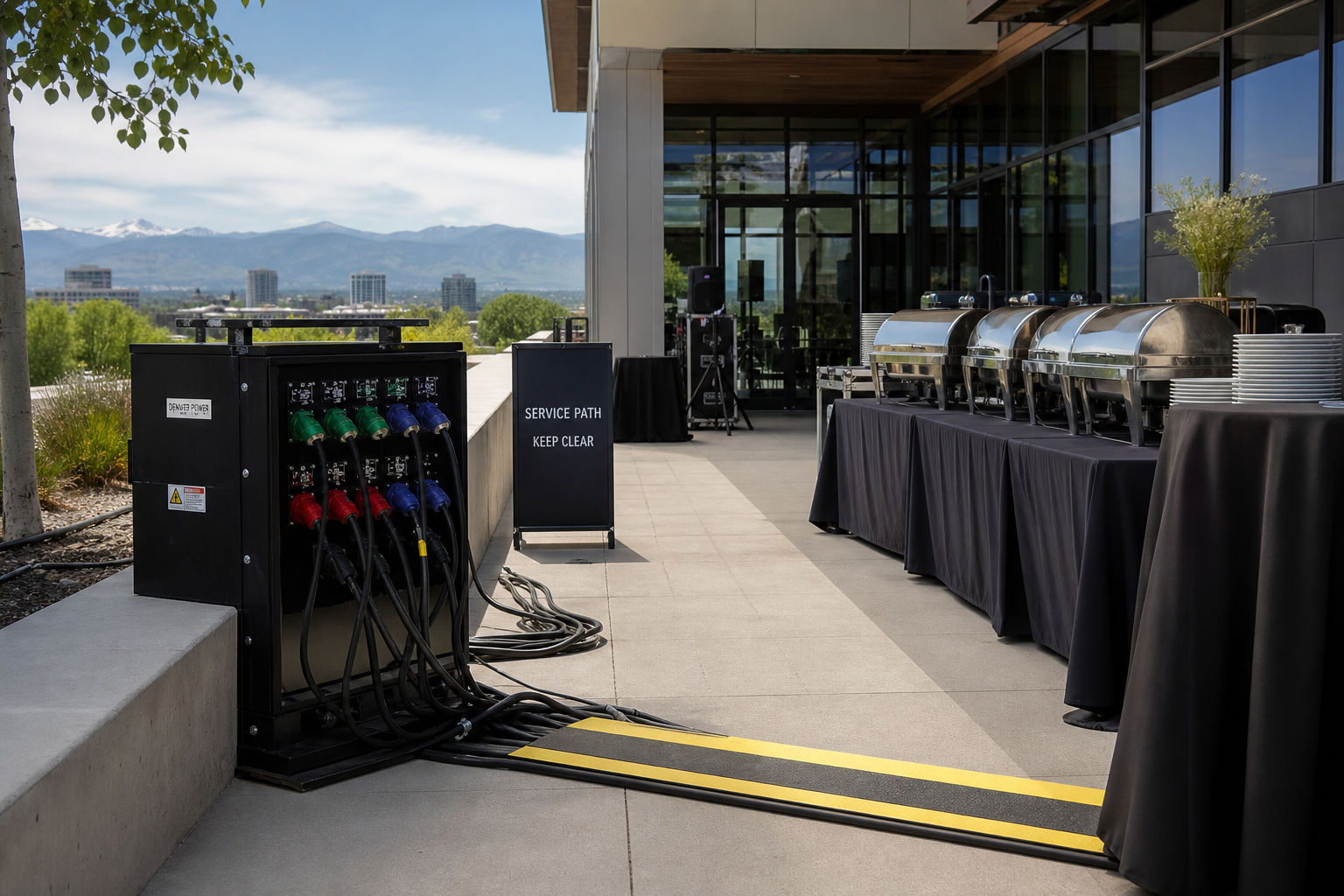
- Nearby power sources and backup options
This review process is one reason professional planning saves time on event day. Instead of improvising around blocked access or poor placement, the team arrives with a site-specific plan. That is valuable for family celebrations, neighborhood events, and backyard parties alike. If you are hosting at home, our guides on backyard party planning tips and what to ask before hiring an event planner can help you think through the right questions early.
How professional planning helps homeowners and local businesses
For homeowners, logistics planning protects the experience you want guests to remember. It reduces the risk of delivery confusion, blocked driveways, torn-up lawns, and service bottlenecks. It also helps your event stay considerate of neighbors and community rules. For businesses, good planning supports employee flow, customer access, and property compliance. A lunch activation in Aurora or Westminster should feel organized and efficient, not disruptive to the workday.
Professional planners also improve coordination across vendors. Rentals, entertainment, florals, tents, and catering all use the same physical space, often on tight schedules. When one access issue affects one vendor, it usually affects everyone else. A planner sees those overlaps in advance and builds a realistic setup order that reduces congestion. That is especially useful for larger private events, HOA gatherings, and celebrations with multiple moving parts. If that sounds like your event, our post on planning neighborhood parties and HOA events with mobile catering offers additional insight.
What to expect when working with The Food Truck Family
The Food Truck Family serves the Denver metro area as a mobile caterer and event planning partner, helping clients think through the details that keep service on track. That includes discussing site layout, identifying likely constraints, confirming practical setup options, and aligning catering operations with the event schedule. Whether the event is at a home in Thornton, a business in Denver, or a private venue near Castle Rock, the planning process is designed to reduce surprises.
If you are planning a graduation, wedding, office gathering, or private celebration, the smartest time to solve parking, power, and access challenges is before invitations go out and vendors are booked. Strong logistics support better service, a better guest experience, and a more confident host. That is the difference between hoping the setup works and knowing it has been planned to work.
Source: Denver Parks event permit information