Wedding Reception Timelines That Work With Mobile Catering in Thornton, Denver, and Surrounding Areas
What You'll Learn
- Build a reception timeline around real service windows
- Prevent bottlenecks at guest arrival, dinner, and speeches
- Coordinate venue access, parking, and catering setup smoothly
- Improve guest experience with better transitions and pacing
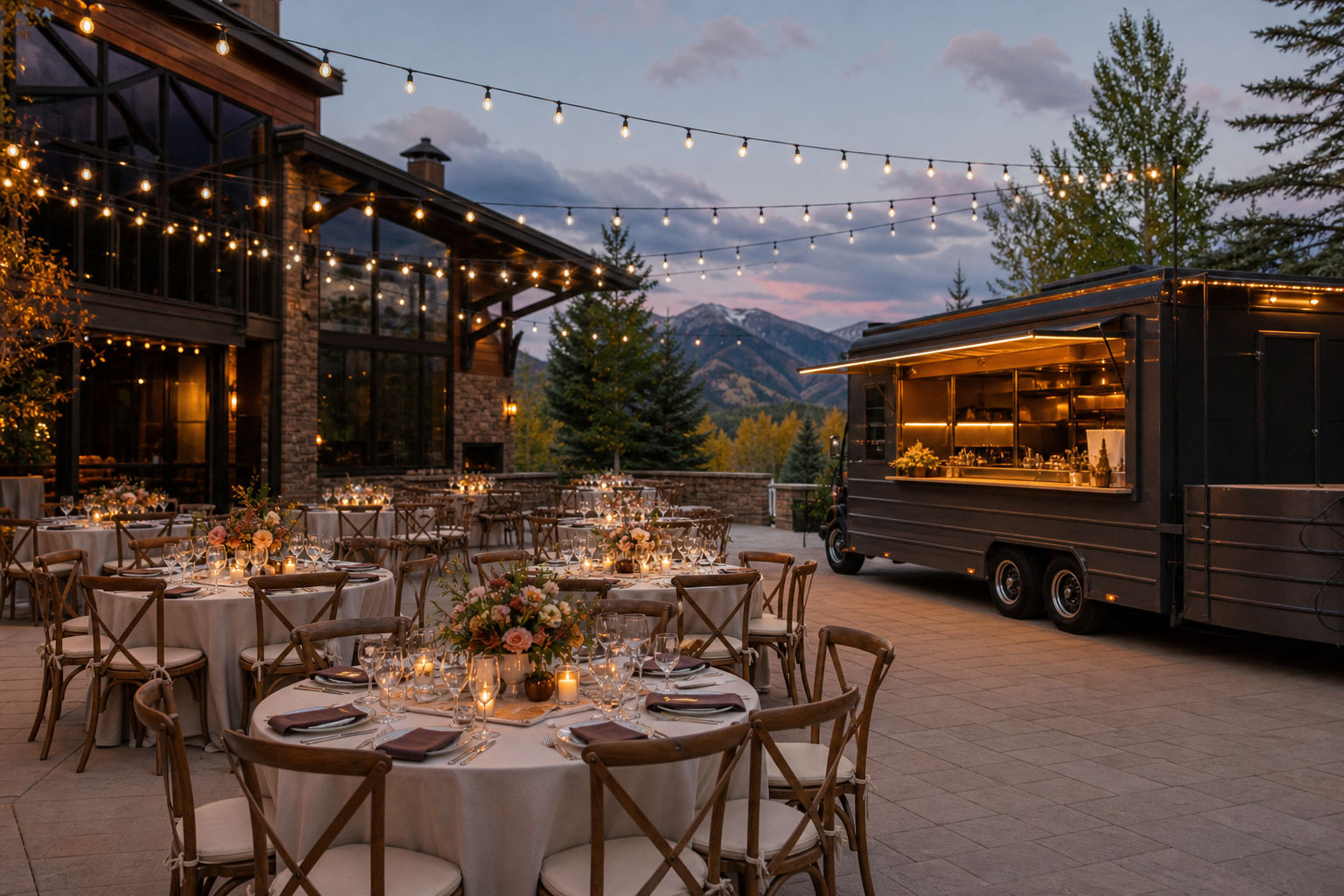
A great wedding reception feels effortless to guests, but the timeline behind it should be carefully built. When a mobile caterer is part of the day, timing matters even more because setup access, parking, power, serving speed, and guest flow all affect how smoothly the celebration unfolds. For couples planning weddings in Thornton, Denver, Aurora, and nearby communities, a realistic reception timeline helps protect the atmosphere you want while making sure dinner, speeches, and transitions happen without unnecessary waiting.
As both a mobile caterer and event planning partner, The Food Truck Family helps couples think beyond a generic run-of-show. A reception timeline should reflect the venue layout, guest count, service style, cocktail hour length, and how people will move from one part of the event to the next. The goal is not to pack the evening with activity. The goal is to create a steady rhythm that keeps guests comfortable, fed, and engaged.
Start With the Service Style, Not Just the Ceremony End Time
One of the biggest mistakes couples make is building the reception schedule around ideal moments instead of actual operational needs. A plated meal, buffet line, and food truck-style service all move at different speeds. If mobile catering is central to the reception, the timeline should begin with realistic service capacity and setup requirements, then work backward and forward from there.
For example, if guests will order from a truck or pick up meals from a mobile service station, the serving window may need to be longer than a traditional buffet, depending on menu complexity and guest count. If the caterer needs a specific parking position or generator-safe location, arrival and setup should be coordinated well before guests enter the reception space. Couples comparing planning approaches may also find it helpful to read How to Plan Guest Counts, Service Windows, and Seating for a Mobile Catered Event, which explains how counts and layout affect food service timing.
- Confirm caterer arrival, parking, and setup access with the venue
- Match meal timing to actual serving speed, not a guess
- Allow for guest movement between cocktail hour, dinner, and dancing
- Schedule speeches where they support service instead of interrupting it
A Sample Reception Flow That Works Well With Mobile Catering
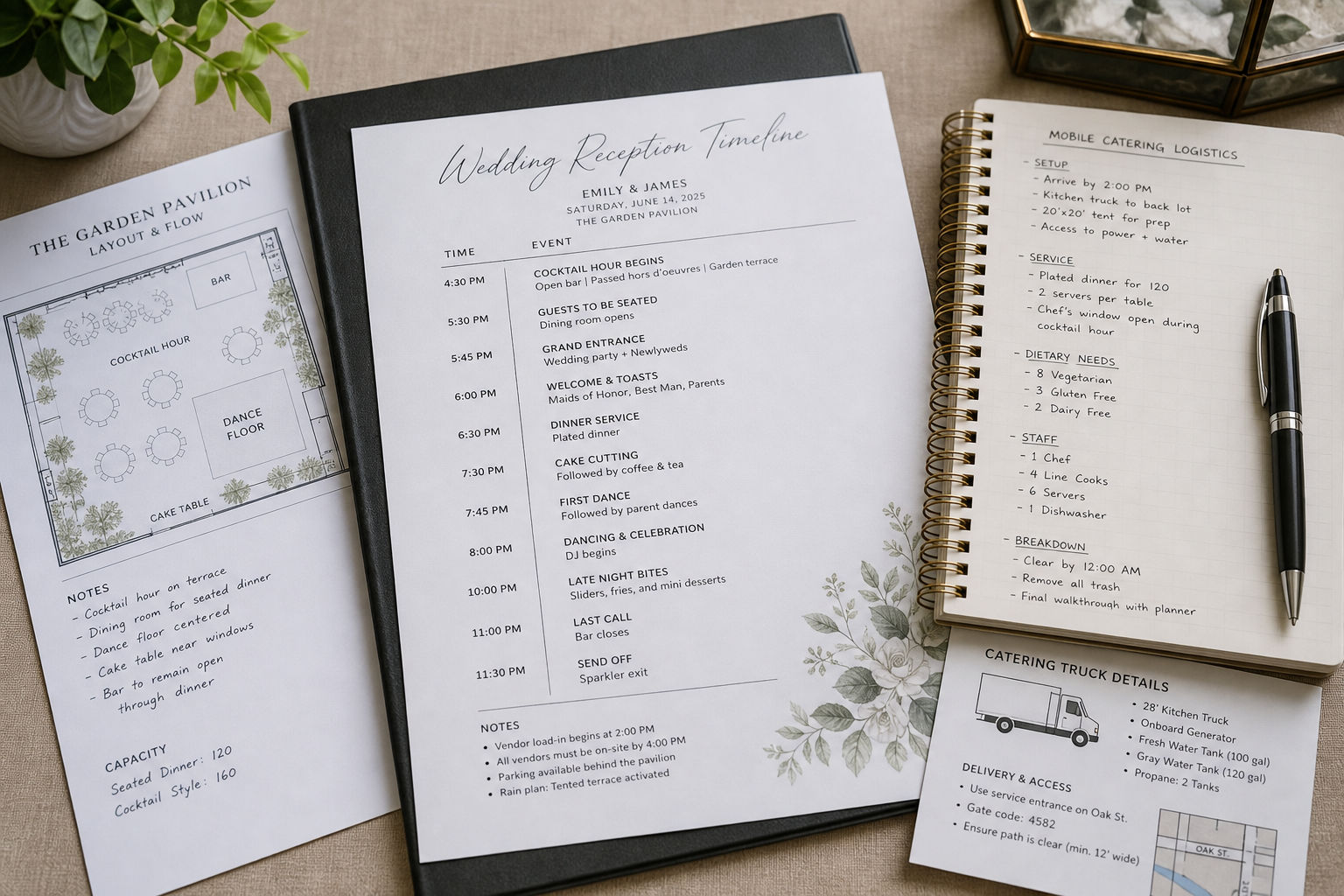
Every wedding is different, but most successful receptions with mobile catering follow a structure that balances hospitality and logistics. After the ceremony, guests typically move into cocktail hour while the couple finishes photos and the catering team completes final prep. This transition period is valuable because it gives the mobile caterer time to settle into service position without feeling rushed or visible in a disruptive way.
Once guests are invited into the main reception area, it helps to have a clear first activity: a welcome, grand entrance, or quick blessing. Then dinner service can begin while energy is still high and guests are ready to eat. Speeches often work best either just before dinner starts, while some guests are already seated, or after the majority of guests have been served. Long toasts during the busiest part of service can create stalled lines, distracted guests, and cold food.
- Guest arrival and cocktail hour
- Couple entrance or welcome remarks
- Dinner service opens
- Short speech window once most guests are served
- Cake, dessert, or late-night food transition
- Open dancing and final send-off
This order is flexible, but the principle stays the same: each activity should support the next one. If guests are spread across a venue in Westminster or Broomfield, or moving between indoor and outdoor spaces in Lakewood or Littleton, transitions need extra time. The timeline should account for walking distance, restroom access, bar lines, and how quickly guests can gather when it is time for announcements or dinner.
Guest Arrival and Cocktail Hour Set the Tone
The first reception window often determines whether the rest of the evening feels smooth. Guests should know where to go, where to place gifts, where to find drinks, and whether appetizers are available immediately. If the mobile caterer is visible on-site during cocktail hour, that can build excitement, but only if the setup area is clean, accessible, and separated from guest congestion.
An event planner will usually watch for bottlenecks at entry points, bars, and signage. If a venue in Denver or Thornton has limited parking or a narrow access lane, vendor arrivals must be staggered so that the mobile caterer is not blocked by rentals, florals, or entertainment load-in. Couples hosting at private homes should also review local logistics early. Our post on Permits, Neighborhood Rules, and Event Logistics: What Hosts in Thornton and Denver Should Handle Before a Private Event covers the practical issues that can affect timing before the first guest even arrives.
How Meal Service Timing Affects the Entire Reception
Meal service is usually the most timeline-sensitive part of the reception. If the dinner window runs long, speeches start late, dancing gets compressed, and transportation or venue-end times become stressful. A planner working with a mobile caterer will estimate how many guests can be served per interval, whether multiple order points are needed, and how menu choices affect speed. Simpler menus often improve guest experience because lines move faster and timing stays predictable.
Seating also matters. If guests are unsure whether they should line up, wait for a table release, or order individually, service slows down. Clear announcements and simple signage can keep the line moving without making the evening feel overly managed. For family weddings, backyard celebrations, or hybrid private events, couples may also benefit from What to Ask Before Hiring an Event Planner for a Backyard Wedding or Private Party, especially when comparing coordination support.
Place Speeches and Special Moments Where Guests Can Enjoy Them
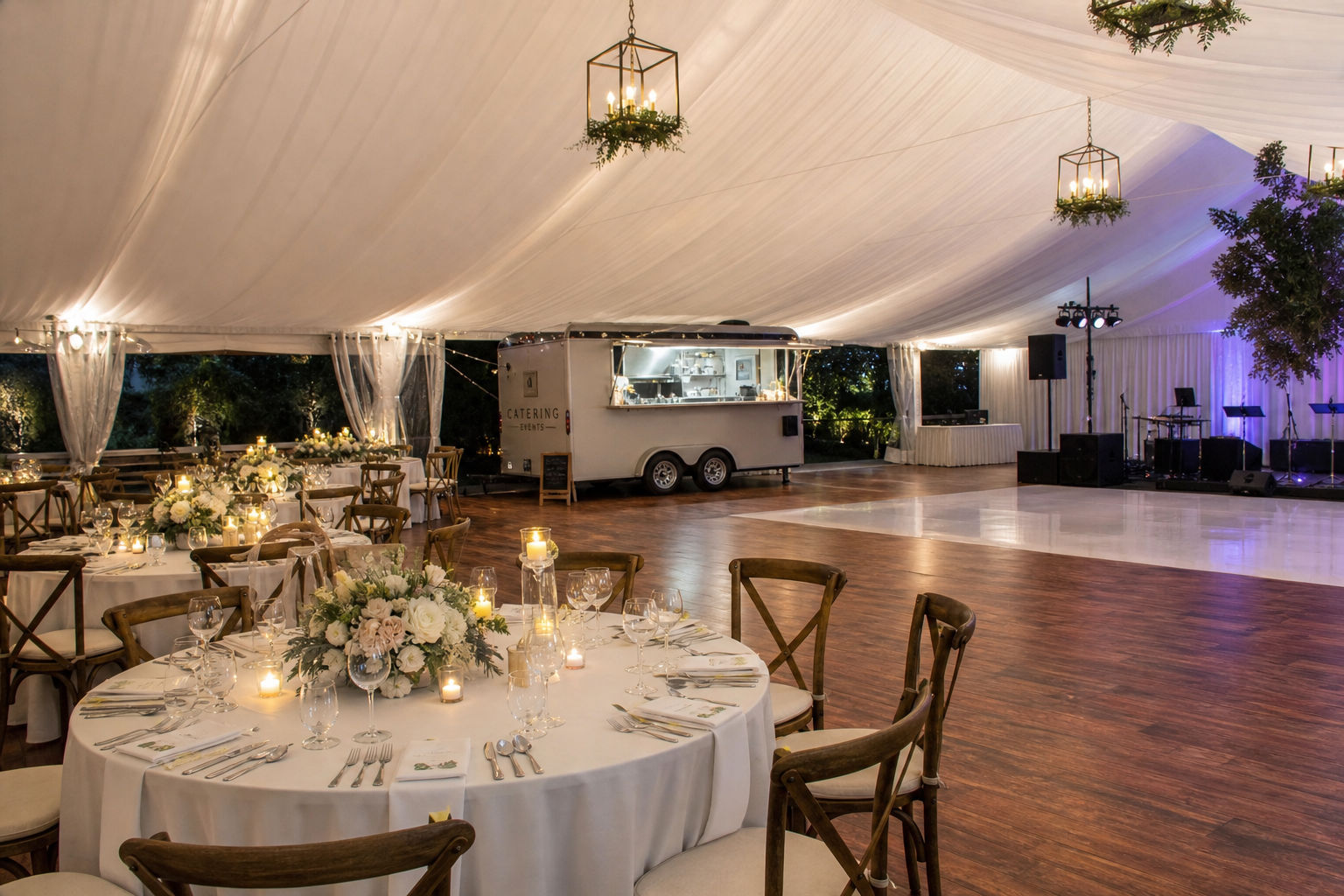
Toasts, first dances, cake cutting, and parent dances should feel like highlights, not interruptions. With mobile catering, that usually means avoiding long speech blocks right when guests are entering the food line or waiting for meals. If the couple wants several speakers, it is often better to group brief toasts after most guests have food in hand. That keeps attention high and reduces frustration.
Special moments also need transition time. Guests may need to move from patio seating to a dance floor, gather for cake, or step outside for a send-off. In Colorado, weather can affect every one of those transitions, especially in places like Arvada, Brighton, and Castle Rock where outdoor receptions are common. For outdoor planning considerations, see Rain, Wind, and Heat: Event Planning Strategies for Outdoor Celebrations in Colorado.
Build Buffer Time Into Every Major Transition
The best timelines are realistic, not rigid. Guests arrive late from the ceremony, family photos run over, the bar line gets longer than expected, or grandparents need extra time getting seated. A professional planner builds small buffers between major moments so the evening can absorb normal delays without feeling off schedule. Even ten extra minutes between cocktail hour and dinner, or between speeches and dancing, can make the reception feel much calmer.
This is especially important for events with multiple vendors and moving parts. In communities such as Northglenn, Commerce City, Englewood, and Centennial, venue access rules and travel times between ceremony and reception sites can vary widely. A timeline should reflect those local realities rather than copying a template from a different type of wedding. If you are planning another private celebration and want a broader framework, A Step-by-Step Event Planning Timeline for Graduation Parties, Milestone Birthdays, and Family Celebrations offers a helpful planning model.
Why Local Coordination Matters
Mobile catering works best when the planner, venue, and caterer are aligned early. Local knowledge helps with parking layouts, neighborhood restrictions, travel timing, weather expectations, and guest flow patterns common to Front Range events. Whether the reception is in Thornton, Denver, Aurora, Westminster, or a smaller nearby market, experienced coordination reduces surprises and keeps service moving.
For couples, the main takeaway is simple: timeline decisions directly shape guest experience. When dinner starts on time, speeches are placed thoughtfully, and transitions are built around how people actually move and eat, the reception feels welcoming and well paced. Working with a team like The Food Truck Family can help you turn a mobile catering concept into a reception schedule that is practical, polished, and enjoyable from arrival to the last dance.
Source: wedding reception timeline guide