How to Plan Neighborhood Parties and HOA Events With Mobile Catering in Westminster, Broomfield, and Arvada
What You'll Learn
- Build a simple event plan that reduces day-of stress
- Set up parking and service zones for smoother operations
- Choose serving windows that keep lines moving
- Coordinate HOA communication, vendors, and resident access
- Use site planning to make casual events feel organized
Neighborhood parties and HOA events work best when they feel welcoming and well managed. Whether you are planning a block party in Westminster, a summer social in Broomfield, or a resident appreciation event in Arvada, mobile catering can simplify food service while still giving your gathering a polished structure. The key is not just choosing a food vendor. It is building an event plan that covers site access, parking, serving windows, communication, and crowd flow before the first guest arrives.
For homeowners, board members, and community organizers, good planning turns a casual get-together into a low-stress event that runs on time and feels intentional. A mobile caterer like The Food Truck Family can support food service, logistics, and event coordination, but the strongest results come when the neighborhood has a clear framework in place. If you are still deciding how much coordination help you need, this guide on when to hire an event planner for a small event is a useful starting point.
Start With the Event Purpose and Guest Count
Before discussing menus or truck placement, define the purpose of the event. Is it a neighborhood meet-and-greet, an HOA annual meeting with refreshments, a holiday celebration, or a larger open-house style gathering for residents and guests? The answer shapes everything from service style to staffing. A short event with a steady guest flow may work well with a continuous service window, while a larger resident event may need staggered serving times by building, block, or RSVP group.
Guest count matters just as much. Many HOA and community events underestimate attendance because they rely on broad invitations rather than confirmed responses. Even an approximate range helps your mobile caterer and planner estimate production timing, queue length, and the amount of space needed around the truck. For events across Westminster, Broomfield, and nearby Thornton, a realistic attendance estimate is often the difference between short lines and unnecessary congestion.
- Define whether the event is social, informational, or both
- Estimate attendance using RSVPs, prior turnout, or unit count
- Choose a service style that matches guest volume
- Set a clear start time, service window, and end time
Confirm Site Rules, Permits, and HOA Requirements Early
One of the most common planning mistakes is assuming a neighborhood common area can automatically support a food truck or mobile catering setup. HOA properties, private streets, clubhouses, pool lots, and shared green spaces may all have different rules for vendor access, generator use, parking, and insurance documentation. If your event is on a public street or in a city park, permit requirements may also apply. Checking these details early gives you time to make adjustments instead of troubleshooting in the final week.
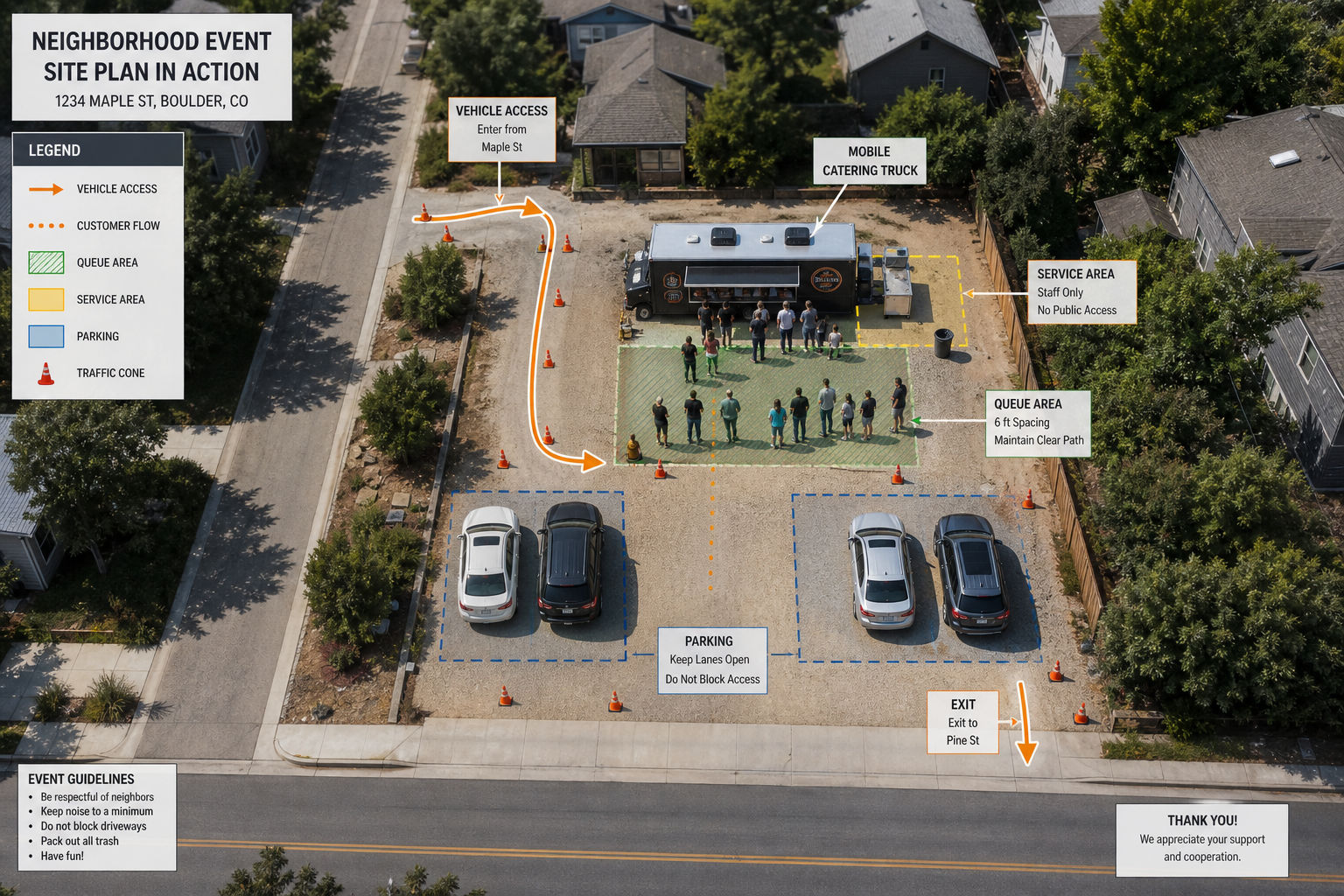
This is where event planning adds real value. A site review should confirm vehicle access, operating surfaces, guest approach paths, and whether any restrictions affect setup time or service location. This article on building a site plan for private events with mobile catering explains why a layout review is so important, especially when access points and shared spaces must stay open for residents.
Build a Parking and Access Plan That Protects Resident Flow
Parking is often the issue residents notice first, especially in denser neighborhoods or townhouse communities. A mobile catering event should never leave guests guessing where to park or residents blocked from normal access. Identify where the food truck will stage, where guests will approach, and which nearby spaces must remain clear for homeowners, deliveries, and emergency access. In communities in Arvada and Westminster, this can be especially important when events take place near cul-de-sacs, shared drives, or amenity lots.
Good access planning also improves the guest experience. If the truck is too close to parked cars, lines can spill into driving lanes. If it is too far from the main event area, guests may drift away and miss announcements or activities. The best setup creates a comfortable queue, clear entry and exit paths, and enough room for the mobile caterer to operate safely. For broader community gatherings, this post on HOA, school, and community events using mobile catering offers additional perspective on organizing shared spaces efficiently.
- Reserve a flat, accessible truck location
- Keep fire lanes and resident drive access open
- Mark guest parking and overflow parking in advance
- Use signs or volunteer greeters to direct arrivals
Set Serving Windows That Keep Lines Manageable
Food service timing is where many neighborhood events either feel smooth or start to drag. A single broad statement like “food starts at 6” can create an immediate line if most residents arrive at once. Instead, think in serving windows. For example, you may invite one section of the neighborhood at the top of the hour, then open general service 15 to 20 minutes later. If the event includes announcements, raffles, or board updates, place those around the service schedule rather than competing with it.
Serving windows are especially helpful for larger resident events in Broomfield, Northglenn, or Lakewood where attendance can spike quickly. A mobile caterer can often help estimate pacing based on menu format and expected guest count, but organizers should also communicate the plan clearly in advance. If your event includes multiple moving parts, this overview of questions an event planner will ask before coordinating an event can help you think through timing, access, and guest expectations.
Simple ways to improve service flow
- Open arrival 15 to 30 minutes before food service
- Use one clear line start point with visible signage
- Separate food pickup from seating or activity zones
- Announce final service time so guests can plan accordingly
Plan for Crowd Management Without Making the Event Feel Formal
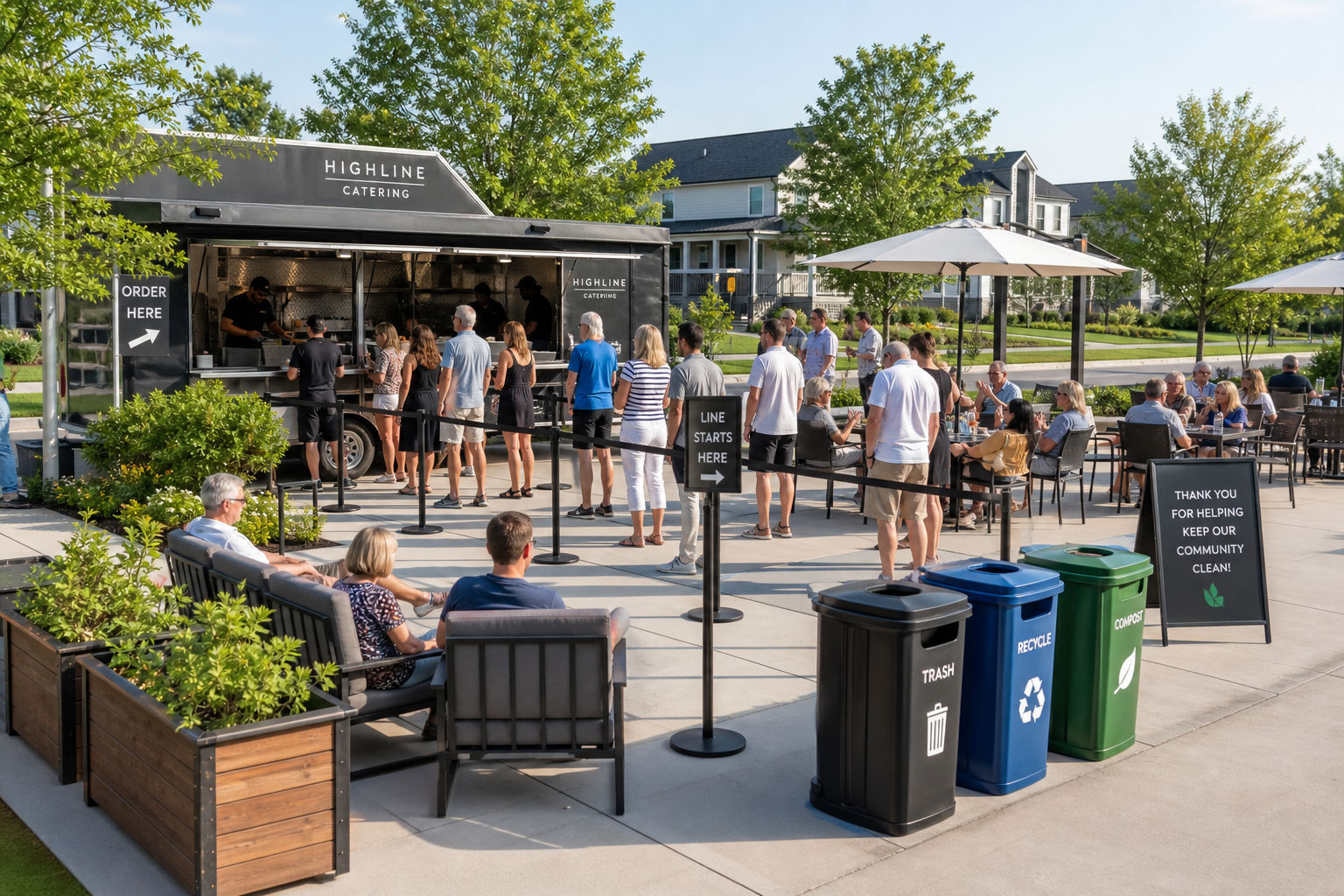
Community events should feel easygoing, but they still benefit from structure. Crowd management does not mean barriers and strict rules. It means creating a layout that naturally guides guests where they need to go. Place check-in tables, welcome signs, trash and recycling, beverage stations, and seating so they support flow rather than interrupt it. If children will be present, make sure activity areas are not directly in the path of the food line or truck operations.
Volunteer assignments can make a major difference here. Even two or three helpers can manage arrival questions, direct guests toward parking, and keep common areas from becoming crowded. For neighborhood gatherings that are small but still need some structure, a light coordination plan may be enough. For larger or multi-part events, a dedicated planning partner can help the day stay organized from setup through breakdown.
Communicate the Plan to Residents Before Event Day
Residents are far more cooperative when they know what to expect. A strong pre-event message should include the event time, truck location, parking guidance, whether RSVPs are requested, and any temporary access changes. If there are serving windows, include them clearly. If the event is open-house style, say so. This communication reduces confusion and helps the mobile caterer stay focused on service instead of fielding basic logistics questions from every arrival.
Good communication also supports turnout. Homeowners and local business owners attending a community event want confidence that it will be worth their time and easy to navigate. A simple map, a reminder email, and a same-day text or resident portal notice can improve arrival patterns and reduce the rush at the start of service.
Why Mobile Catering Works Well for Neighborhood Events
Mobile catering is a strong fit for HOA and neighborhood events because it combines flexibility with visible on-site service. It works for resident appreciation nights, seasonal socials, private neighborhood parties, and community celebrations where a full traditional venue setup is not necessary. With the right site plan and timeline, it can also reduce the burden on organizers who would otherwise coordinate multiple food deliveries, setup crews, and cleanup points.
The Food Truck Family supports events throughout Westminster, Broomfield, Arvada, Thornton, Denver, and surrounding communities with mobile catering and event planning insight that helps gatherings feel organized from the start. When food service, site layout, and communication are aligned, neighborhood events become easier to run and more enjoyable for everyone attending.
Source: park and pavilion reservation information