Planning an Event at a Brewery, Taproom, or Industrial Venue: What a Party Planner in Denver Checks Before Booking
What You'll Learn
- Spot layout problems before they affect guest comfort
- Plan load-in, seating, and service flow more efficiently
- Avoid restroom, noise, and weather-related surprises
- Choose the best mobile catering setup for the venue
- Reduce last-minute coordination stress on event day
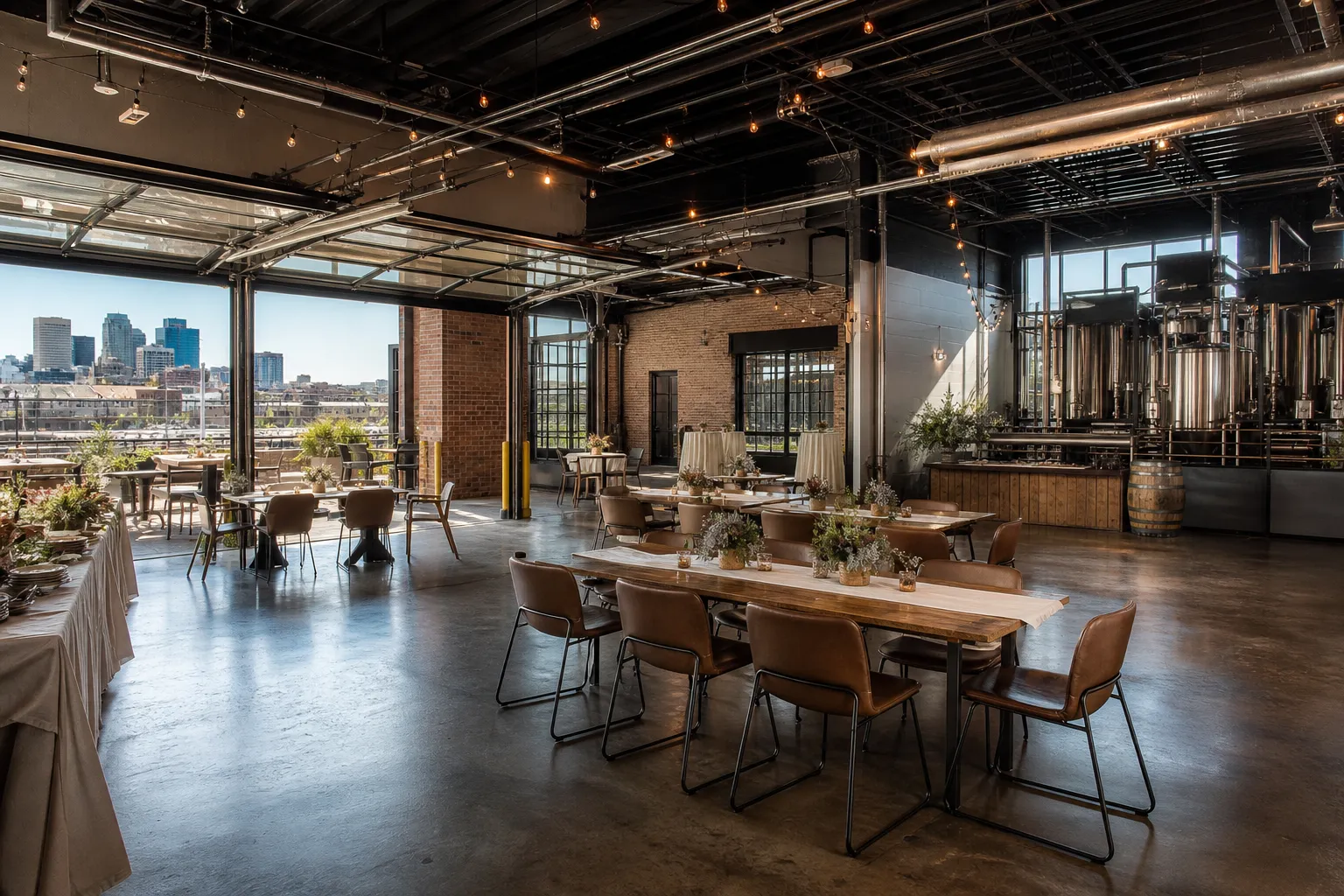
Booking a brewery, taproom, or industrial space can create a memorable atmosphere, but these venues often need more advance coordination than a traditional banquet room. A party planner in Denver looks past the visual appeal and studies how the event will actually function from arrival to cleanup. For homeowners hosting a private celebration and business owners planning a client or team event, early planning is what prevents bottlenecks, seating confusion, noise issues, and service delays that can turn a great venue into a stressful one.
Why nontraditional venues need a tighter planning process
Brewery and industrial-style venues are popular because they feel relaxed, distinctive, and flexible. The challenge is that flexible space still needs structure. A party planner in Denver typically begins by identifying how guests will move through the property, where food service will happen, and which parts of the venue need clear boundaries. If you are still shaping your approach to layout and timing, it helps to review this guide to guest flow, food service, and timing for open house parties in Denver, because many of the same circulation principles apply in taprooms and warehouse-style venues.
Unlike a conventional event hall, these spaces may have shared entrances, active production areas, garage doors, uneven outdoor surfaces, or furniture that must be reconfigured. A planner is not just asking whether the room looks good. The real question is whether the venue supports the event comfortably and safely for the guest count, service style, and schedule you have in mind. That is why many hosts benefit from reviewing the key questions an event planner asks before coordinating a private or business gathering before they commit to a date.
Load-in routes are one of the first things to verify
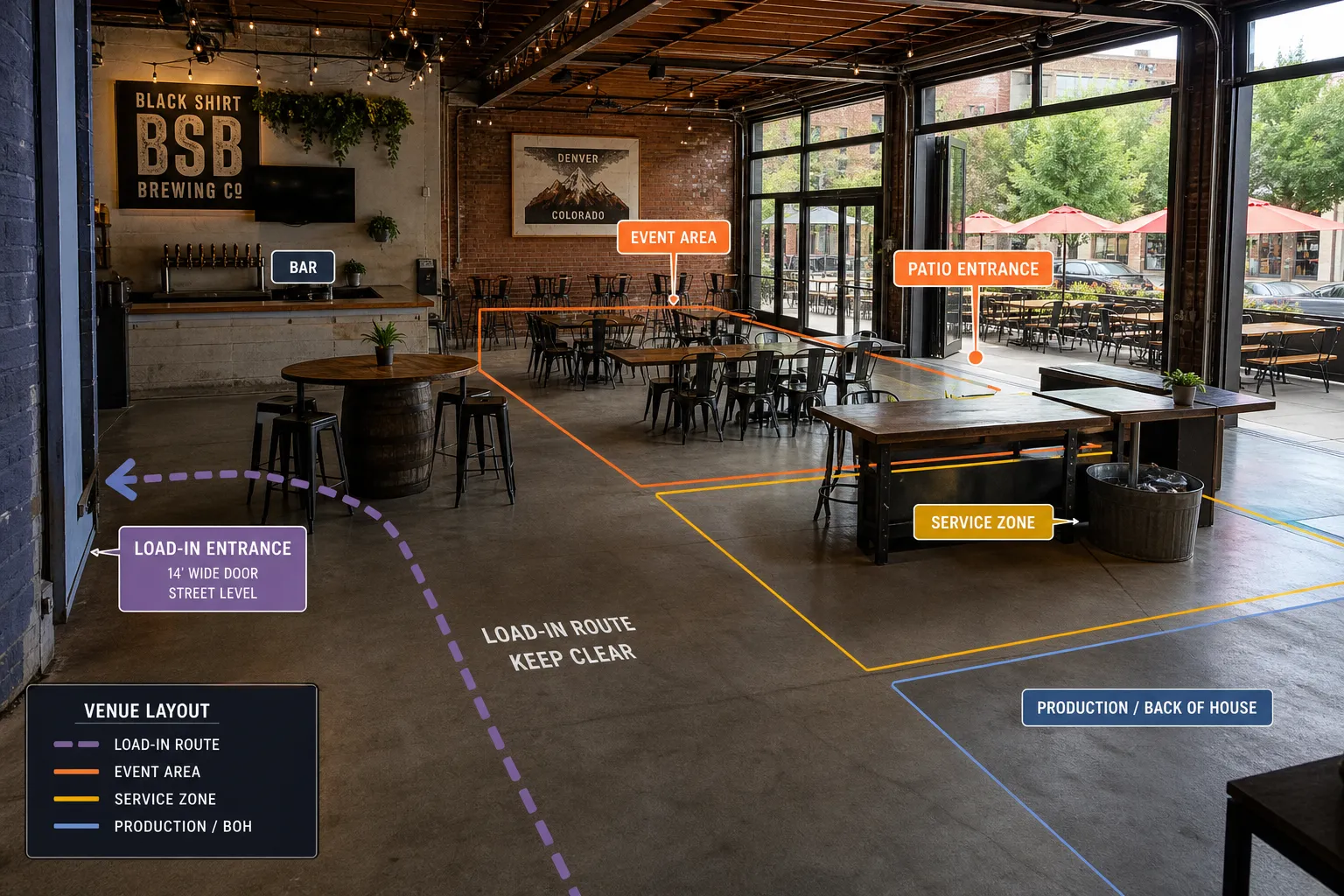
Load-in is easy to overlook when a venue tour focuses on décor and ambiance, but it has a direct impact on timing, labor, and setup quality. A party planner in Denver checks where vendors can park, how close service vehicles can get to the setup area, whether elevators or ramps are involved, and whether access changes at certain times of day. In brewery and industrial settings, there may be back entrances, shared alleys, or limited staging space that make setup slower than expected.
This matters even more when mobile catering is part of the plan. Some venues have the outdoor clearance and access needed for a straightforward setup, while others require food to be staged from a secondary location and brought in manually. Thinking through the site plan early reduces avoidable labor and keeps service on schedule. For a deeper look at how layout decisions affect setup and operations, see how an event planner builds a site plan for private events with mobile catering.
Indoor-outdoor flow should feel intentional, not accidental
Many brewery and taproom events use both interior and patio space, which can be a major advantage when planned well. A party planner in Denver studies how guests will transition between those zones and whether both areas will stay active throughout the event. If the food is outside but the bar, restrooms, and seating are inside, guests may repeatedly cross the same doorway and create congestion. If speeches or presentations are planned, open-air movement can also affect attention and sound control.
The goal is to create a natural rhythm. That may mean placing social seating near the highest-traffic threshold, assigning one area as the main dining zone, or using signage and furniture placement to guide people without making the event feel rigid. Hosts planning milestone celebrations often benefit from a clear sequence for setup, guest arrival, service, and transitions, which is why a step-by-step event planning timeline for private celebrations can be helpful during the early booking phase.
Seating plans need to match the venue's real use patterns
One of the biggest mistakes in a nontraditional venue is assuming that listed capacity automatically means comfortable capacity. A party planner in Denver looks at how many guests can actually sit, stand, eat, and circulate at the same time once catering, gift tables, check-in, beverage stations, and any entertainment are added. Long communal tables can look great in a taproom, but they may reduce flexibility if your event includes mixed-age guests, presentations, or staggered arrivals.
- Count usable seating after service areas are placed
- Leave enough aisle width for guests carrying food and drinks
- Separate high-traffic paths from seated dining zones
- Plan overflow standing areas that still feel connected
- Confirm furniture move rules with the venue before finalizing layout
For private parties, the right seating plan keeps guests relaxed and makes the event feel polished without becoming overly formal. For business owners, it supports networking, presentations, and smoother service. If you are deciding how much coordination your event really needs, it is worth reading when to hire an event planner for a small event and when simple coordination is enough so you can match the planning approach to the venue complexity.
Restroom capacity is a comfort issue, not a minor detail
Restrooms are rarely the highlight of an event tour, but they quickly become a guest experience issue if they are undersized or poorly located. A party planner in Denver checks the number of restrooms, whether they are easy to find from both indoor and outdoor areas, and how lines may affect adjacent seating or service stations. In flexible venues, the restroom count may work for everyday operations but feel strained during a private event with a concentrated guest arrival window.
This is especially important for longer events, family celebrations, and business functions where guests are expected to stay and mingle. If restrooms are near the main entry or next to the food queue, circulation can become messy fast. Planning around these pressure points early is much easier than trying to solve them after invitations are sent.
Noise limits and sound conditions can change the entire plan
Industrial and brewery spaces often have high ceilings, hard surfaces, patio activity, and neighborhood operating rules that affect sound. A party planner in Denver asks whether there are decibel limits, amplified sound restrictions, cutoff times, or competing ambient noise from nearby operations. Even if formal entertainment is not part of the event, background music, announcements, and ordinary conversation can behave very differently in these environments than they would in a carpeted indoor venue.
For homeowners, this affects whether to include toasts, games, or a more relaxed open-house format. For business owners, it affects presentations, recognition moments, and client conversation. If your gathering needs multiple service or activity zones, reviewing how event planners coordinate multi-point service for large private parties and corporate gatherings can help you understand how sound and circulation work together in a busy venue.
Where mobile catering fits best in the layout
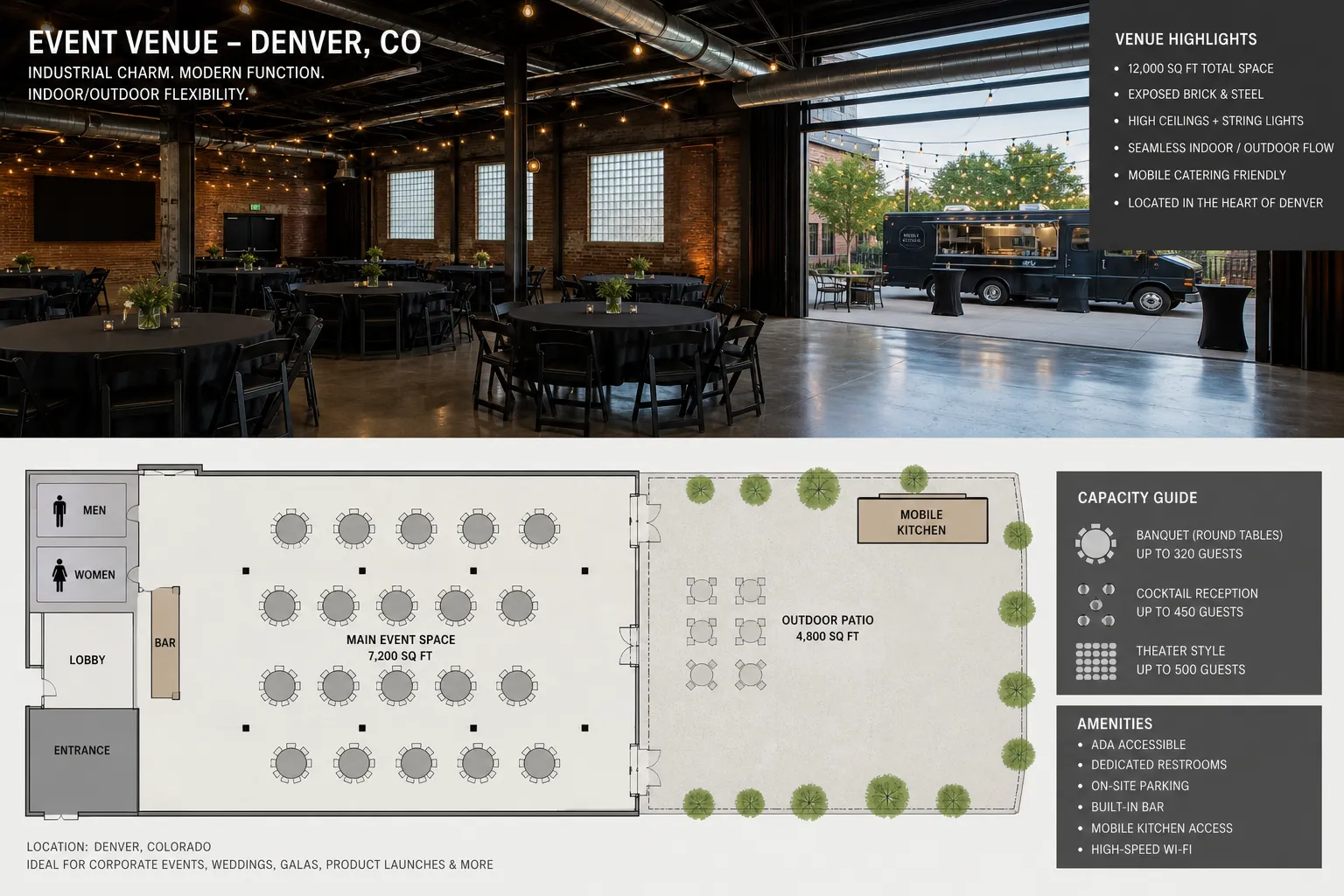
Mobile catering can be an excellent match for brewery, taproom, and industrial venues because it complements the casual style and can reduce pressure on the interior footprint. The key is choosing the right placement. A party planner in Denver evaluates whether the best catering position is near the main patio, offset from the entrance, or placed to draw guests toward an underused area of the property. The ideal location supports service speed without blocking circulation, creating long lines across doorways, or competing with the venue's own beverage operations.
In some cases, the best setup is outside to preserve indoor seating and keep traffic dispersed. In others, weather exposure, access constraints, or guest flow may make a closer staging arrangement more practical. The right answer depends on the site, guest count, and event goals. If you are comparing planning approaches for different event styles, this guide on what to ask before hiring an event planner for a backyard wedding or private party offers useful questions that also apply when evaluating flexible venues.
Early planning prevents the most common day-of problems
Most event-day issues at nontraditional venues are not random. They usually trace back to an early assumption that was never tested: the patio would be large enough, lines would stay short, the room would feel quieter, or setup would be simple. A party planner in Denver reduces those risks by pressure-testing the event before contracts, diagrams, and schedules are finalized. That planning process protects guest comfort, keeps vendors coordinated, and helps the host stay present instead of solving logistics during the event.
For homeowners and local business owners alike, the value is not just organization. It is confidence that the venue can support the experience you want to create. When a brewery, taproom, or industrial setting is matched with the right layout, realistic timing, and a smart mobile catering plan, the event feels easy for guests because the hard questions were answered early. That is exactly where a party planner in Denver adds value: turning an interesting space into a functional, welcoming event environment.
Source: event safety guidance
Frequently Asked Questions
The Food Truck Family with a hands-on approach shaped by a genuine passion for bringing people together through great food and smooth event experiences. Drawn to catering and mobile food service by the energy of celebrations and community gatherings, focuses on making each event feel well cared for from start to finish. The interest in this work comes from the simple idea that good food and thoughtful service can turn any occasion into something memorable. Customers can expect each truck to be approachable, detail-minded, and committed to making planning easier, whether they need catering, delivery, or support for a larger event. They bring a practical, customer-first mindset to every order and every celebration in Colorado.
- Specialized in catering services
- Experienced in mobile catering and event catering
- Offers event planning and event management services
- Provides wedding, party, takeout, and meal delivery services