How to Plan Food Truck Catering With an Event Planner for School Events, Sports Banquets, and Family Nights in Lakewood
What You'll Learn
- Build a smoother approval and logistics process for school events
- Set up parking, access, and service flow to reduce delays
- Choose payment and headcount plans that fit family-friendly events
- Improve safety, supervision, and guest experience on event day
Planning a successful school event takes more than booking a vendor and hoping the line moves quickly. If you are coordinating a family night, booster fundraiser, staff appreciation meal, or sports banquet, working with an event planner in Lakewood can help you turn a busy campus gathering into an organized, low-stress experience. For PTA leaders, coaches, and administrators, the goal is simple: create a welcoming event that is easy for families to attend, safe for students, and manageable for staff. The right plan covers approvals, truck placement, service timing, payment setup, and realistic guest counts before the event ever begins.
School-based events have special considerations that private parties do not. You may need district sign-off, principal approval, custodial coordination, or traffic direction around dismissal and pickup patterns. An experienced event planner helps you map those details early so the event supports the school instead of disrupting it. If your site has strict sound limits or a hard stop at the end of the evening, it helps to review a planning framework like this guide to handling strict noise and end-time rules and adapt those principles to your campus setting in Lakewood.
Start With School Approval and a Clear Event Scope
The first step in event planner work for a school function is defining the event itself. Is this a ticketed banquet, an open family night, a fundraiser tied to a percentage of sales, or a team celebration with prepaid meals? In Lakewood, that distinction affects where the event can be held, how guests arrive, and what approvals may be required. Before confirming any timeline, create a one-page event summary that lists the date, service window, estimated attendance, campus contact, electrical or lighting needs, and whether the event is student-only or open to families and guests.
Your event planner should also confirm who has final authority to approve vendor access and site use. On some campuses, the decision may involve administration, facilities, athletics, or a parent organization. A logistics-first approach is important because many event problems come from assumptions made too early. The same planning discipline discussed in this article on permits, rules, and event logistics applies here: document access, timing, and operating boundaries before promotion begins.
Evaluate Parking, Access, and Truck Placement
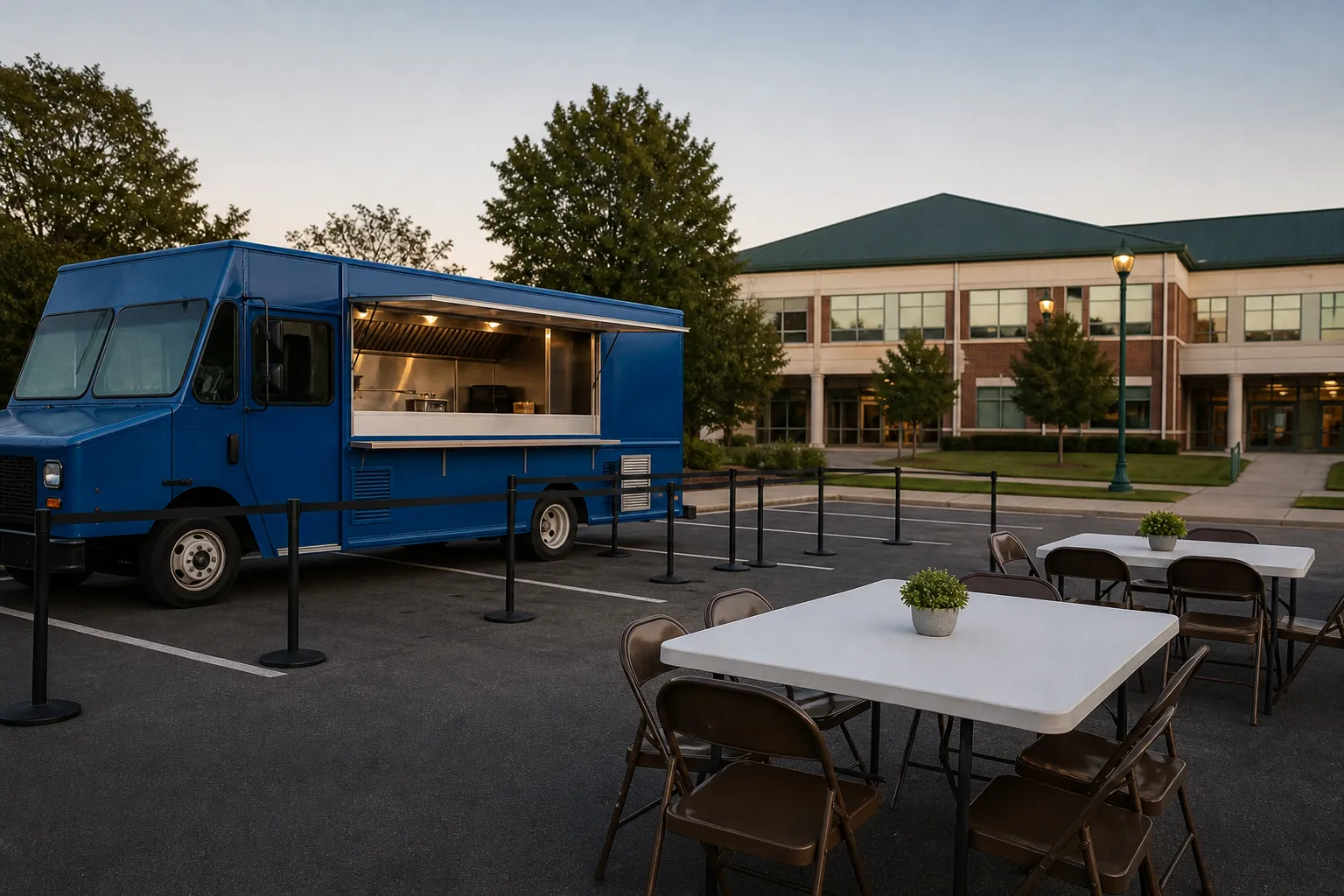
One of the biggest differences between a smooth event and a chaotic one is truck placement. A strong event planner in Lakewood will inspect the site and ask practical questions: Can the truck enter without crossing active pedestrian zones? Is there enough turning radius? Will families queue into a fire lane or bus lane? Is the surface level and suitable for service? School parking lots often look spacious until arrival windows, team buses, and parent traffic all overlap. Placement should support visibility without creating congestion.
Think beyond where the truck fits and focus on how guests move. Students and families should be able to approach, order, wait, and exit without crossing vehicle paths or blocking building entrances. If the event includes tables, shade, or a nearby seating zone, your event planner should connect those comfort details to the service plan. A useful reference is this post on seating, shade, and comfort planning, which highlights how physical layout affects guest satisfaction and line control.
Design a Student-Friendly Service Flow
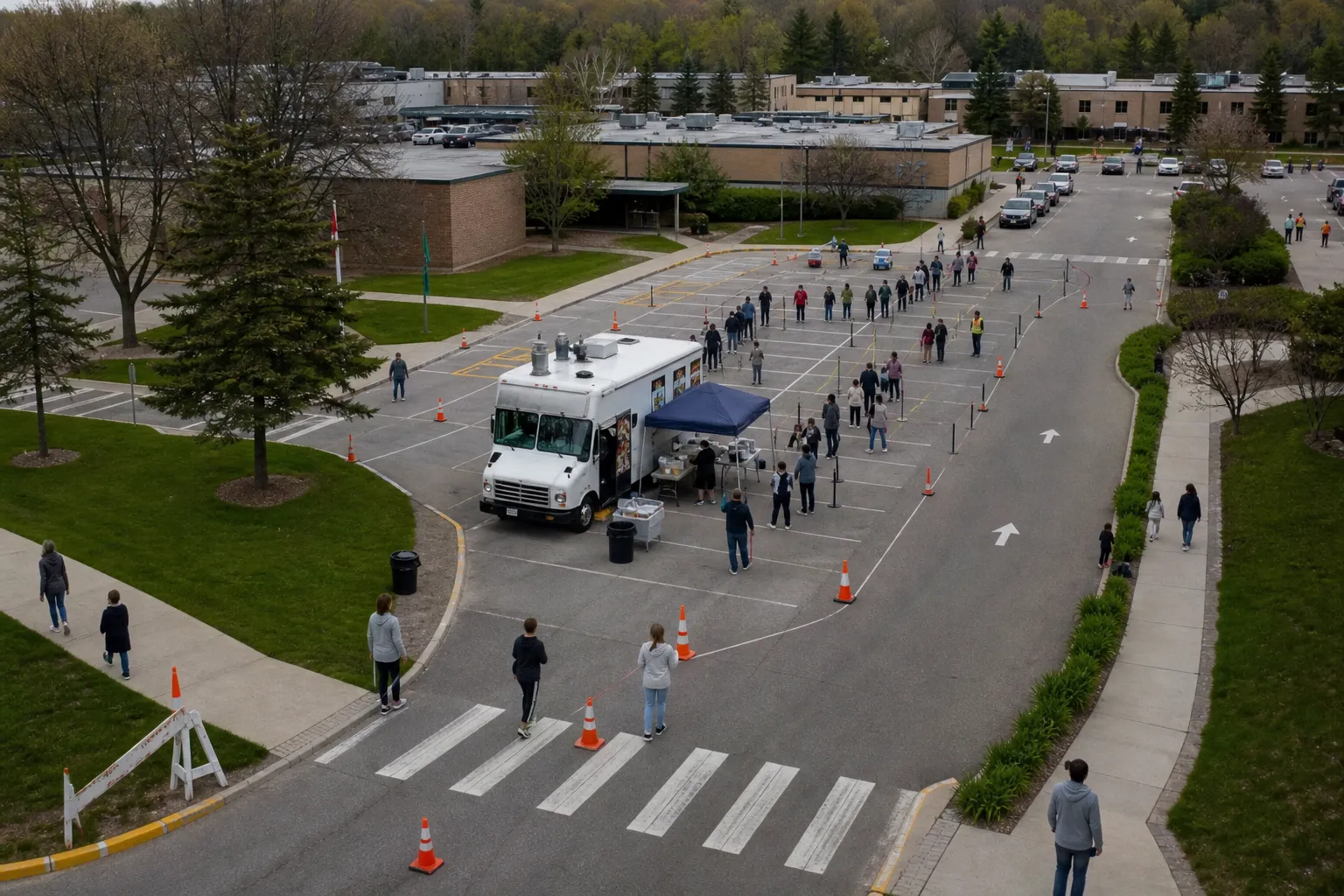
School events work best when the service flow is simple. Younger students may need shorter menus, clearer queue markers, and separate pickup points from adults. Coaches and administrators may prefer scheduled meal windows for teams or staff so the line does not peak all at once. An event planner can divide the event into waves—for example, pregame families first, players second, and guests after awards—to keep waits manageable. This is especially helpful during sports banquets and family nights where everyone tends to arrive within the same 15 to 20 minutes.
- Create one obvious line start with cones or signs
- Separate ordering from pickup when space allows
- Use staggered meal windows for teams, staff, and families
- Keep ADA access routes open at all times
- Assign one school contact to manage announcements and timing
If your event has a short setup window between dismissal, practice, or another campus activity, timeline discipline matters even more. Borrowing from this guide on events with short setup windows, your event planner should build a minute-by-minute arrival sequence for vendor access, parking confirmation, opening service, and cleanup. That level of preparation helps avoid the most common school-event problem: guests arriving before the site is actually ready.
Choose the Right Payment Setup for Families and School Groups
Payment planning is not a small detail. It directly affects line speed, family participation, and how easy the event feels. In Lakewood, an event planner should help the school decide whether the event is fully hosted, partially subsidized, voucher-based, or pay-as-you-go. For example, a booster club may prepay for athlete meals while family members purchase their own. A PTA family night may offer meal tickets in advance to simplify ordering. The best option depends on your budget, fundraising goals, and the age range of attendees.
When planning payment flow, think about communication as much as technology. Families should know before arrival whether they need tickets, cards, mobile payment, or pre-registration. If your event uses multiple activity zones such as games, awards, and dining, service timing can get fragmented fast. The coordination principles in this article on managing events across multiple outdoor zones are useful for keeping guests informed and preventing long gaps between ordering and eating.
Prioritize Safety, Supervision, and Accessibility
Safety is central to event planner work for schools in Lakewood. Your plan should address pedestrian flow, dark-area lighting, emergency access, weather contingencies, and supervision near the truck. Students should never have to stand in a queue that backs into moving traffic. If the event runs into the evening, identify who monitors the line, who handles crowd questions, and how cleanup will be managed so the campus is left in good condition. Accessibility should also be part of the plan from the start, not a late adjustment.
A strong event planner will review route widths, curb cuts, seating access, and the experience for guests with mobility needs. Those considerations mirror the practical checklist covered in this accessibility planning guide. For school communities, accessibility is about more than compliance; it is about making sure every family can participate comfortably and confidently.
Estimate Guest Count Realistically
Headcount is one of the most important planning variables, and one of the easiest to misjudge. A school may have 500 students, but that does not mean 500 meals. An event planner in Lakewood should estimate attendance based on the type of event, time of day, RSVP data, ticket sales, team roster size, and whether siblings and extended family are likely to attend. Family nights often see wide swings in turnout depending on weather, school calendars, and competing activities. Sports banquets may be more predictable if meal participation is tied to registration.
Use your event goals to guide your forecast. If the objective is speed and simplicity, a tighter RSVP process may make sense. If the goal is community turnout, build in a buffer and communicate expected peak times. Business-style planning can help here too; this post on preparing before hiring an event planner reinforces how better pre-event information leads to smoother execution. The more clearly you define attendance assumptions, the easier it is to align service flow, staffing, and timing.
Build a Day-Of Operations Checklist
Once approvals, layout, and headcount are set, your event planner should create a simple operating checklist for the day of the event. That checklist should include truck arrival time, parking confirmation, contact numbers, opening announcement timing, payment instructions, line management assignments, trash and cleanup coordination, and final departure procedures. School events are busy environments, so written roles reduce confusion and keep staff from improvising under pressure.
- Confirm site access and arrival contact 24 hours in advance
- Mark parking and queue space before guests arrive
- Share payment instructions with staff and families
- Assign one point person for vendor communication
- Monitor line length and adjust announcements as needed
- Verify cleanup, trash removal, and exit timing at close
If your school is comparing planning support options, it can also help to review broader hiring questions like those in this guide on what to ask before hiring an event planner. Even though the setting is different, the same core idea applies in Lakewood: clear expectations produce better event outcomes.
Final Thoughts on Event Planner Support in Lakewood
School events succeed when logistics are handled as carefully as the guest experience. Whether you are organizing a booster banquet, PTA family night, or campus celebration, working with an event planner in Lakewood helps you coordinate approvals, placement, timing, payment, safety, and attendance with fewer surprises. The Food Truck Family brings a planning mindset that helps schools create events that feel organized, welcoming, and easier for families to enjoy. If you want a smoother process from the first checklist to the final cleanup, event planner support in Lakewood is the right place to start.
Source: school event health and safety considerations
Frequently Asked Questions
The Food Truck Family with a hands-on approach shaped by a genuine passion for bringing people together through great food and smooth event experiences. Drawn to catering and mobile food service by the energy of celebrations and community gatherings, focuses on making each event feel well cared for from start to finish. The interest in this work comes from the simple idea that good food and thoughtful service can turn any occasion into something memorable. Customers can expect each truck to be approachable, detail-minded, and committed to making planning easier, whether they need catering, delivery, or support for a larger event. They bring a practical, customer-first mindset to every order and every celebration in Colorado.
- Specialized in catering services
- Experienced in mobile catering and event catering
- Offers event planning and event management services
- Provides wedding, party, takeout, and meal delivery services