How to Plan Takeout Restaurant Catering for a Corporate Open House in Denver With Staggered Arrivals, Quick Service, and Minimal Disruption
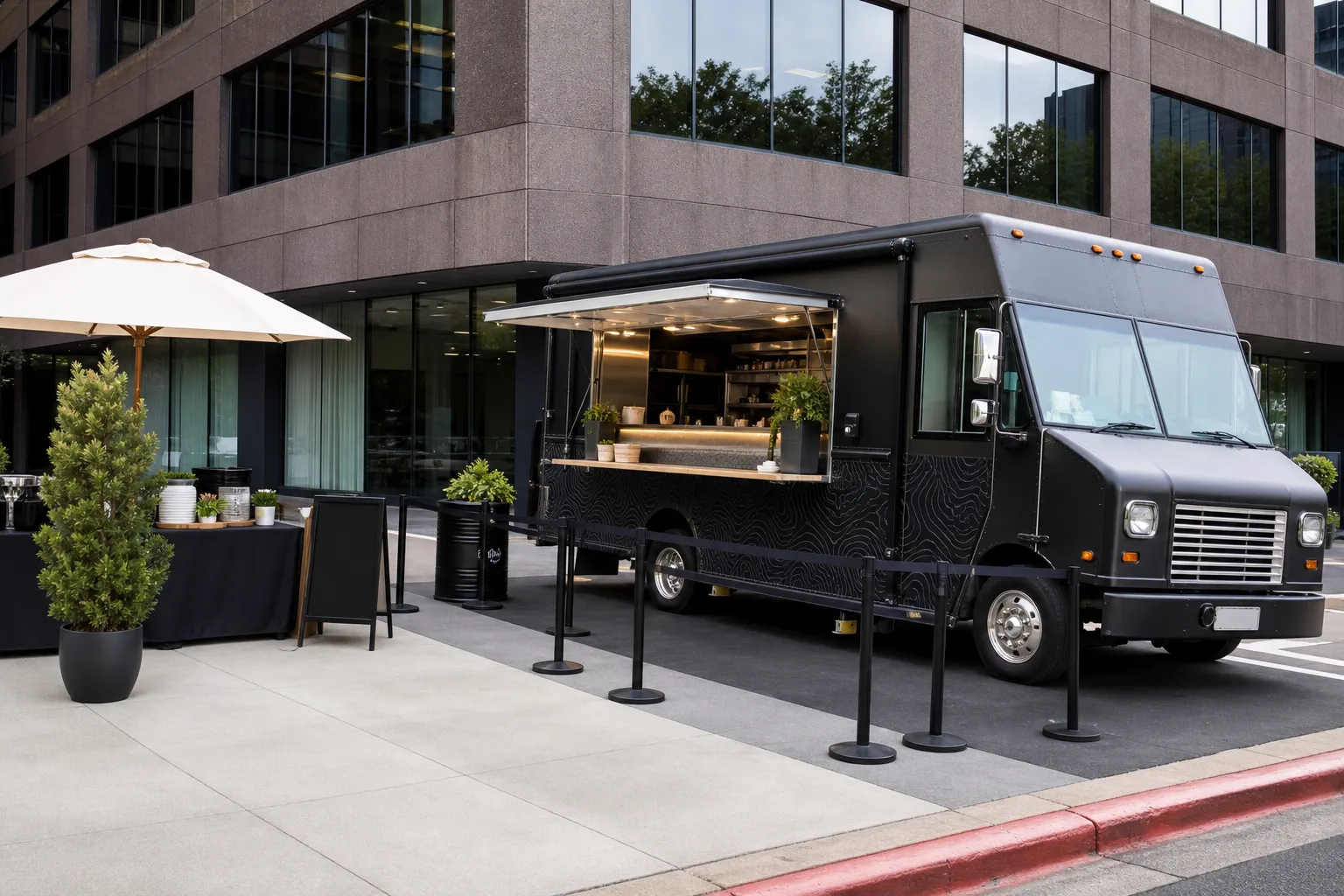
What You'll Learn
- Build a service plan around guest arrival waves
- Reduce parking and access issues before event day
- Keep food service fast without slowing office operations
- Use setup details to support branding and hospitality
- Coordinate staff flow for a smoother client-facing event
Planning takeout restaurant service for a client-facing open house takes more than choosing a menu. In Denver, business owners and office managers also need a practical plan for staggered guest arrivals, curb access, fast ordering, and employee workflow. When handled well, a mobile setup can welcome visitors, reinforce your brand, and keep your team productive without turning a normal workday into a logistical headache.
The most successful open houses start with a realistic operations mindset. Instead of treating food as a separate add-on, fold takeout restaurant planning into your event schedule, reception flow, and site map from the beginning. If you are building out a broader event checklist, it can help to review what local business owners should prepare before hiring an event planner so your internal team is aligned on timing, access, and responsibilities before event day in Denver.
Start With Arrival Waves, Not a Single Meal Time
Corporate open houses rarely behave like seated lunches. Guests may arrive in clusters before a presentation, during a networking window, or after work. That is why takeout restaurant service works best when you plan around waves instead of one fixed serving period. Map out when clients, vendors, employees, and leadership are most likely to approach the food area. If your event includes invitations with multiple suggested arrival times, estimate the busiest 20- to 30-minute windows and design service to absorb those peaks.
A staggered schedule allows your Denver open house to feel welcoming rather than crowded. It also helps you avoid a long line forming at the exact moment your sales team wants to greet new visitors. For a useful example of how mobile food timing can be built around event traffic, see this guide to planning an office party with a realistic service schedule. The principle is the same: align food availability with how people actually move through the event.
- Identify the first, busiest, and final arrival windows
- Estimate how many guests may order during each wave
- Separate presentation times from peak service times
- Give employees a different ordering window if needed
Choose a Parking and Access Plan That Supports Fast Service
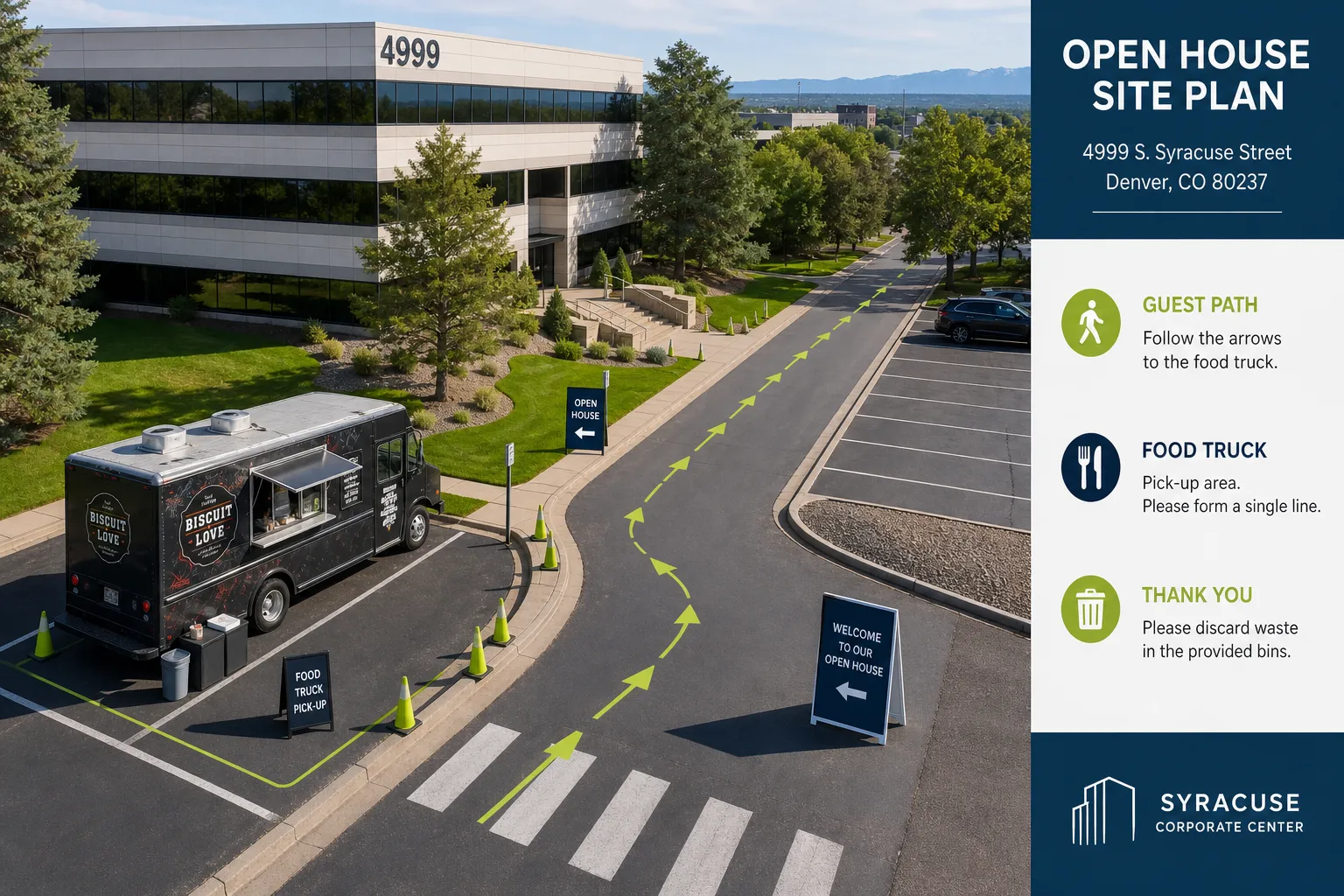
For takeout restaurant catering to run smoothly, the truck or mobile setup needs an efficient location. In Denver, that means thinking through parking restrictions, loading zones, private lot rules, turning radius, and guest walking paths well before the event. The best placement is usually close enough to be convenient but far enough from your main entrance to prevent bottlenecks at the door.
Look at access from the perspective of both the caterer and your guests. Can the vehicle enter and exit without blocking customer parking? Will visitors have a clear path from reception to the service area? Is there enough space for a line that does not interfere with ADA access, deliveries, or your regular business traffic? For a deeper look at the logistics behind this step, review how event planners solve parking, power, and site access challenges for mobile catered events. Those same issues can make or break a polished open house experience.
Keep the Menu and Ordering Process Built for Speed
Quick service is one of the biggest reasons companies choose takeout restaurant catering for an open house, but speed does not happen automatically. It comes from a menu and ordering flow designed for volume. For a client-facing event, the goal is not maximum variety. The goal is consistent throughput, easy handoff, and a clean eating experience that works for guests who may be standing, talking, or heading back into the office.
Ask for a streamlined selection of items that can be prepared and served quickly, with clear signage and minimal customization at the point of service. If your event runs into the evening, you may also benefit from reading this post on planning late-night takeout restaurant catering, because it highlights how narrower menus and simpler guest decisions improve line speed. The same approach helps a Denver office event stay efficient and professional.
- Limit choices to a manageable number of high-demand items
- Use clear menu boards or pre-event communication
- Organize pickup so completed orders move out quickly
- Provide nearby standing tables or designated eating zones
Protect Employee Workflow During the Open House
A well-run open house should support business development without slowing regular operations. That is especially important when employees are still answering calls, meeting deadlines, or guiding visitors through the space. With takeout restaurant service in Denver, the simplest fix is to establish separate traffic patterns: one for invited guests and one for staff handling normal work. That may mean directing attendees to a side lot, assigning a greeter near the food area, or giving employees a dedicated break window so they are not competing with guests for service.
Think through noise, smell, and line visibility as well. If your conference room presentation is near the service area, schedule ordering before or after the talk. If your front desk team needs an unobstructed view of arrivals, avoid placing the queue in front of reception. For venue-style planning ideas that translate well to commercial properties, read what to check before booking an industrial-style event space in Denver. The underlying lesson is that guest flow and operational flow should support each other, not compete.
Use the Setup to Strengthen Hospitality and Brand Presence
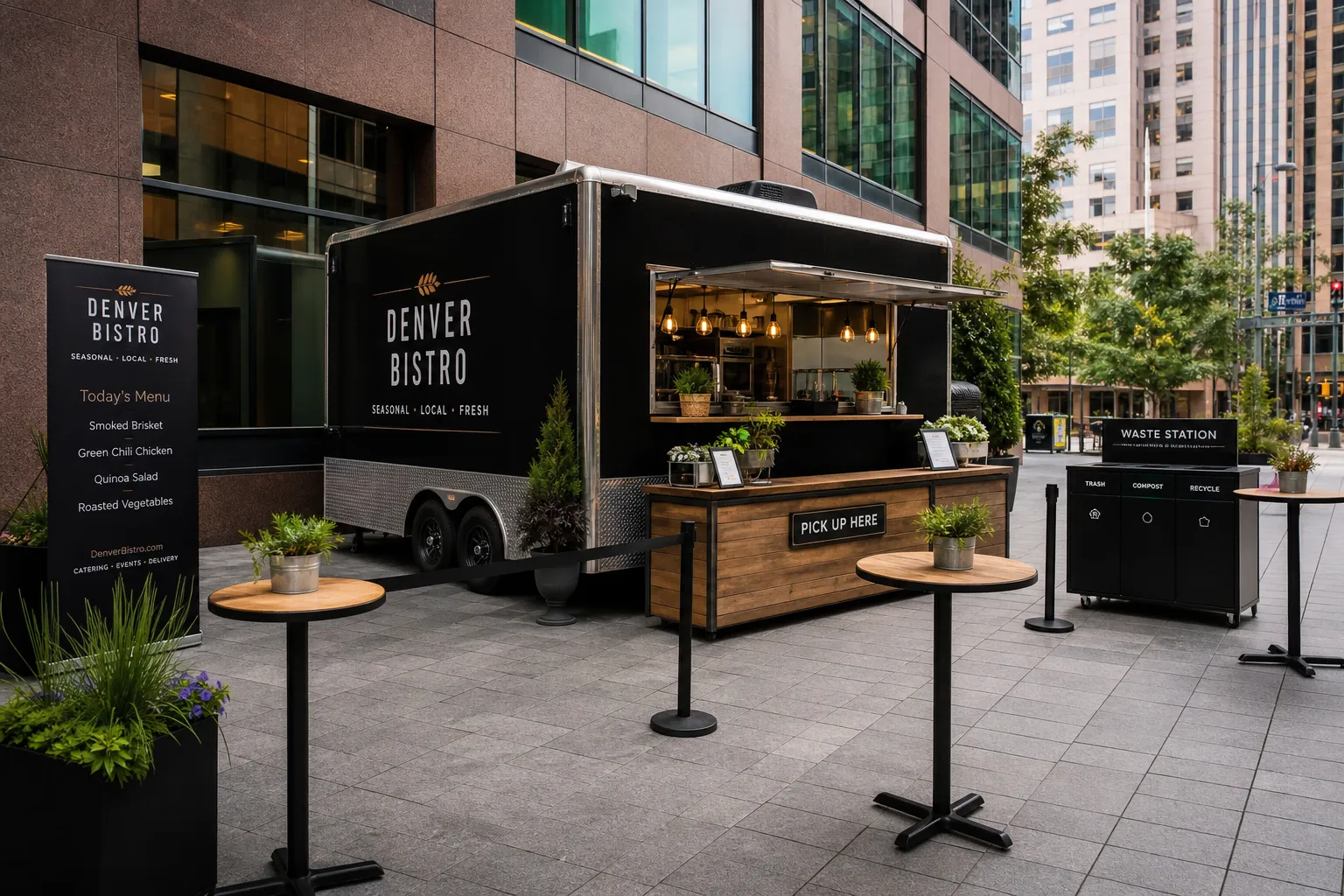
Food service at an open house is not just functional. It is part of the guest experience. A clean, organized takeout restaurant setup can reinforce that your company is thoughtful, prepared, and easy to do business with. In Denver, where many companies compete to make a strong impression on clients and partners, details matter: visible directional signage, a tidy staging area, coordinated waste stations, and a service location that feels intentional rather than improvised.
Branding does not need to be overdone to be effective. Simple touches such as branded welcome signs, a host stationed near the ordering area, and a clear path back to your showroom, office suite, or demo space can help guests connect the hospitality experience to your business identity. Sanitation planning also matters for perception as much as compliance. If you need a framework for that side of event logistics, review how sanitation logistics are organized for takeout restaurant events. Guests notice when these basics are handled well.
Create a Simple Day-Of Operations Checklist
The final step is turning your plan into a short day-of checklist. Confirm arrival time, parking location, service window, guest count assumptions, internal point of contact, trash removal, and weather contingencies. Even if your open house is mostly indoors, outdoor service still depends on conditions, and a backup plan protects the event from last-minute confusion. For weather-related preparation, this guide to rain, wind, and heat planning is a helpful companion when your setup includes exterior service space.
When each moving part is mapped in advance, takeout restaurant service becomes an asset rather than a distraction. Your guests get a convenient, memorable experience, your employees can keep working, and your leadership team can focus on conversations instead of troubleshooting. For companies hosting a corporate open house in Denver, that balance is exactly what makes mobile hospitality effective.
Conclusion
If you want a polished open house that feels welcoming without disrupting the workday, thoughtful takeout restaurant planning is essential. By organizing arrival waves, parking, service speed, and staff workflow in advance, businesses in Denver can use mobile food service to support both hospitality and operations with far less stress on event day.
Source: Denver mobile food licensing information
Frequently Asked Questions
The Food Truck Family with a hands-on approach shaped by a genuine passion for bringing people together through great food and smooth event experiences. Drawn to catering and mobile food service by the energy of celebrations and community gatherings, focuses on making each event feel well cared for from start to finish. The interest in this work comes from the simple idea that good food and thoughtful service can turn any occasion into something memorable. Customers can expect each truck to be approachable, detail-minded, and committed to making planning easier, whether they need catering, delivery, or support for a larger event. They bring a practical, customer-first mindset to every order and every celebration in Colorado.
- Specialized in catering services
- Experienced in mobile catering and event catering
- Offers event planning and event management services
- Provides wedding, party, takeout, and meal delivery services