How to Plan Food Truck Catering With an Event Planner for a Youth Sports Tournament in Dacono
What You'll Learn
- Build a serving schedule around brackets, halftime, and team breaks
- Reduce bottlenecks with smart line layout and pickup flow
- Plan menus that hold up through a long tournament day
- Coordinate parking, setup, and service without disrupting games
When a tournament runs from early morning through late afternoon, food service can either support the day or create delays that frustrate families, coaches, and organizers. In Dacono, using an event planner to coordinate mobile catering for a youth sports tournament helps turn meal service into a structured part of operations instead of a last-minute add-on. For hosts managing multiple age groups, staggered game times, and steady spectator traffic, an experienced event planner in Dacono can map setup, ordering flow, and service timing so teams eat efficiently and the event keeps moving.
Start With the Tournament Schedule, Not the Menu
The biggest planning mistake is thinking about food first and logistics second. For tournament days, the schedule drives everything. A strong event planner begins by reviewing bracket structure, field rotation, likely break windows, and the times when parents and spectators typically arrive in waves. That planning approach is similar to the short-window coordination covered in this guide to handling tight setup timing in Dacono, but for sports events the challenge is less about one short rush and more about repeated surges throughout the day.
In Dacono, that means identifying three critical traffic periods: pre-game breakfast or coffee demand, midday meal peaks, and late-day refueling between semifinal or championship rounds. An event planner should work backward from those peaks to set serving readiness, prep pacing, and any recommended pre-order windows for teams. When organizers know when the largest groups will arrive, they can avoid sending every family to the truck at the same moment.
- Map game start and end times by division
- Identify 10- to 20-minute team break windows
- Estimate spectator counts during peak bracket rounds
- Separate coach, player, and family ordering patterns
Use an Event Planner to Design Fast, Takeout-Style Service
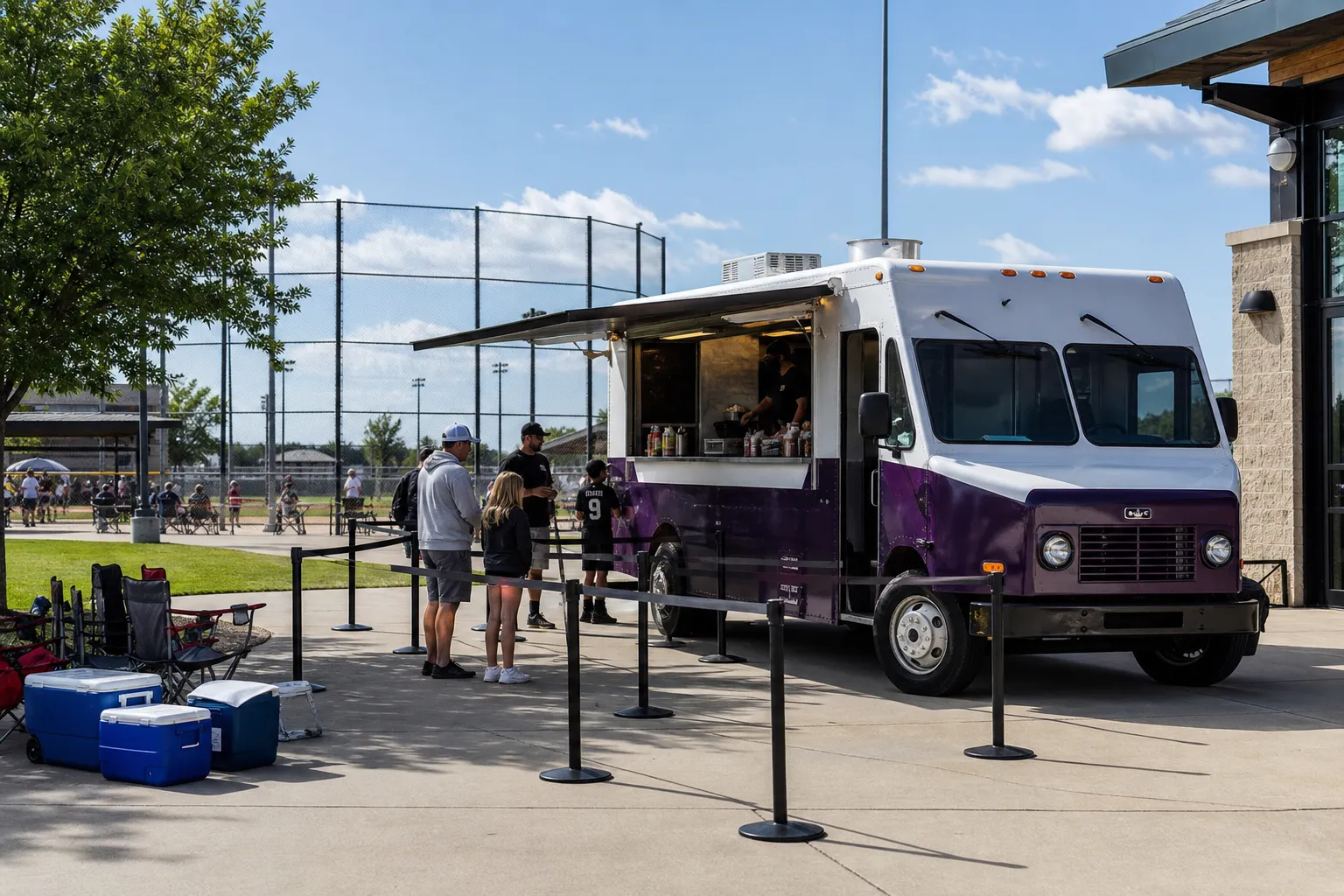
At a sports complex, seated dining is usually not the goal. Speed, portability, and clean circulation matter more. A professional event planner in Dacono will usually recommend a takeout-style service model with clear entry and exit points, visible menu boards, and a pickup area that does not overlap with the ordering line. This is especially important when multiple games let out close together and families move quickly between fields.
Think of the service zone as part of the event layout. The truck should be easy to find but not so central that it blocks walkways, team staging, or emergency access. If your venue has several outdoor activity zones, the routing lessons in this article on managing events across multiple outdoor areas are useful for understanding how guests drift and where congestion tends to form. A capable event planner applies that same thinking to food lines, trash placement, and nearby standing areas so people can grab food and move on without backing up into tournament traffic.
Plan for Rotating Team Breaks Instead of One Lunch Hour
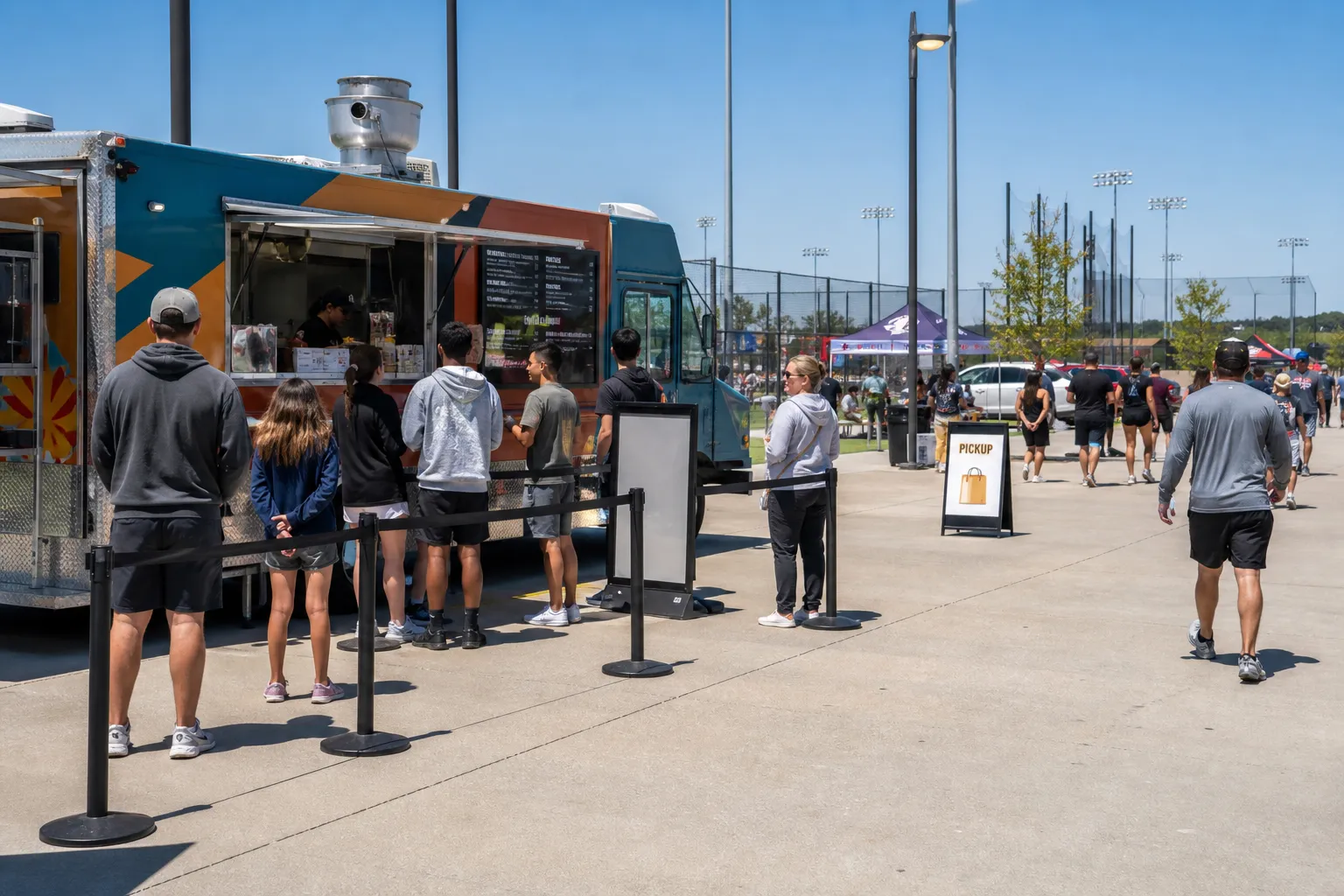
Youth tournaments rarely have one clean lunch break. Some teams finish a game at 10:40, others at 11:15, and still others may have only a short gap before they warm up again. That is why an event planner should organize service around rotating team breaks rather than a single noon rush. In Dacono, this often means creating a bracket-based feeding plan: early pool play teams order first, mid-day teams use staggered windows, and later rounds rely on rapid pickup and shorter menus.
For larger events, the planner may suggest pre-assigned pickup ranges for coaches or team parents. That does not need to be complicated. Even a simple schedule by division can reduce line length and keep athletes from waiting too long before their next game. Organizers planning school or family-centered events can also borrow ideas from this post about coordinating food truck catering with an event planner for school events, especially when managing mixed-age crowds and overlapping break periods.
Build a Menu Pace That Can Last All Day
Long tournament days demand menu pacing, not just menu variety. The right event planner in Dacono will help organizers think about how service changes from morning to afternoon: lighter items and beverages early, stronger meal demand at midday, and quick grab-and-go choices later when families are tired and trying to leave efficiently. The point is to support steady throughput over several hours instead of overloading service with too many choices at the busiest time.
That same operational thinking shows up in other event formats too. For example, this guide on planning steady service for a grand opening highlights how pacing and guest flow affect satisfaction when attendance rises in waves. For a youth tournament in Dacono, the menu should stay easy to carry, easy to eat between games, and fast to hand off. A trimmed, high-efficiency menu usually serves the event better than an oversized one that slows production.
- Limit peak-hour choices to speed ordering
- Prioritize portable items for athletes and parents on the move
- Keep beverages and quick add-ons accessible without blocking the main line
- Plan late-day service for guests leaving one field and heading to another
Coordinate Setup, Parking, and Access Before Event Day
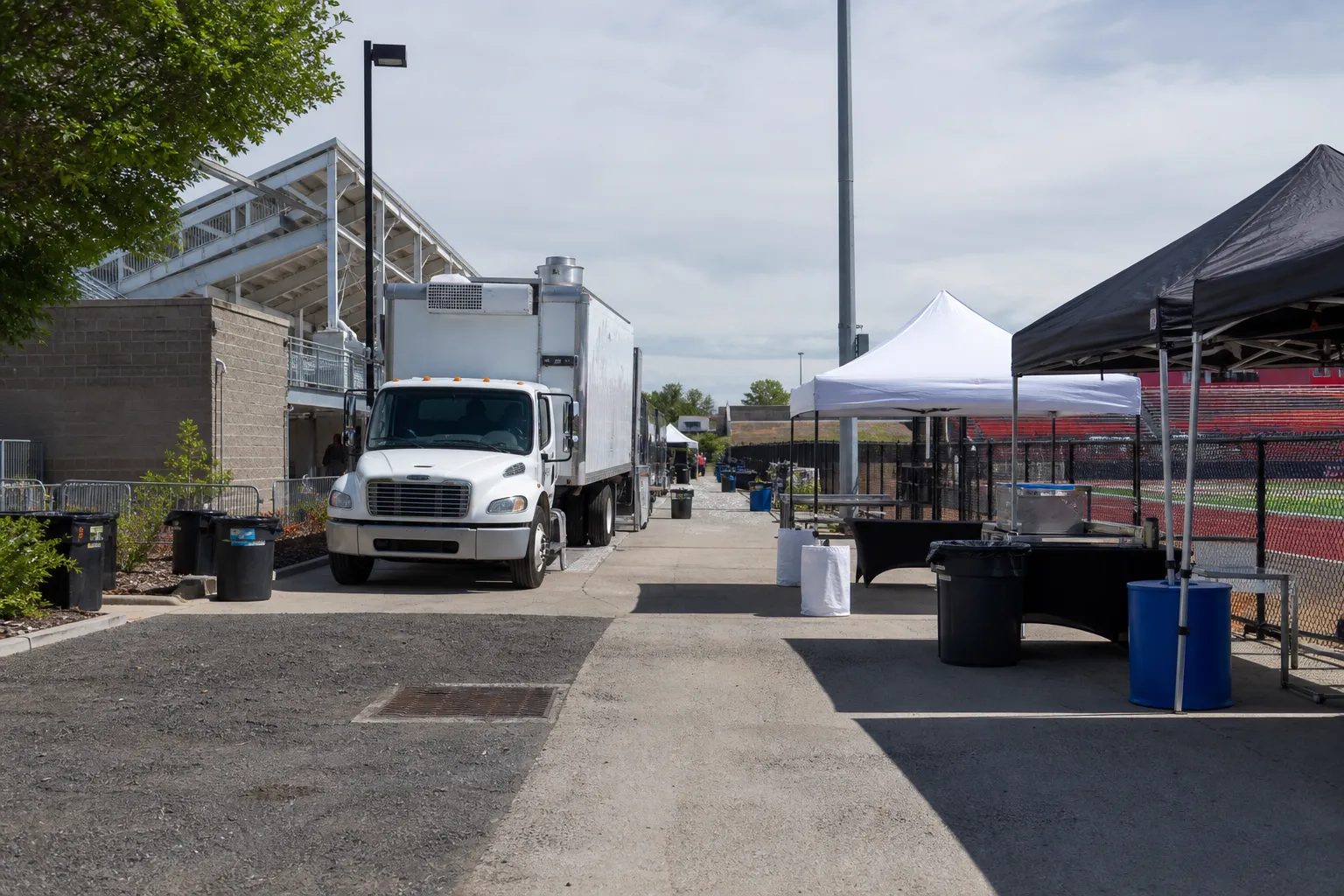
One of the most valuable roles of an event planner is handling the details that guests never notice when they are done well. In Dacono, that includes confirming vehicle access, setup timing, surface conditions, generator considerations if needed, and nearby space for lines and pickup. It also means checking whether the service area conflicts with team drop-off, equipment unloading, or pedestrian crossings. These details matter because even excellent food service can become a problem if the truck is parked where it interrupts tournament operations.
While every venue has its own rules, organizers can benefit from the logistics mindset discussed in this article on what an event planner checks before booking a venue. The same discipline applies here: walk the site, confirm clearances, review traffic flow, and document the staging plan before tournament morning. For public guidance on temporary food operations and event safety, it is also smart to review retail food establishment information from the Colorado Department of Public Health & Environment.
Think About Shade, Waiting Comfort, and Parent Experience
Fast service is the priority, but comfort still affects how the event feels. If tournament guests are standing in direct sun, crowding around one narrow path, or unsure where to wait, the line will feel longer than it is. An event planner in Dacono should account for nearby shade, visible queue direction, and enough room for families with bags, chairs, and younger siblings. Even basic comfort planning can improve order speed because guests understand where to stand, where to pick up, and where to move after receiving food.
That guest-comfort perspective aligns with this post on seating, shade, and comfort planning and with accessibility considerations outlined in this guide to accessibility planning for community events. For a sports tournament, those same principles help families navigate strollers, coolers, folding chairs, and mobility needs without turning the food area into a choke point.
Create a Simple Communication Plan for Coaches and Families
Even the best layout will struggle if nobody knows how service is supposed to work. Before event day, an event planner should help the organizer prepare a short communication plan: where the truck will be located, when service starts, how team pickup should work, and what guests can expect during peak periods. This can be shared through registration emails, team apps, or signage at check-in. Clear communication reduces line confusion and prevents coaches from sending an entire roster to order at once.
For Dacono tournaments, simple instructions are usually enough: one map pin, one service window, one pickup process, and one reminder to use natural game breaks. When everyone understands the plan, the event planner can focus on monitoring flow instead of solving avoidable bottlenecks all day.
Conclusion
Successful tournament food service depends on timing, circulation, and preparation more than luck. With the right event planner, organizers in Dacono can align mobile catering with bracket play, team breaks, spectator surges, and site logistics so the day stays efficient from first whistle to final game. If you want food service to support the schedule instead of slowing it down, working with an experienced event planner in Dacono is the clearest way to create a smooth, professional tournament experience.
Source: retail food establishment information from the Colorado Department of Public Health & Environment
Frequently Asked Questions
The Food Truck Family with a hands-on approach shaped by a genuine passion for bringing people together through great food and smooth event experiences. Drawn to catering and mobile food service by the energy of celebrations and community gatherings, focuses on making each event feel well cared for from start to finish. The interest in this work comes from the simple idea that good food and thoughtful service can turn any occasion into something memorable. Customers can expect each truck to be approachable, detail-minded, and committed to making planning easier, whether they need catering, delivery, or support for a larger event. They bring a practical, customer-first mindset to every order and every celebration in Colorado.
- Specialized in catering services
- Experienced in mobile catering and event catering
- Offers event planning and event management services
- Provides wedding, party, takeout, and meal delivery services