The Food Truck Family Blog - 2026-04-27
What You'll Learn
- Learn what to confirm before booking local food truck catering
- Avoid common event-day delays with better site planning
- Match service style to guest count, timing, and venue needs
- Improve guest experience for private and business events
- Use local planning details to make booking more predictable
What Homeowners and Local Business Owners Should Know Before Booking
Food truck catering has become one of the most flexible ways to serve guests at private gatherings, neighborhood celebrations, office events, and community functions. For homeowners and local business owners, the appeal is clear: a more engaging food experience, simplified service, and a setup that can work across many event types. But the best results usually come from asking the right questions before you book. In the local area, details like parking access, guest flow, service timing, and property layout can all affect how smoothly an event runs.
If you are comparing options, it helps to start with the event itself. A backyard birthday party in Downtown may need a very different setup than a school fundraiser in Northside or a corporate lunch in West End. Guest count, event duration, and available space should drive the catering format. If you are still weighing formats, our post on how to decide if food truck catering or drop-off catering fits your event best is a useful place to begin.
For many local events, the biggest advantage of food truck catering is that it combines fresh preparation with a built-in service station. That can reduce the need for extra rentals and help keep cleanup more contained. At the same time, a successful event depends on practical planning. Access to the service area, room for guests to queue comfortably, and a realistic serving timeline all matter. When those pieces are addressed early, the experience feels much more organized for hosts and guests alike.
Start With the Event Type and Guest Experience
Before discussing menus or service windows, define what success looks like for your event. Do you want a casual open-house atmosphere where guests can eat on their own schedule? Do you need a tighter lunch service for employees? Are you hosting a graduation, wedding-related event, tenant appreciation day, or customer event where presentation and flow matter just as much as the food? The answers help determine whether a food truck is the right fit and how the service should be structured.
- Private events often benefit from staggered service and easy guest access.
- Business events usually need tighter timing and clear communication.
- Community events require stronger planning for lines, space, and throughput.
- Smaller gatherings may need a simpler format than larger public-facing events.
Hosts sometimes focus first on the menu, but event flow should come first. A great menu cannot overcome a poor setup. Think about where guests will gather, how they will approach the truck, and whether the service area will stay comfortable during the busiest part of the event. If your priority is creating a more seamless event from the start, you may also want to read how to plan a smoother local event with food truck catering.
Site Access, Parking, and Setup Matter More Than Most Hosts Expect
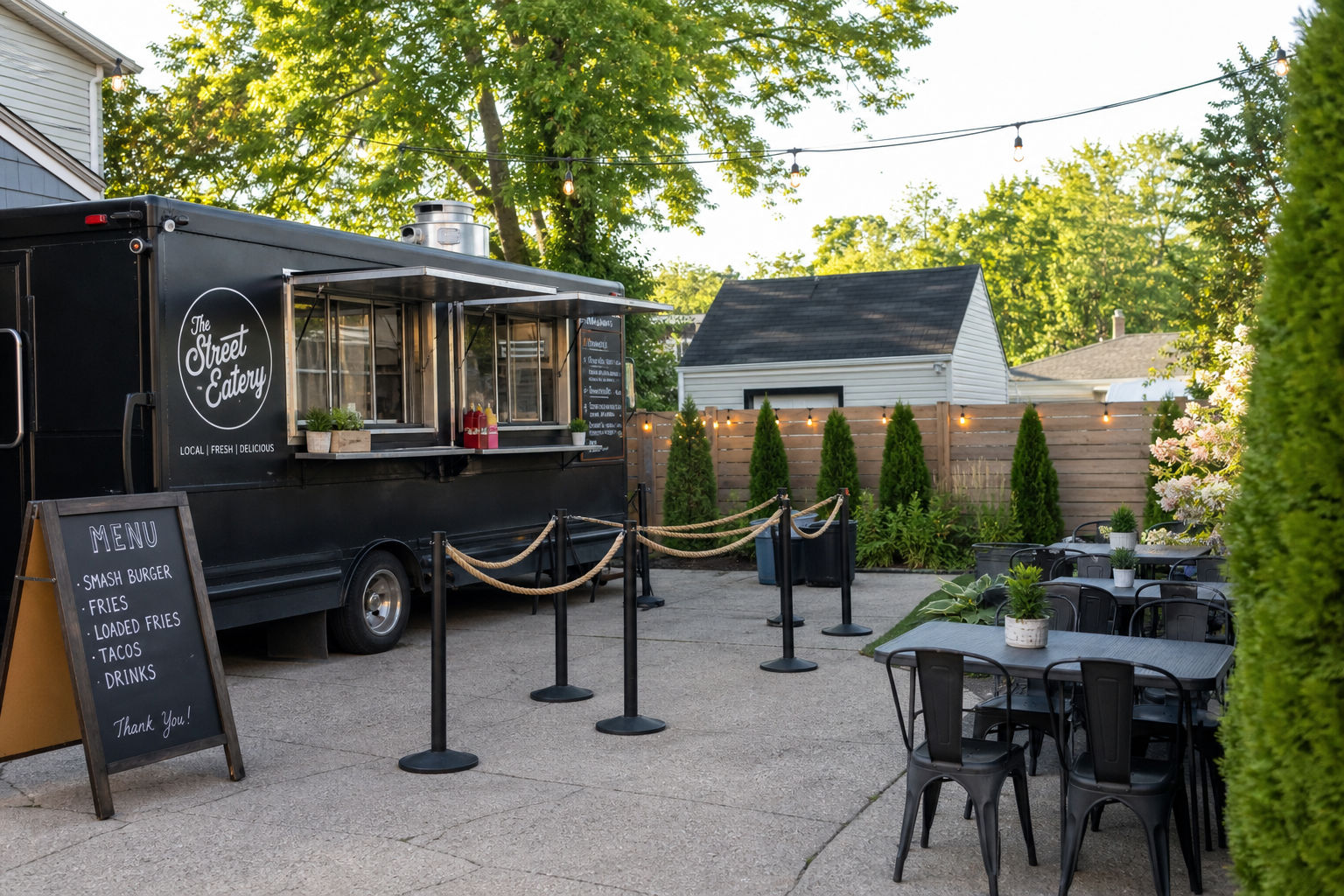
One of the most important parts of local food truck catering is the setup environment. A truck needs safe access, adequate parking space, and enough room to serve guests without creating congestion. For a residential event in Eastside, that may mean checking driveway clearance, street parking rules, and neighborhood restrictions. For a commercial property in Midtown, it may involve confirming loading access, fire lane limitations, and where employees or guests can line up without disrupting operations.
It is also smart to think beyond the truck footprint itself. Hosts should consider traffic patterns, nearby entrances, shade, lighting for evening events, and whether the ground surface is level and suitable for service. If the event is on private property, designate a clear service location in advance. If it is at a venue or office complex, confirm permissions early. These practical checks help avoid last-minute changes that can affect timing and guest comfort.
How to Estimate Timing and Service Flow
Timing is one of the most common concerns for both homeowners and business clients. Hosts want to know how long service will take, when guests should eat, and how to avoid long lines. The answer depends on guest count, menu complexity, and whether everyone is arriving at once or over a wider window. A neighborhood party with rolling arrivals may feel very different from a company appreciation event where everyone breaks at noon.
For that reason, it helps to share as much event information as possible when booking. Estimated attendance, age mix, ideal serving window, and whether guests will order individually or from a limited event menu can all influence recommendations. If you are trying to make the experience feel easier on the day of the event, our article on how to make food truck catering feel effortless at local events offers additional guidance.
- Estimate realistic attendance rather than only invited guests.
- Identify whether guests will arrive all at once or in waves.
- Choose a service window that matches your event schedule.
- Confirm site logistics early so setup does not cut into service time.
In many cases, a well-planned event menu and a realistic service timeline do more for the guest experience than adding more complexity. Simplicity is often what keeps lines moving and the event feeling polished. That is especially true for office parks, school events, and residential celebrations where the host wants convenience without sacrificing quality.
Choosing Between Food Truck Catering and Other Formats
Food truck catering is not the best fit for every event, and a trustworthy planning process should acknowledge that. Some events benefit more from drop-off catering, especially when access is limited, service timing is extremely compressed, or the venue does not support on-site truck operation. The right format depends on your priorities: interactivity, freshness, setup constraints, and how guests will be served.
If you are comparing options for an upcoming event in the local area, review how to choose between food truck catering and drop-off catering for your next local event and how to choose food truck catering that actually fits your event. Both can help you think through event size, venue realities, and service style before making a decision. The goal is not to force one format into every situation, but to choose the one that supports a smoother event overall.
Questions Worth Asking Before You Book
Whether you are hosting at home or coordinating a business event, asking detailed questions upfront can save time later. Confirm what information is needed about the site, what setup conditions are required, how the serving window is typically organized, and what the host should prepare before arrival. It is also wise to discuss weather contingencies, property access on the day of service, and any venue-specific rules that could affect placement.
- What space and access conditions are needed for setup?
- How should guest count and service timing be estimated?
- What should the host prepare before arrival?
- How are venue restrictions or weather concerns handled?
For local SEO purposes and practical planning alike, it also helps to work with a provider familiar with events across the local area. Knowledge of neighborhood layouts, commercial access challenges, and common event settings can make planning more efficient. That local familiarity can be especially helpful for events in Downtown, Midtown, Northside, and surrounding neighborhoods where access and timing can vary significantly from one property to the next.
A Better Booking Process Starts With Better Event Planning
The strongest food truck catering experiences are usually the result of thoughtful preparation, not guesswork. When hosts align the catering format with the event type, guest count, location, and schedule, the result is more efficient service and a better overall impression for attendees. For homeowners, that means less stress and a more enjoyable gathering. For local business owners, it means an event that supports employee satisfaction, client hospitality, or community engagement without unnecessary friction.
If you are planning an upcoming event in the local area, start by evaluating your site, your guest flow, and the type of experience you want guests to have. Once those pieces are clear, booking becomes much more straightforward. A well-matched catering plan does more than serve food—it helps the entire event feel more organized, welcoming, and successful.
Source: U.S. Small Business Administration