How to Plan Meal Delivery for a Company Field Day in Parker With Outdoor-Friendly Menus, Fast Team Breaks, and Simple Site Logistics
What You'll Learn
- Build a meal schedule that fits field day activity blocks
- Choose menu formats that hold up well outdoors
- Reduce lines with staggered team break planning
- Set up site logistics that support fast, smooth service
Planning meal delivery in Parker for a company field day takes more than choosing a menu. Outdoor events move quickly, teams are often spread across activity zones, and break periods need to stay short so the day keeps its energy. A well-organized meal delivery plan helps employers feed guests efficiently, protect the event timeline, and create a better overall experience without turning lunch into a bottleneck. For organizers who want a professional setup, the goal is to match food service to the pace of the day, the layout of the site, and the practical needs of an outdoor crowd.
The strongest plans begin with service flow. Before finalizing headcount or menu selections, map when teams will be available to eat, how far they will be from the service point, and how long each break can realistically last. If you are also reviewing event timing ideas, it may help to see how staggered service is handled in this guide to planning delivery service for a grand opening in Parker. The same principle applies here: when meal delivery is aligned with movement, arrivals, and activity transitions, the event feels organized instead of crowded.
Start With a Break Schedule That Supports the Event
At a company field day, everyone usually wants to eat within a narrow window. That creates unnecessary line pressure unless breaks are intentionally staggered. For meal delivery in Parker, divide attendees into groups based on departments, team colors, or activity rotations. Give each group a defined meal window, even if the difference is only 10 to 15 minutes. This keeps the service point moving and reduces the common problem of one long line stopping the momentum of the day.
Organizers should also think in terms of throughput, not just total guest count. A field day with 150 attendees does not create a problem if arrivals are spread out; a field day with 150 attendees all released at once often does. For perspective on pacing and volume, review how many guests meal delivery can serve per hour at events. While every event is different, understanding realistic service speed helps you set break lengths that are practical instead of overly optimistic.
- Assign meal windows by team or activity group
- Release groups in waves rather than all at once
- Place lunch between activity rounds, not during transitions
- Build a small buffer in case games or announcements run late
Choose Outdoor-Friendly Menus That Travel and Hold Well
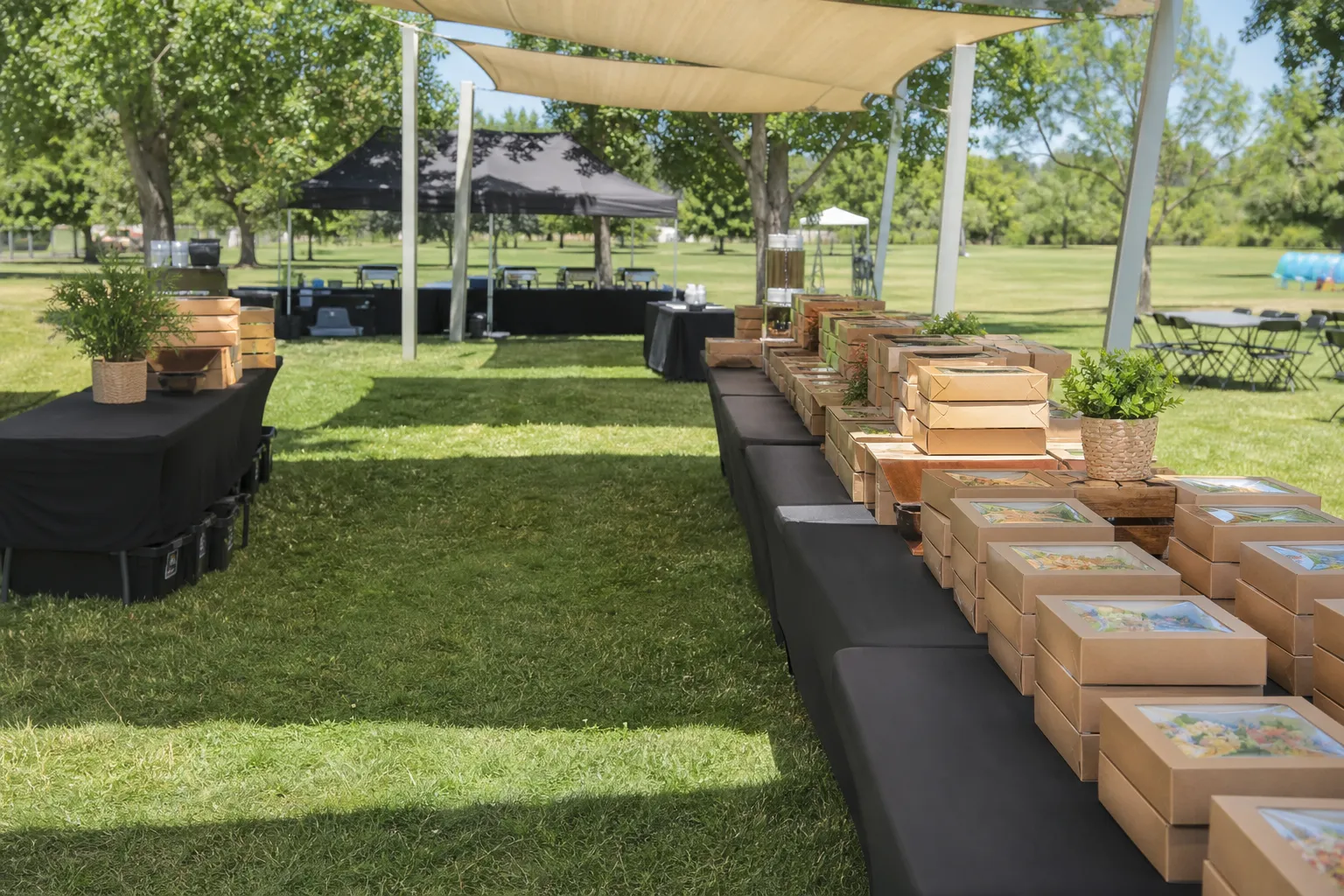
Menu planning matters even more outdoors than it does inside. The best meal delivery in Parker for a company field day usually centers on items that are easy to carry, easy to serve, and less vulnerable to wind, heat, or uneven surfaces. Meals that can be handed off quickly help teams get back to activities on time. Foods that require extensive assembly, delicate plating, or complicated condiment management can slow the line and create extra cleanup across the field day site.
Think in terms of complete, contained meals. Individually packaged or neatly boxed options are often easier to distribute in outdoor settings than formats that require guests to balance multiple plates and utensils. Menu flexibility also matters if your attendee mix includes different dietary preferences. If you are comparing event menu strategy for another group format, this article on delivery service for a company picnic offers useful planning ideas that also apply to field day environments.
Match the Service Point to the Site Layout
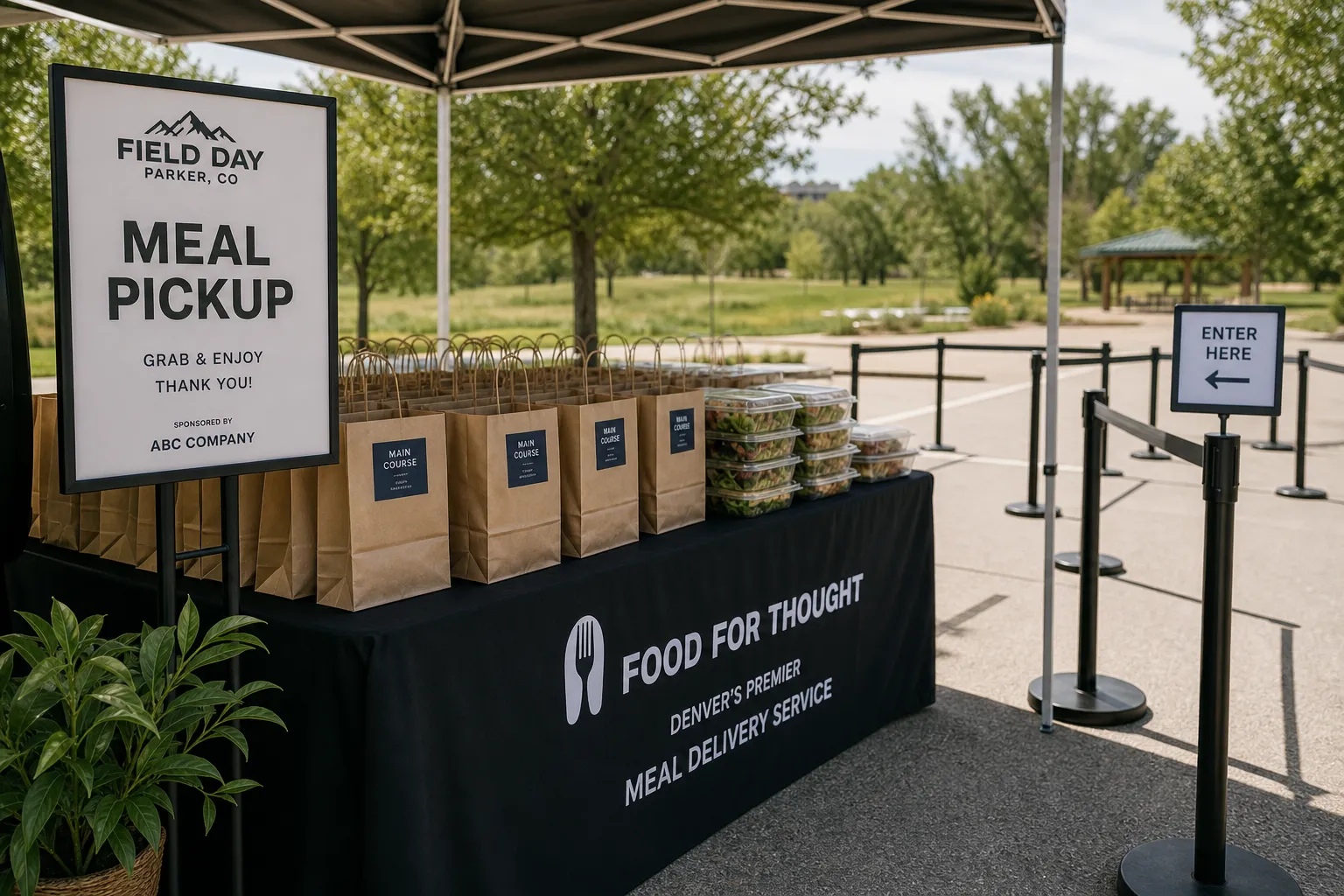
One of the biggest advantages of meal delivery is the ability to serve where the event is happening, but placement still needs planning. In Parker, field day sites can vary widely in access, walking distances, and open-space layout. The meal service point should be visible, easy to approach, and located where guests can queue without crossing game areas or interrupting announcements. The best setup is often near a central path or edge zone that is close enough to activity areas for convenience but separate enough to keep traffic flowing.
It is also important to think about comfort. Shade, nearby seating, and a clear waiting area all affect how smoothly meal delivery works. While this article focuses on one service, event comfort planning still influences food flow. For ideas related to guest comfort and layout, see how seating, shade, and comfort are organized for events in Parker. Even a strong menu can feel disorganized if guests are standing in direct sun with no obvious place to gather.
- Confirm vehicle access and parking position before event day
- Keep the service area out of active game lanes
- Allow room for a single clear line instead of a crowded cluster
- Position trash and beverage stations nearby to reduce backtracking
Plan for Multiple Activity Zones Without Losing Control
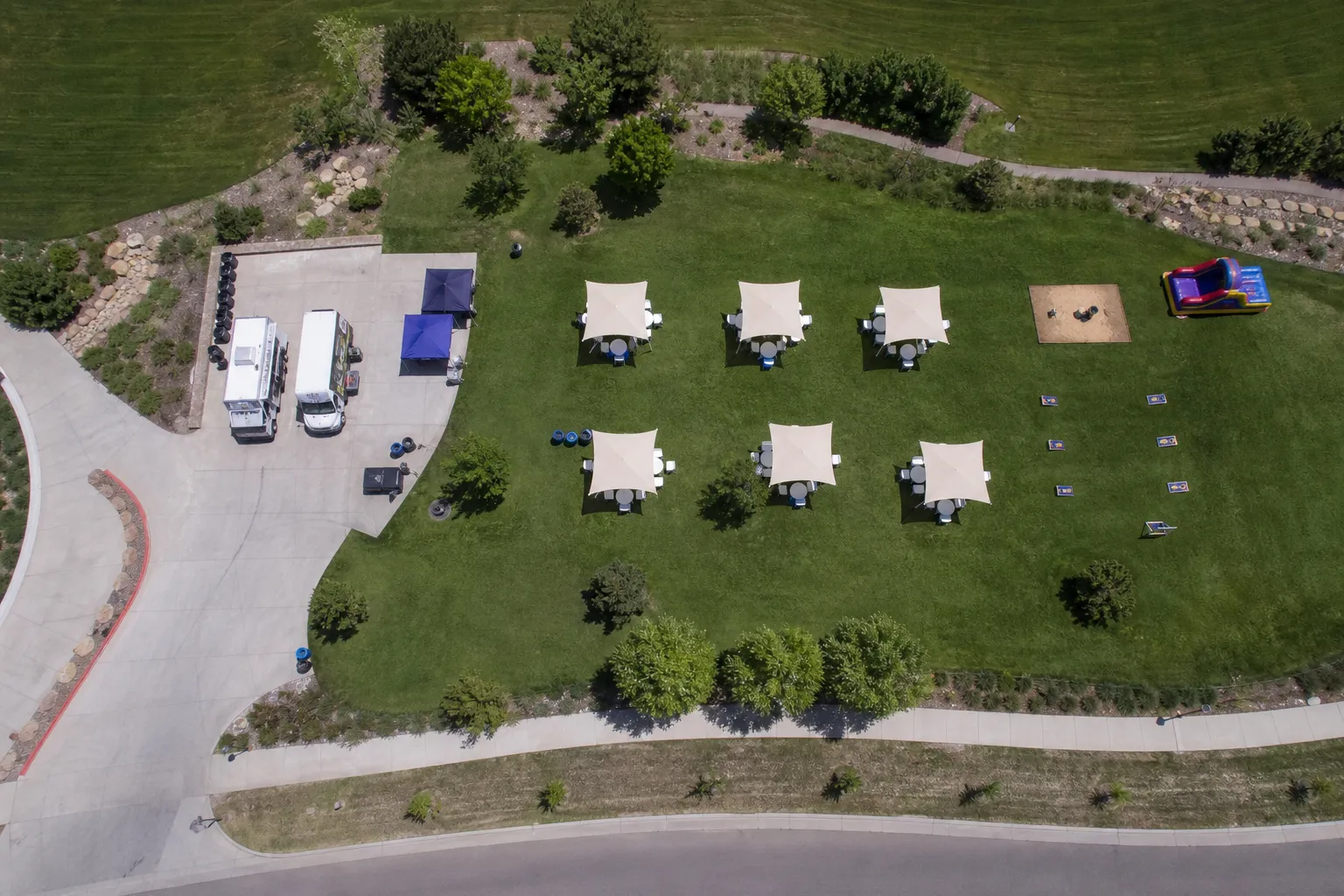
Many company field days are spread across several outdoor zones, such as lawn games, team competitions, check-in areas, and rest spaces. That means meal delivery in Parker should be coordinated with movement patterns, not treated as a separate piece of the event. If teams are rotating across a large site, organizers need clear instructions about when each group breaks and where they enter the line. Signage, staff communication, and a simple event map can prevent confusion and keep guests from drifting to the service area all at once.
This becomes even more important when the event footprint is wide or segmented. A helpful comparison is this post on planning meal delivery across multiple outdoor zones, which shows how layout affects timing and guest flow. For a field day, the same lesson applies: food service works best when it is integrated into the event route instead of competing with it.
Keep Team Breaks Short Without Making the Experience Feel Rushed
Fast service is not just about speed; it is about predictability. Guests are more patient when the line moves steadily and they understand the process. For company organizers using meal delivery in Parker, that means communicating the break schedule in advance, posting group release times, and having a designated contact who can coordinate with the caterer if an activity runs long. Small adjustments made early are much easier than trying to solve crowding once everyone is already hungry.
It can also help to borrow strategies from other employer-focused events. For example, this guide to delivery service for a multi-shift employee appreciation event highlights ways to feed groups efficiently without slowing operations. A company field day has a different atmosphere, but the same operational truth remains: controlled release timing leads to a better meal experience and less downtime for the business.
Coordinate Logistics Early for a Smoother Event Day
The easiest field day meal service is the one that has already solved logistics before setup begins. Organizers should confirm arrival windows, exact parking location, point-of-contact information, estimated guest count, and any site restrictions well ahead of time. If the event includes speeches, awards, or scheduled announcements near the meal period, those should be shared too. Even simple coordination can prevent service delays and help the event stay on schedule from the first activity through the last break.
Another useful planning reference is this article on coordinating speeches, announcements, and food service. The takeaway for a field day is clear: meal delivery should support the event timeline, not compete with it. When the organizer and caterer are aligned on sequence, access, and guest movement, the day feels polished and efficient.
Why Professional Meal Delivery Helps a Company Field Day Run Better
A company field day is supposed to feel energetic, social, and easy to enjoy. Professional meal delivery in Parker helps make that possible by reducing friction around one of the most important parts of the day: feeding everyone on time. With the right menu format, staggered breaks, and a practical service location, employers can keep teams comfortable and engaged without letting lunch overtake the event schedule.
For organizers planning a company field day, the best results come from treating meal delivery in Parker as part of the event strategy from the start. When food timing, menu design, and site logistics are planned together, the experience is better for employees, easier for event leads, and more consistent from the first break to the final activity.
Source: heat exposure and outdoor safety guidance
Frequently Asked Questions
The Food Truck Family with a hands-on approach shaped by a genuine passion for bringing people together through great food and smooth event experiences. Drawn to catering and mobile food service by the energy of celebrations and community gatherings, focuses on making each event feel well cared for from start to finish. The interest in this work comes from the simple idea that good food and thoughtful service can turn any occasion into something memorable. Customers can expect each truck to be approachable, detail-minded, and committed to making planning easier, whether they need catering, delivery, or support for a larger event. They bring a practical, customer-first mindset to every order and every celebration in Colorado.
- Specialized in catering services
- Experienced in mobile catering and event catering
- Offers event planning and event management services
- Provides wedding, party, takeout, and meal delivery services